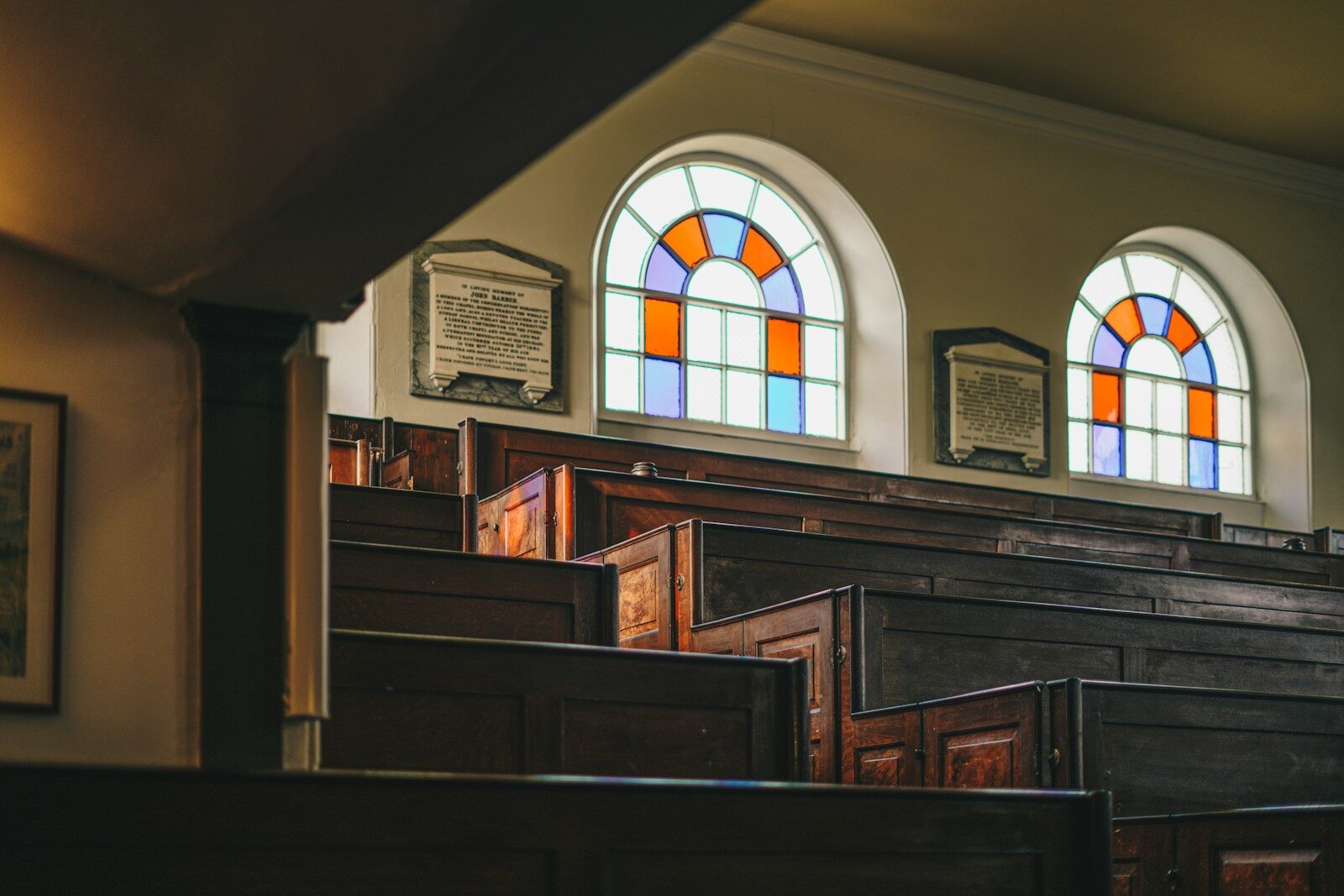
American congregations built for a country that attended. The result is a building stock of remarkable quality distributed through nearly every neighborhood: sound structures on generous lots, frequently the best-made buildings in town, with kitchens, halls, parking and a room designed to hold several hundred people comfortably.
Attendance has fallen for decades and the buildings have not. A congregation of sixty maintaining a sanctuary built for six hundred is running a deficit against a roof, a boiler and a masonry envelope that do not care how many people are inside, and that arithmetic is now closing churches at a rate that has made the disposition of the property a genuine civic question.
The building is worth more than the balance sheet suggests
What makes these properties unusual is that their most valuable features are the ones a conventional buyer discounts. Tall ceilings, a large column-free room, a commercial kitchen and a parking lot are expensive to reproduce and difficult to use for anything a standard pro forma contemplates. The land value is often the whole appraisal, which points toward demolition, and demolition is what happens when nobody has done the work to find the alternative.
The alternatives that succeed tend to share a shape. The sanctuary becomes a performance or assembly space, which it already is; the education wing becomes housing, offices or childcare, being conveniently divided into rooms; and the kitchen and hall keep doing what they have always done for whoever now needs them. The conversions that fail are the ones that tried to make the sanctuary into apartments, which requires fighting the building's only irreplaceable feature.
Zoning is the binding constraint. A church is typically permitted in a residential district as an institutional use, and the moment it becomes housing or a venue it needs an approval that can take two years — during which the building is unheated, uninsured and deteriorating on a schedule that does not pause for a hearing. Municipalities that have moved fastest simply added conversion of existing religious buildings as a permitted use, which costs nothing and removes the interval in which most of these buildings are lost.
The financing is harder than the office conversions getting far more attention, and for the opposite reason. An office tower is a large, legible transaction that a capital markets desk can underwrite. A church is a small, idiosyncratic deal requiring a buyer who understands both historic fabric and community politics, and there is no institutional capital pool organised around that. The successful projects are almost invariably assembled locally, one at a time.
What is at stake is more than the structure. These buildings have been functioning as informal civic infrastructure regardless of attendance — the polling place, the food pantry, the recovery meeting, the space a neighborhood group can use for nothing. That role has been growing in importance as the library becomes the last free room in town and as retailers discover they are selling belonging rather than goods. Losing a church building removes a room from a town's inventory, and towns are not building replacements.
The congregations themselves are in the hardest position, holding an asset they cannot maintain, cannot easily sell and have obligations toward beyond the financial ones. Many are choosing to give the building away, on terms, to whoever will keep it open.
The ground beside them is carrying the same problem, where the cemetery runs on a fund that stopped working.
Topics culturereligionreal estatezoningcommunity