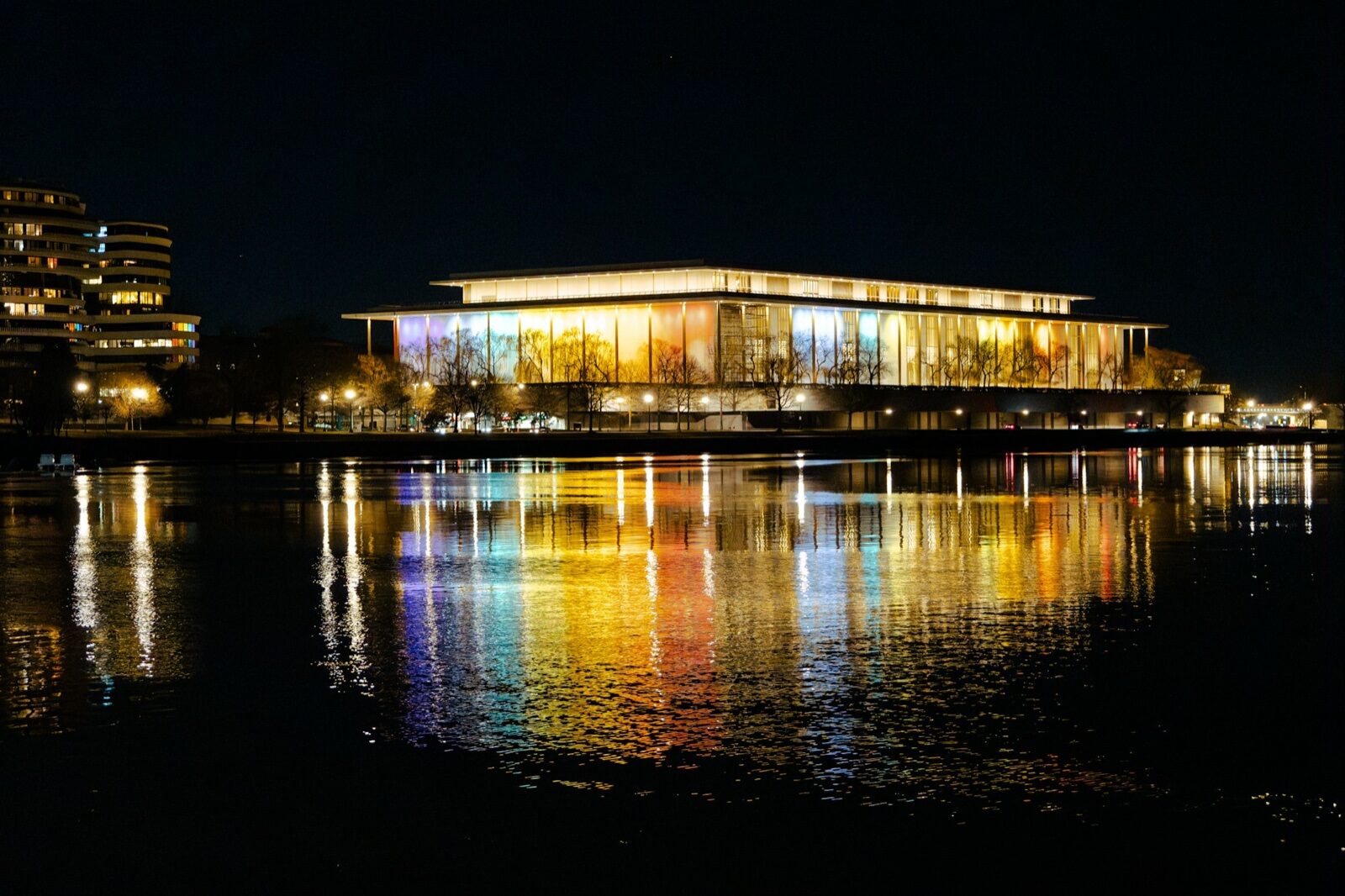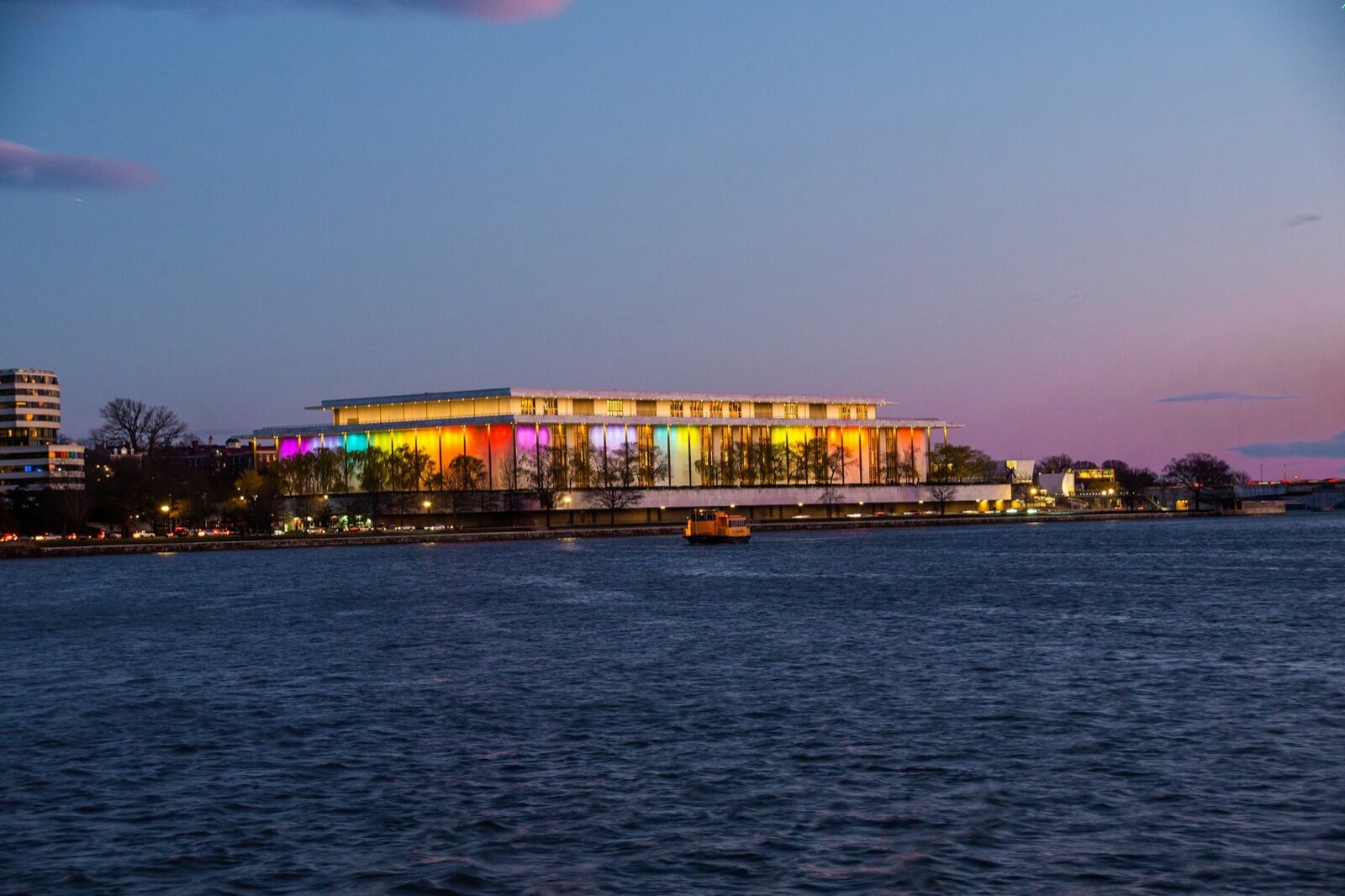
Two decisions were taken about the Kennedy Center on Tuesday, and the order matters.
In the morning, US District Judge Christopher Cooper ruled that the board could not rename the building or install memorials to President Trump. "Simply put," he wrote, "Defendants cannot install memorials for President Trump or anyone or anything else at the Kennedy Center without Congress's blessing." Of the board's attempts to word its way around his earlier order, he wrote that "linguistic gymnastics cannot extricate the Kennedy Center's Board from an operative judicial order."
In the afternoon, the board voted to close the main building immediately, for a renovation expected to take about two years, with a hoped reopening in 2028.
The president, who chairs the board and joined the meeting by video, then said the work would not happen at all unless the ruling is overturned: "The Reconstruction and the Renovation of The Kennedy Center will not take place."
What the money was for
Congress appropriated $256.7 million for the building in July 2025, restricted to capital repair, restoration, maintenance backlog and security, and available until 30 September 2029. This desk reported on Monday that the centre had told a court it could not meet payroll within weeks, with revenue projected at $124 million against a budget of $220 million, and that part of the grand foyer ceiling had collapsed on 5 September.
Those two facts describe the split this institution runs on. Congress pays for the structure, because it is a national memorial. Tickets and donors pay for the performances. The appropriation could not have covered payroll, and no amount of ticket revenue was going to repair a ceiling.
A closure resolves that in the way available to a board with no cash: it stops the second problem by ending performances, and it applies the first to a building nobody is in.
What stays open
The REACH, the centre's extension, remains open. The Kennedy Center Honors, the Mark Twain Prize and National Symphony Orchestra programming are expected to continue, presumably in other venues.
That matters more than it sounds. Those three properties are the centre's national profile and much of its fundraising case. Keeping them alive through a two-year closure is what makes a 2028 reopening a plan rather than a hope.
The condition attached
The president's statement ties the renovation to the appeal. If the D.C. Circuit or the Supreme Court does not overturn Cooper's ruling, he wrote, the reconstruction will not take place.
Read plainly, that makes the naming question a condition of the building work — which is a different arrangement from the one the appropriation assumed. Congress voted money for improvements to a national memorial. The improvements are now described as contingent on a name the court has just said Congress alone can grant.
Whatever happens on appeal, that is the sentence the institution's next two years will be argued over.
What closure costs an arts organisation
A theatre that closes does not simply pause. Subscribers do not renew, and the ones who lapse are the hardest audience to get back. Technical staff, stagehands and musicians take other work, and the specialists do not wait. Touring productions book two to three years out, which means a 2028 reopening has to be sold to producers during the closure, by an institution whose finances are the reason for it.
This desk has written about what happened to a cultural institution when the funding returned and the people did not. The Kennedy Center is now running that experiment at national scale, with its calendar cleared and its name in litigation.
What to watch
The appeal to the D.C. Circuit, which will decide whether the naming condition holds. Then the first contract let for the renovation work, which is the only evidence that the two-year clock has actually started. A closure with no construction contract behind it is not a renovation. It is a dark building.
Correction, 16 September: An earlier version of this article said Congress had appropriated $250 million for the building. The appropriation is $256,657,000, made in July 2025 and restricted to capital repair, restoration, maintenance backlog and security through September 2029. The $250 million figure belongs to the fundraising drive described in the board's internal documents, which is a separate sum.
Judge Christopher Cooper's ruling of 15 September 2026, including the quotations "Defendants cannot install memorials for President Trump or anyone or anything else at the Kennedy Center without Congress's blessing" and "Linguistic gymnastics cannot extricate the Kennedy Center's Board from an operative judicial order", and its reference to a federal court order and a statute enacted by Congress, are as reported by ABC News. The board's vote to close the main building immediately for a renovation of about two years with a hoped reopening in 2028; the closure being the third such vote since February; the president's participation in the meeting by video and his exchanges with Rep. Joyce Beatty; the board's statement on payroll and maintenance; the resignation of chief financial officer Donna Kauranen; the appropriation of $256,657,000 by Congress in July 2025, restricted to capital repair, restoration, maintenance backlog and security and available through 30 September 2029; the continuation of the REACH, the Honors, the Mark Twain Prize and National Symphony programming; and the president's statement that reconstruction will not take place unless the ruling is overturned are as reported by NBC News and NPR on 15 September 2026. This publication has not seen the ruling. The analysis is our own.