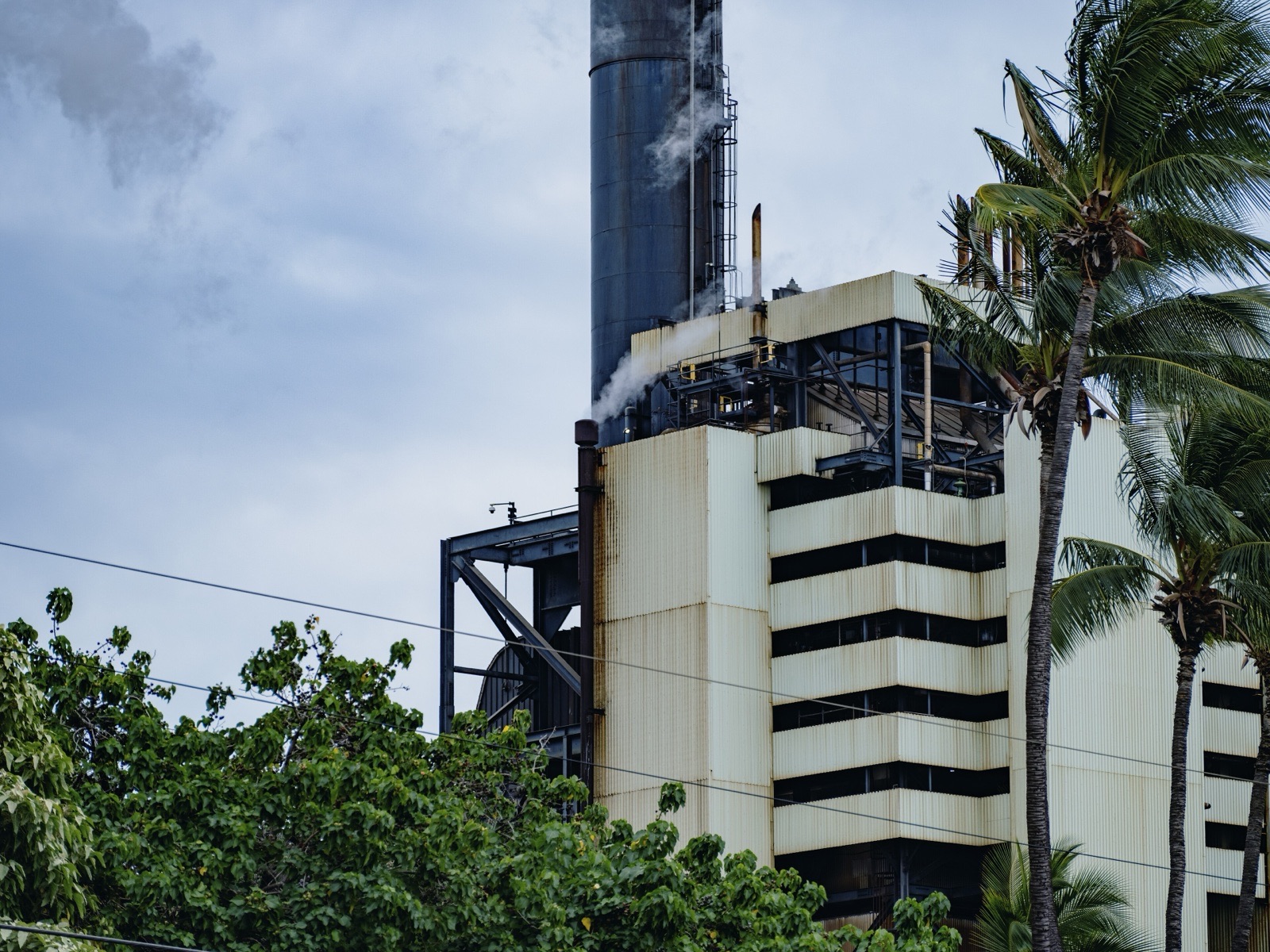
On 1 April 2026, with oil prices up sharply after the outbreak of war with Iran, Hawaiian Electric told its customers that typical residential bills could rise by 20 to 30 per cent over the following months. The utility, which said it relies heavily on imported fuel to generate power, was close. By August the average residential price of electricity in Hawaii was 22.5 per cent higher than a year earlier.
That was the largest increase of any state, according to the U.S. Energy Information Administration's Electric Power Monthly. Nationally, households paid an average of 18.16 cents a kilowatt-hour in August, 3.4 per cent more than the 17.57 cents of August 2025. Prices rose in 44 states and the District of Columbia, by our count of the agency's table, and fell in seven.
Where did prices rise and fall the most?
We ranked every state by the change in its average residential price between August 2025 and August 2026, and added the change for the first eight months of the year from the year-to-date table. The last column shows what the August change would mean for a household using a round 1,000 kilowatt-hours in a month.
| State | Aug 2025 | Aug 2026 | Change | Jan-Aug change | Per 1,000 kWh |
|---|---|---|---|---|---|
| Hawaii | 38.53 | 47.18 | +22.5% | +14.7% | +$86.50 |
| Maine | 28.14 | 32.11 | +14.1% | +10.1% | +$39.70 |
| New Hampshire | 24.44 | 27.64 | +13.1% | +15.0% | +$32.00 |
| District of Columbia | 23.18 | 25.98 | +12.1% | +17.2% | +$28.00 |
| Virginia | 15.85 | 17.64 | +11.3% | +13.0% | +$17.90 |
| Delaware | 16.85 | 18.70 | +11.0% | +7.1% | +$18.50 |
| Michigan | 20.73 | 22.99 | +10.9% | +9.0% | +$22.60 |
| Idaho | 12.08 | 13.37 | +10.7% | +11.8% | +$12.90 |
| Ohio | 17.55 | 19.38 | +10.4% | +13.0% | +$18.30 |
| Iowa | 15.48 | 17.06 | +10.2% | +6.1% | +$15.80 |
| Massachusetts | 30.55 | 30.48 | -0.2% | -0.1% | -$0.70 |
| Arizona | 15.09 | 15.05 | -0.3% | +1.2% | -$0.40 |
| New Jersey | 24.70 | 24.61 | -0.4% | +7.9% | -$0.90 |
| Florida | 15.33 | 14.99 | -2.2% | +1.9% | -$3.40 |
| Utah | 13.62 | 13.31 | -2.3% | +2.7% | -$3.10 |
| California | 30.92 | 29.75 | -3.8% | +4.7% | -$11.70 |
| Connecticut | 30.17 | 24.51 | -18.8% | -9.1% | -$56.60 |
| United States | 17.57 | 18.16 | +3.4% | +6.8% | +$5.90 |
Over the first eight months, the picture is broader: prices were higher than in the same months of 2025 in 48 of 51 jurisdictions, and up 6.8 per cent nationally. August's smaller national rise reflects falls in a few large, expensive states, California among them, rather than a general cooling.
Why did Hawaii's bills jump?
Because imported fuel sets much of the price there. Hawaiian Electric's rates include fuel costs "that fluctuate with world markets," the utility said in April, adding that it "makes no profit on the fuel used to generate electricity." It said the increase would reach Oahu bills in April, Hawaii Island in May and Maui County in June.
Hawaii's average residential price, 47.18 cents in August, is now about 2.6 times the national average. For a household using 1,000 kilowatt-hours, the August increase alone works out at about $86.50 a month, by our arithmetic. On the mainland, fuel oil matters mostly for heating, and we reported in October what it is doing to tank fills in Massachusetts.
Why did Connecticut's fall?
Policy, mostly. The state cut the public benefits costs carried on electric bills, and that line now shows a credit, helped by what the governor's office called "profitable contracts" with the Millstone and Seabrook nuclear plants. Supply rates were also cut on 1 July. Governor Ned Lamont's office said on 8 September that residential bills for Eversource and United Illuminating customers had fallen by an average of 18 per cent so far this year, and that state bonding, including $125 million for affordability programs, would keep the reduction going "through at least April 30, 2027."
That fits the EIA figure closely. It also means part of Connecticut's fall is a shift of cost from ratepayers to the state's borrowing, which the price per kilowatt-hour does not capture.
What else is in the numbers?
Businesses are paying more than households. The average industrial price rose 7.3 per cent in August, to 9.64 cents, and the commercial price 4.3 per cent, to 14.47 cents, in the same EIA table. Outside Hawaii and northern New England, the largest residential increases cluster in the Mid-Atlantic and Midwest: the District of Columbia, Virginia, Delaware, Michigan and Ohio all rose by more than 10 per cent. The EIA table does not say why, and the causes differ by utility and state commission. Electricity is one line in a household energy bill that the war has pushed up across the board.
What to watch
The EIA's next monthly report will add September. In the spring, Hawaii's bills followed oil within weeks: crude jumped in March and Oahu bills rose in April. West Texas crude averaged about $84 a barrel in August and $97 in September, according to EIA data, so if that pattern holds, Hawaii's September price has further to rise. Connecticut's credit is funded through 30 April 2027; the test there is what replaces it.
State and national prices for August 2026 and 2025 and for January to August are from the U.S. Energy Information Administration's Electric Power Monthly, Tables 5.6.A and 5.6.B, retrieved on 13 November 2026; 2026 figures are preliminary. Hawaiian Electric's forecast and island timing are from its release of 1 April 2026. Connecticut's bill reduction, its causes, the bonding amount and its duration are from the Office of Governor Ned Lamont's release of 8 September 2026. Monthly average West Texas Intermediate prices are EIA data retrieved via FRED (series MCOILWTICO). The state ranking, the count of states, the percentage changes and the 1,000 kilowatt-hour bill arithmetic are this publication's calculations. The analysis is our own.
Topics moneyelectricityutilitiesenergy pricesEnergy Information AdministrationIran war