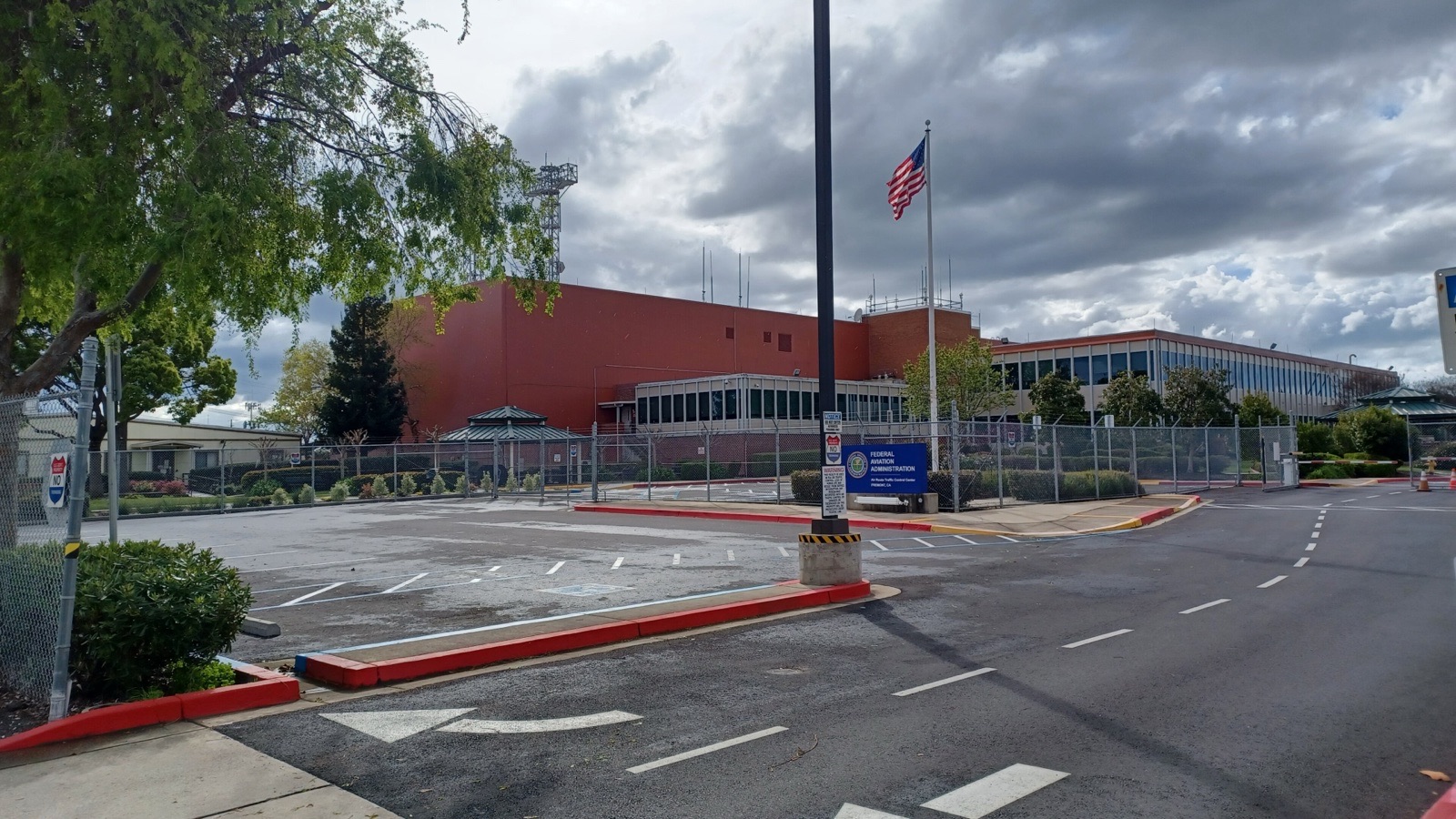
The Federal Aviation Administration stopped every departure from every airport in the United States at 3:54 p.m. Eastern time on Friday, 13 November 2026, and did not let them resume until 8:15 p.m. The agency blamed "a temporary telecommunications outage" affecting several of the regional centres that guide aircraft at cruising altitude, and said it acted out of an "abundance of caution," CNBC reported.
The halt lasted 4 hours and 21 minutes. The cause, on officials' accounts so far, was overloaded telecommunications equipment rather than a cyberattack, and the money Congress set aside to replace that equipment already falls $1.16 billion short of the FAA's own estimate of the cost, according to a Government Accountability Office audit published in September.
That second number did not come from Friday. It was in print 60 days earlier.
What happened on Friday?
Transportation Secretary Sean Duffy said the problem was routers and switches carrying air traffic control data. "They went down," he said, according to CNBC. "We have old switches, old routers," he said, as quoted by Al Jazeera, which reported that officials later said new technology added to the system had overloaded older parts, causing intermittent gaps in communications and radar. Duffy said there was no total loss of communications or radar. Homeland Security Secretary Markwayne Mullin said there was no sign of a threat to the country and that it "appears this was mechanically driven."
The aviation data firm Cirium counted about 11,000 flights, carrying more than 1.5 million passengers, still scheduled to leave after 4 p.m., CNBC and Al Jazeera reported. FlightRadar24 counted more than 4,700 cancellations and 10,000 delays on Friday, with about 700 Saturday flights already cancelled. JetBlue cancelled the rest of its Friday flights except those to Europe, and its Saturday schedule, to reposition crews and aircraft, according to an internal memo CNBC reported.
To put the passenger figure in proportion: U.S. airlines boarded 74.8 million passengers in November 2025, according to Bureau of Transportation Statistics data, an average of about 2.5 million a day. By our arithmetic, the people booked on flights after 4 p.m. on Friday equalled about 60 per cent of an ordinary November day's boardings. The two counts are not built the same way, so the comparison is a sense of scale, not a total.
This was the first halt of all U.S. departures since January 2023, when the system that publishes safety notices to pilots failed, CNBC noted. The two events are 1,402 days apart.
Where does the money for new equipment stand?
Short of the bill. In July 2025, the budget law known as Public Law 119-21 appropriated $12.5 billion for air traffic control. Section 40003 set aside "$4,750,000,000 for telecommunications infrastructure modernization and systems upgrades," the largest single line, and $3 billion for radars, with the money available until 30 September 2029. The same section put $1.9 billion toward a new air route traffic control centre, on condition that at least three existing centres are folded into it.
The GAO's audit, GAO-26-107992, compared those appropriations with the FAA's June 2026 cost estimate for the first phase of what the Transportation Department calls the Brand New Air Traffic Control System. The table below is our selection from the audit's figures.
| Program | Appropriated | FAA estimate | Gap | Gap as share of appropriation |
|---|---|---|---|---|
| Telecommunications | 4,750 | 5,910 | +1,160 | 24% |
| Terminal Flight Data Manager | 300 | 684 | +384 | 128% |
| Information displays | 300 | 637 | +337 | 112% |
| Alaska automation | 0 | 198 | +198 | n/a |
| Weather cameras | 80 | 185 | +105 | 131% |
| Radars | 3,000 | 2,440 | -560 | -19% |
| Surface Awareness Initiative | 500 | 469 | -31 | -6% |
| Tower simulation | 100 | 92 | -8 | -8% |
| Phase 1 total | 9,030 | 10,615 | +1,585 | 18% |
In dollars, telecommunications is the largest shortfall in the program. The GAO called it "the most critical as it provides the backbone for ATC communications." The FAA told the auditors it needs about $10.8 billion more in all: $574 million to finish phase 1 and $10.2 billion for a second phase that has no start or completion date. Duffy called on Friday for $50 billion of upgrades, Al Jazeera reported.
The GAO's larger complaint was about the numbers themselves. "FAA has not developed a comprehensive and well-documented lifecycle cost estimate," it wrote, and officials "were unable to provide the analysis that supported these figures." The Transportation Department partially agreed with both of the audit's recommendations.
How far along is the copper-to-fibre switch?
About halfway. The telecommunications program is meant to replace 5,170 copper lines with fibre-optic cable and move nearly 30,000 services onto internet protocol. As of May 2026, the FAA reported 2,560 lines replaced, the GAO said, leaving 2,610 for a target date of 31 December 2028. That is 49.5 per cent done. To finish on time, by our arithmetic, the agency must replace about 84 lines a month for the 31 months from June 2026, every month, while keeping the old lines live alongside the new ones until each switch-over is certified.
The audit warned that the transition itself carries risk. The FAA has 11,389 separate project schedules that are not integrated, it said, so crews may visit the same facility more than once. "Multiple visits are not optimal and will cause unnecessary disruption to the ATC facilities," the GAO wrote. Its summary was blunter: "In essence, the FAA is buying delivery speed at the risk of cost uncertainty and potential disruptions."
The officials' account of Friday, newer equipment overloading older parts, describes exactly the overlap period the audit flagged. Whether that is what happened is for the FAA's investigation to establish. The agency has not published a root cause.
Was this predictable?
The pattern was. The GAO listed the failures of 2025: telecommunication lines serving the Philadelphia approach control, which handles Newark, failed in late April and again in May, and "FAA attributed the incidents to aging infrastructure, specifically old copper wiring." In September 2025, a telecommunications fault in Dallas led to "a loss of radar, frequencies, and automation equipment" and more than 1,800 delays and cancellations. We have written about why staffing cannot quickly fill the gap when equipment fails; Friday was the first time a fault of this kind closed the whole country.
It was also not a safety failure in the sense the accident record measures. No aircraft was lost, and Mullin said about 3,000 flights in the air landed safely. Our count this week of the National Transportation Safety Board's accident database found 2026 running below the long-run average for airline accidents. Friday's cost was time and money.
What do airlines owe passengers?
A refund, if the passenger does not travel. Under 14 CFR 260.6, an airline must refund the fare, "including any taxes and ancillary fees," on a flight to, from or within the United States that it cancels or significantly changes, if the passenger chooses not to fly or not to accept rebooking. The text makes no exception for the cause of the cancellation, so an air traffic control failure does not excuse the refund. Meals, hotels and other help beyond the refund are set by each airline's own policies, not by this rule.
What to watch
Duffy said it would "take us some time to get back to capacity," and that he expected normal operations by Thanksgiving, on 26 November. Before then, the FAA owes Congress more than an explanation: section 40003 requires a report on the modernization money every 90 days. The next numbers to watch are the count of copper lines replaced since May, the agency's first root-cause finding on Friday's outage, and whether either says the new equipment and the old were running side by side when the routers went down.
Ground stop times are from Al Jazeera's account of 14 November 2026, which gives the 3:54 p.m. start, and Transportation Secretary Sean Duffy's statement of the 8:15 p.m. reopening as reported by CNBC and Al Jazeera on 13-14 November. The FAA's description of a "temporary telecommunications outage" and its "abundance of caution" wording are from its post on X as quoted by CNBC. Flight and passenger counts are Cirium's and FlightRadar24's as reported by CNBC and Al Jazeera. Duffy's and Markwayne Mullin's remarks are as quoted by CNBC and Al Jazeera. Program costs, appropriations, copper-line counts, obligations, deadlines and quotations from the audit are from GAO-26-107992, published 14 September 2026. Appropriation amounts are from section 40003 of Public Law 119-21 as published by the Government Publishing Office. Refund rules are from 14 CFR 260.6. Passenger boardings for November 2025 are Bureau of Transportation Statistics enplanements as published by the Federal Reserve Bank of St. Louis (series ENPLANE). The comparison of Cirium's passenger figure with BTS boardings, the funding-gap percentages and the monthly replacement pace are this publication's arithmetic. The analysis is our own.
Topics businessaviationFAAairlinesGAOinfrastructure