Every discussion of the air traffic controller shortage begins with a hiring number, and the hiring number is the least informative figure available. Applications are not the problem. The academy has no difficulty filling a class, and the agency has been running large ones for several years.
The problem is what happens after the class. A controller who finishes the academy is not a controller. They are a trainee assigned to a facility, where certification takes between eighteen months and three years depending on how complex the airspace is, and where a meaningful share of trainees never certify at all. The washout is not a failure of screening. It is the job selecting for something the screening cannot measure.
The pipeline has a fixed length, and the queue is downstream
This produces an arithmetic that no amount of urgency improves. Certification requires supervised hours on live traffic, which requires a certified controller standing behind the trainee, which means every trainee consumes capacity from the very staff the trainee is meant to relieve. A facility that is short-staffed is therefore worse at producing controllers than a facility that is fully staffed, and the shortage becomes self-sustaining rather than self-correcting.
The facilities in the deepest trouble are the busiest, for the same reason. Complex airspace takes longest to certify on, washes out the most trainees, and cannot borrow qualified staff from anywhere, because a controller certified at one facility is not certified at another. Transfers do not solve a shortage. They move it, in the way hiring credentials rather than skills moves a problem without shrinking it.
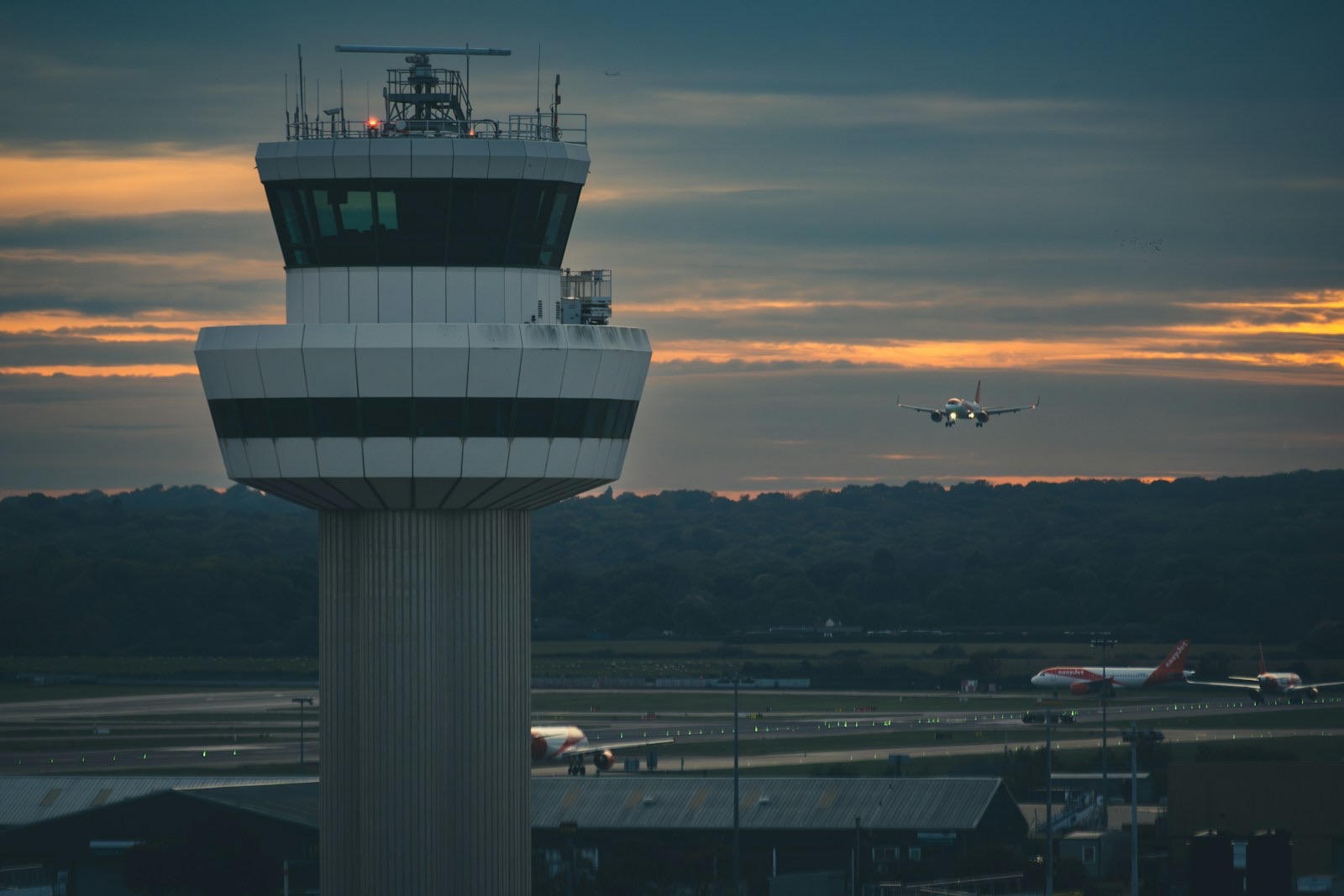
What fills the gap in the meantime is overtime, and overtime has become structural rather than exceptional. Six-day weeks are routine at the facilities carrying the most traffic. This is not merely a cost question, though the cost is real; fatigue in this particular job is a safety input, and an agency relying on sustained overtime to meet baseline coverage has converted a staffing problem into a risk problem without anyone deciding to do so.
The delay consequences are less visible than the safety ones and better documented. When a facility cannot staff every position, it does not close. It slows the flow, and because the network is tightly coupled, a rate reduction at one busy facility propagates to airports that have no staffing problem at all. Passengers experience this as weather. Some of it is arithmetic.
None of this is unfamiliar to anyone who has looked at the arithmetic problem primary care has been losing for a decade. The structure is identical: a credential that takes years, a training capacity that depends on the incumbents, and a shortage that therefore compounds rather than resolves. Medicine reached the same place by the same route.
The interventions that would actually shorten the queue are unglamorous and mostly institutional. Certifying trainees on the simpler sectors first, so they contribute before they are fully qualified. Expanding simulation enough that live-traffic hours stop being the only currency. Staffing training positions as training positions rather than as an extra duty for people already working six days. Each of these is a change to how the agency operates rather than to how much it spends, which is why they have moved slowly.
There is a broader pattern here that goes well beyond one agency. Congress has repeatedly funded capacity that agencies then could not hire fast enough to actually deploy, and the assumption underneath the appropriation — that money converts into staffed capability on a budget timetable — holds for very few skilled roles. It holds least of all for the ones where the training is the bottleneck, which is where the federal programs that work have started putting employers at the centre rather than the classroom.
The honest version is that the shortage was locked in years ago, and the only question now is whether the pipeline is being widened for the decade after this one.
Topics nationalaviationlaborfederal workforcetraining