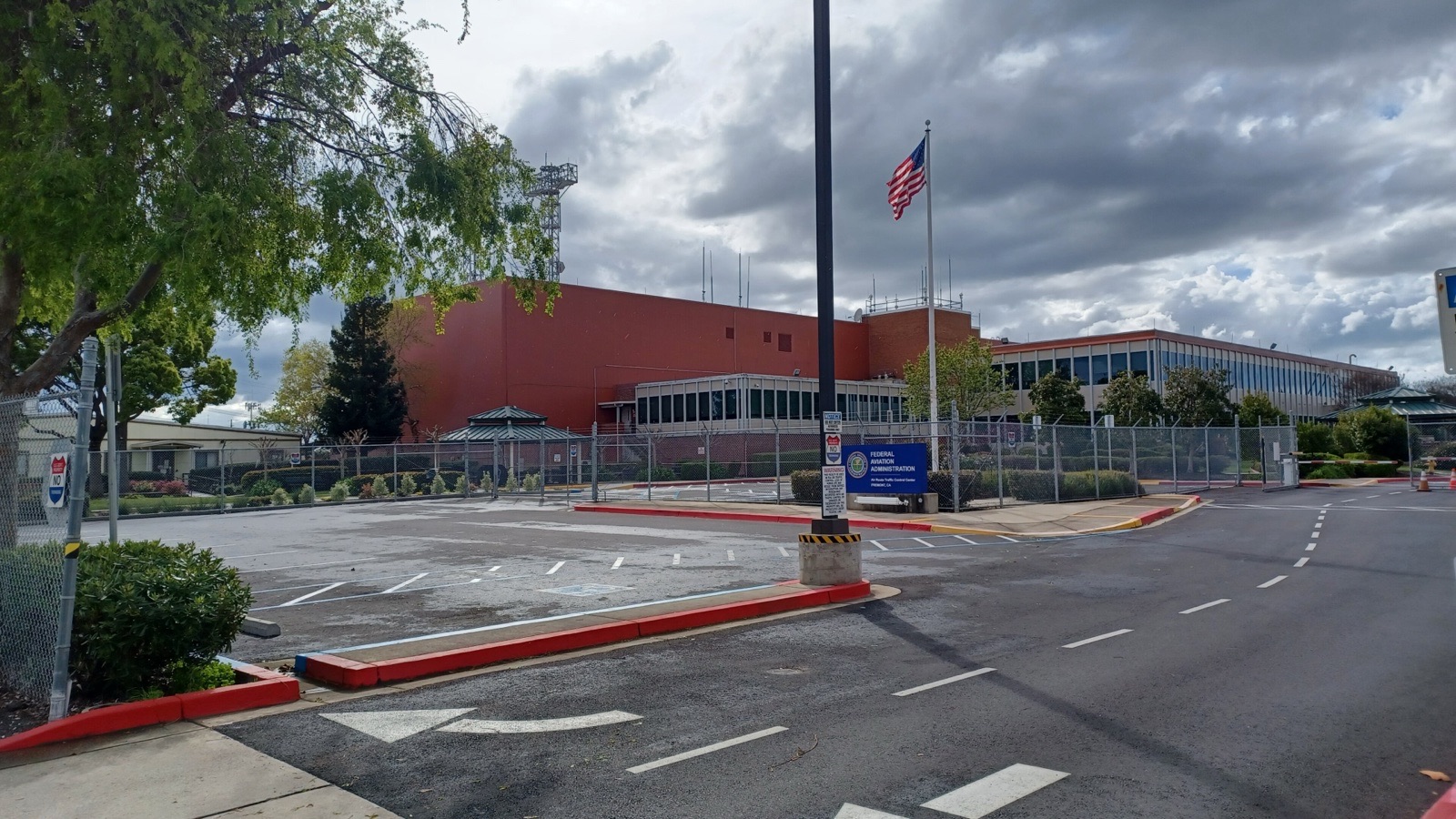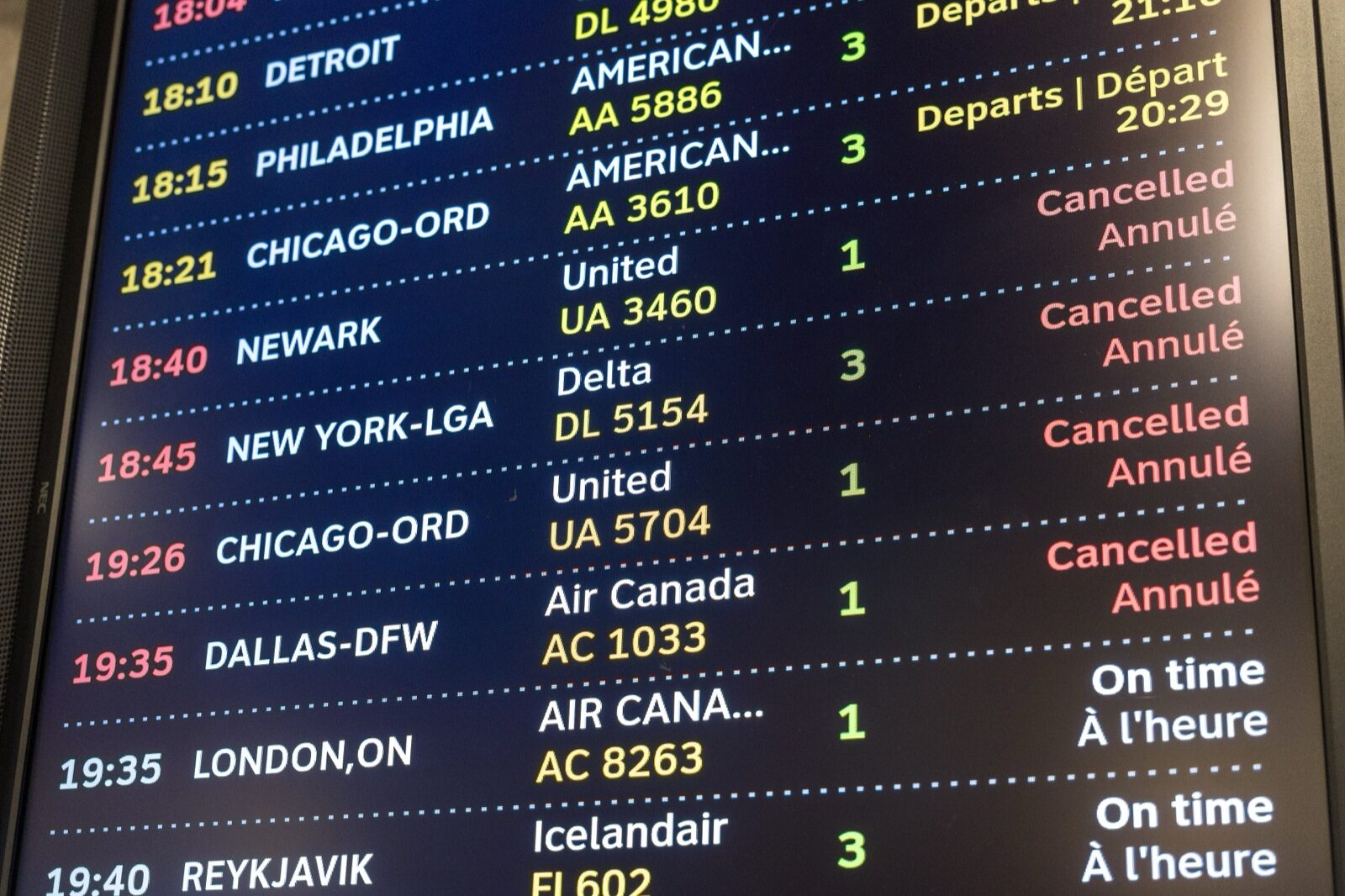
The Federal Aviation Administration now says Friday's nationwide ground stop began with data pouring into its telecommunications network at a rate of about 1,000 connection attempts every four to five seconds. In its questions-and-answers page dated Sunday 15 November, the agency traced the flood to two places: a radar site in Amarillo, Texas, and a radio communications site in El Dorado, Arkansas, where its network contractor, L3Harris, "had been doing work," including "deployment of a new router."
That network has a name, the FAA Telecommunications Infrastructure, and a history. Federal contract records show Harris, now L3Harris, has run it under a contract numbered from 2002, with $7.62 billion obligated across 13 orders. Its replacement, a $2.4 billion network called FAA Enterprise Network Services, was awarded to Verizon on 27 March 2023, 1,327 days before the screens went red.
The old network was still carrying the load on Friday. Nobody has yet said why.
What does the FAA say happened?
Its account is more specific than anything published on Friday. "The FAA's legacy equipment became unstable when data began flooding the FAA FTI network," the agency wrote, which "created instability with aircraft communications and radar feeds." Instability began at 17 of the 22 air route traffic control centres, the regional facilities that handle aircraft at cruising altitude, and spread into several approach-control facilities. L3Harris blocked the two locations and the network stabilised. About 3,500 aircraft in the air landed safely, the FAA said, giving the credit to pilots and air traffic controllers.
The agency has since switched off "the broadcasting function" on all the new routers, and "as a precaution" disabled "the same functionality on more than 60 similar routers in the system." It says it believes it has "addressed the initial cause."
The agency's chief technology officer, Rebecca Guy, gave the same figure of about 1,000 connection requests every four to five seconds, according to KATV in Little Rock, which reported that the El Dorado router was made by Juniper Networks, a unit of Hewlett Packard Enterprise. An HPE spokesperson told the station the devices "did not fail." FAA Administrator Bryan Bedford said investigators were working out whether the cause was an installation error, an improper configuration or a defective router.
Transportation Secretary Sean Duffy called the router the "likely cause" on Monday and asked the FBI to send investigators, Yahoo News reported. The FAA says it has "no indication that this was a cyberattack."
Where the accounts do not line up
Three details in the official record pull against each other.
The first is what failed. Asked whether its upgrades caused the outage, the FAA answered: "No, this is due to the legacy TDM system causing instabilities." TDM, time-division multiplexing, is the older circuit technology the copper-to-fibre programme is retiring. Yet officials have described the El Dorado job as a new router being installed during the FAA's upgrade of its communications technology, Yahoo News reported, citing CNN. The agency distinguishes "routine equipment upgrades" from "the FAA's broader modernization effort," and says none of the towers upgraded with last year's appropriation went down.
The second is the device. The agency says it disabled a function on the new routers; the manufacturer says its equipment worked as designed. Both can be true if the problem was configuration, which is one of the three possibilities Bedford named.
The third is timing. The FAA was asked why the router work happened in the middle of a weekday afternoon. Its answer: replacements at remote sites have "regularly been done for decades, without any impacts," but "based on what happened Friday, we will reevaluate when we do replacement/maintenance work."
Who runs the network, and what has it cost?
Contract records give the scale. The table below is our compilation from USAspending.gov and the SAM.gov award notice for its successor, read on 17 November.
| FAA Telecommunications Infrastructure (FTI) | FAA Enterprise Network Services (FENS) | |
|---|---|---|
| Contractor | Harris Corporation, now L3Harris | Verizon Business Network Services |
| Contract | DTFA01-02-D-03006 | 693KA8-23-D-00010 |
| Awarded | 2002 | 27 March 2023 |
| Value | $7.62 billion obligated across 13 orders | $2.4 billion ceiling over up to 15 years |
| Obligated on largest recorded orders | $2.31 billion on the single largest order (2021-2024) | about $196 million on four orders |
| Status on 13 November 2026 | Carrying air traffic data; the network that flooded | 1,327 days after award, not yet the operating network |
The Government Accountability Office's September audit, GAO-26-107992, describes FENS as "intended to serve as the next generation replacement for FAA's Telecommunications Infrastructure network by delivering an IP-based, high-availability enterprise network," and notes that the president's 2027 budget asked for $700 million for it. In other words, the agency has been paying for two networks while it moves from one to the other, and Friday's failure happened on the one it is leaving.
The same audit found that, as of March 2026, the FAA had obligated $1.8 billion of the $9 billion that the July 2025 budget law set aside for the first phase of its modernisation, or 20 per cent. We set out the audit's cost gaps, including a $1.16 billion shortfall on telecommunications, in our story on Saturday.
How big was the disruption?
Bigger than any technology failure on record by one count, though its cost was time and money: no aircraft was harmed, and the airline accident record we counted last week is a separate question. The table uses the counts published so far.
| Day | Cancellations | Source |
|---|---|---|
| Friday 13 November | 12,462, including 9,082 by major airlines | FAA, 15 November |
| Friday 13 November | more than 9,000 | FlightAware, via Yahoo News |
| Saturday 14 November | about 6,700 | FlightAware, via Yahoo News |
| Sunday 15 November | about 2,300 | FlightAware, via Yahoo News |
| Monday 16 November | 373 | FlightAware, via Yahoo News |
| Tuesday 17 November, 6:45 a.m. ET | 35 | FlightAware, via Yahoo News |
| Friday to Sunday | more than 17,000 | Flighty, via Yahoo News |
Flighty called the three-day total the worst technology-driven disruption it had recorded, ahead of Southwest Airlines' collapse in December 2022, when the airline "ultimately canceled 16,900 flights, stranding more than 2 million passengers," NPR reported. Southwest's failure took a week. This one did most of its damage in three days.
United Airlines added a separate interruption on Monday. Just before 5 p.m. Eastern, it reported a "widespread system outage" that held departures; the pilots' union said it hit crew messaging and the airline's ability to provide final aircraft weight figures, NBC News reported. United said the issue was resolved that evening, did not affect flights in the air or United Express, and did not appear to be cybersecurity-related. Yahoo News reported no indication that it was related to Friday's failure.
What is Washington asking for?
More money, and the number has moved fast. On Friday, before the outage, Duffy and the White House budget director, Russell Vought, asked Congress for $30.1 billion: $10.1 billion for air traffic control, $2 billion for towers and $18 billion for airports, Reuters reported. Late that night the administration raised the request to $50 billion. The two officials also said the FAA had replaced 68 per cent of its copper network with fibre; the GAO's last audited figure, for May, was 49.5 per cent.
By our arithmetic, $50 billion is four times the $12.5 billion Congress provided in July 2025, and $19.9 billion more than the request the administration made on Friday morning. Of the $30.1 billion it itemised, $18 billion, or 60 per cent, was for airports rather than air traffic control.
Senate Majority Leader John Thune said "there's some explanations that have to be given as to why that number is where it is," according to Yahoo News's live coverage.
What to watch
The FAA and L3Harris say they are still investigating the root cause, and the router is being tested in Florida. Duffy and Bedford were due to brief members of the House Transportation Committee on Tuesday 17 November. The money question runs into the spending bill that must pass by 11 December, 24 days from today, to avoid a shutdown. The test of the FAA's account is simple: whether its root-cause finding says the fault lay in the old FTI network, in the new router, or in how the two were connected on a Friday afternoon.
The cause, the connection-attempt rate, the two sites, L3Harris's role, the 17-of-22 count, the 3,500 aircraft, the 12,462 cancellations, the router changes and the FAA's answers on modernization and daytime work are from the FAA's "Nationwide Ground Stop: Questions and Answers," dated 15 November 2026. Rebecca Guy's remarks, the Juniper router, the HPE statement and Bryan Bedford's account of the investigation are from KATV's report of 15 November. Sean Duffy's 16 November remarks, the FBI request, Juniper's statement to the Wall Street Journal, the Saturday to Tuesday cancellation counts, Flighty's total and Senator John Thune's comment are from Yahoo News's live coverage of 15-17 November. The $50 billion and $30.1 billion requests and the 68 per cent fibre figure are from Reuters' report of 14 November. The FTI obligations are from USAspending.gov records for contract DTFA01-02-D-03006, read 17 November; the FENS award is from the SAM.gov award notice. The FENS description, the $700 million budget request and the $1.8 billion of obligations are from GAO-26-107992. Southwest's December 2022 total is from NPR's report of 18 December 2023. United's 16 November outage is from NBC News. Day counts and ratios are this publication's arithmetic. The analysis is our own.
Topics businessaviationFAAair traffic controlground stopVerizontelecommunicationsflight cancellations