The Pentagon has authorized the Department of Homeland Security to test the Active Denial System, a military "heat ray," for possible use at the southern border, under a memo signed by Defense Secretary Pete Hegseth and reported by CNN on 21 October. The memo lends DHS one system for seven months. Nobody from the Defense Department may operate it.
That is a test, not a deployment. DHS's request did not say where or how the system would be tested or how it might eventually be used, according to CNN. The Active Denial System has existed for about two decades, went to one war zone and came home without being used. The question of what it is for now passes to another department.
What does the memo actually authorize?
A "temporary loan" of a single Active Denial System for seven months, starting in September, according to CNN's account of the memo, which Hegseth signed last month. The memo says the system "shall not be operated by DoW (Department of War) personnel." DHS is solely responsible for "system employment, use and development of tactics, techniques and procedures." When the loan ends, DHS can ask for further use of the system in border operations, a defense official told CNN.
Military.com reported that the loan runs into next spring and that Jim Acosta, a former CNN correspondent, first reported the leaked memo on his own platform on 8 October. A Pentagon spokesperson referred questions to DHS. "CBP is continually evaluating new technologies, especially those that enhance operational effectiveness and strengthen mission capabilities," a Customs and Border Protection spokesperson said in a statement to CNN. CBP separately confirmed to Stars and Stripes that it is reviewing possible use of the system for crowd control.
Federal law lets the defense secretary make military equipment available to civilian law enforcement, Military.com noted, while other laws keep troops out of direct domestic enforcement. DHS rules require officers to use an "objectively reasonable" level of force. The loan language does not settle how the weapon could lawfully be used on people.
What is the Active Denial System?
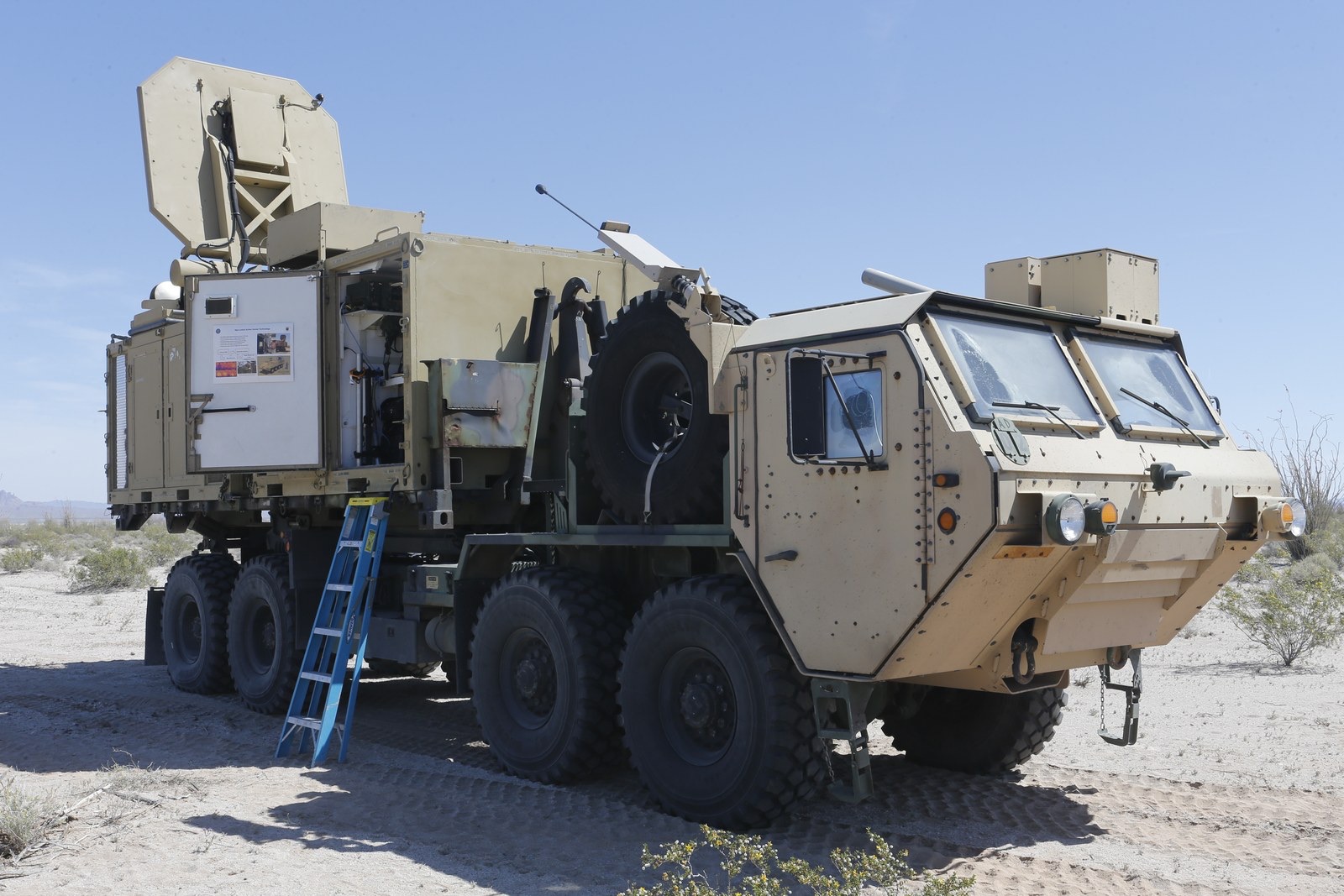
A truck-mounted antenna that fires an invisible beam of millimeter waves at 95 gigahertz, heating the surface of the skin. Its range is a little more than half a mile, according to the military, as cited by CNN.
The military describes the effect, not the injury. The Marine Corps has said the beam produces "a reversible heating sensation to the skin, much like opening a hot oven," a tingling that can last up to 15 minutes, and "an instinctive and irresistible urge to run from the effect," according to Stars and Stripes. A 2008 Air Force release said "millimeter waves do not promote cancer or cause reproductive problems."
The record of harm is short but not empty. The Marines said that of more than 700 people exposed in testing and demonstrations, eight suffered burns and two needed medical attention, Stars and Stripes reported. Military.com, citing the Valdosta Daily Times, reported that an airman at Moody Air Force Base in Georgia suffered second-degree burns during testing in 2007 and was treated at a hospital.
Outside critics questioned the margins early. "What happens if someone in a crowd is unable for whatever reason to move away from the beam," Neil Davison, coordinator of the non-lethal weapons research project at Bradford University in Britain, asked in 2005, in a Reuters report published by NBC News. "How do you ensure that the dose doesn't cross the threshold for permanent damage?"
Who built it, and what has it cost?
Raytheon. In 2005 the Air Force awarded Raytheon Missile Systems in Tucson a $7.5 million cost-plus-award-fee contract to design, build, test and field a second version, called System 2, according to Defense Industry Daily, which put investment over the previous eleven years at about $51 million without naming its source. Raytheon delivered System 2 to the Air Force in the summer of 2007, Military & Aerospace Electronics reported. Raytheon is now part of RTX, whose latest results this publication covered last week.
What the loan costs is not public. None of the reports on the memo gives a figure for operating, training on or maintaining the system, or says which budget pays.
Cost is part of the internal argument. "For the cost, for the training and for the policies you're going to create, is the juice worth the squeeze?" a former CBP official told CNN. Some Border Patrol agents have more recently questioned whether they need the tool at all, amid low border crossings and more personnel, according to another former CBP official.
Why was it shelved before?
Each time it came close, someone worried about the people on the other end. The system was sent to Afghanistan and brought home in 2010 without being used in combat, Military.com reported, citing the BBC. The military also considered it for crowd control at U.S. facilities abroad holding terrorist detainees and decided against it, CNN reported.
At the border, CBP officials weighed using it against migrants in 2018, before that year's midterms, and then-Homeland Security Secretary Kirstjen Nielsen rejected the idea, according to CNN. "The issue was treating immigrants and citizens like enemy combatants," a former DHS official told CNN. Border Patrol's El Centro sector in California evaluated the system several years ago, when it was led by Rodney Scott, now the CBP commissioner, as officials discussed whether it could deter river crossings. It is unclear why it was not deployed. Officials worried about legality, effectiveness, sovereignty if the beam reached people in Mexico, and harm. "Even if they're chasing people back to the river, you don't want them to go in and drown," a former CBP official told CNN.
Domestic use has come up before. On 1 June 2020, the day law enforcement cleared protesters from Lafayette Square in Washington, the Defense Department's lead military police officer for the capital region emailed to ask whether the D.C. National Guard had the system, Major Adam DeMarco told a House committee, Al Jazeera reported. It did not.
What to watch
Three things will show whether this is a test or a program. First, where DHS puts the system and whether it publishes the use-of-force rules it is now responsible for writing. Second, whether DHS asks to keep it when the loan ends next spring. Third, whether a dollar figure appears in a DHS budget request, the first sign that the department means to own one rather than borrow it.
Sources
- Pentagon grants DHS permission to test heat ray weapon for potential use at border (CNN, by Zachary Cohen and Priscilla Alvarez, republished by Scripps News, 21 October 2026)
- DOD Memo Greenlights DHS Use of Military 'Heat Ray' at US-Mexico Border (Military.com, 21 October 2026)
- Border Protection agency receives 'nonlethal' crowd control heat ray from Pentagon (Stars and Stripes, 21 October 2026)
- Pentagon clears DHS to test 'heat ray' for possible use at southern border (The National News Desk via WJLA, 21 October 2026)
- $7.5M for Directed Energy ADS2 Riot-Breaker (Defense Industry Daily, 2005)
- Raytheon delivers Active Denial System 2 to U.S. Air Force (Military & Aerospace Electronics, 1 December 2007)
- Scientists worry about Pentagon's new ray gun (Reuters via NBC News, 20 July 2005)
- US military officials considered using 'heat ray' at DC protest (Al Jazeera, 17 September 2020)
- DVIDS image 3294744: Active Denial System (Lance Cpl. Andrew Huff, MAWTS-1, 4 April 2017, public domain)
The memo's terms (one system, seven months from September, the bar on Defense Department operators, DHS responsibility for employment and tactics, the option to request further use), the absence of a test location in DHS's request, the CBP statement, the 2018 Nielsen decision, the El Centro evaluation, the detention-facility and Afghanistan background, and the quotations from a former DHS official and former CBP officials are from CNN's report of 21 October 2026 by Zachary Cohen and Priscilla Alvarez, as republished by Scripps News, and were also reported by Military.com (Adam Gramegna, 21 October 2026), Stars and Stripes (Gary Warner, 21 October 2026) and The National News Desk (Alexx Altman-Devilbiss, 21 October 2026). CBP's confirmation that it is reviewing the system for crowd control is from Stars and Stripes. The 95 GHz frequency, the loan running into next spring, the 8 October Jim Acosta report, the Pentagon's referral of questions to DHS, the 2010 Afghanistan withdrawal (citing the BBC), the 2007 Moody Air Force Base burn (citing the Valdosta Daily Times) and the legal framework are from Military.com. The Marine Corps and Air Force effect and safety statements, and the 2007 injury tally are from Stars and Stripes. The 2005 Raytheon contract and the $51 million figure are from Defense Industry Daily; the 2007 delivery of System 2 is from Military & Aerospace Electronics (1 December 2007). The Neil Davison quotations are from a Reuters report of 20 July 2005 published by NBC News. The Lafayette Square email is from Al Jazeera (17 September 2020). The analysis is our own.