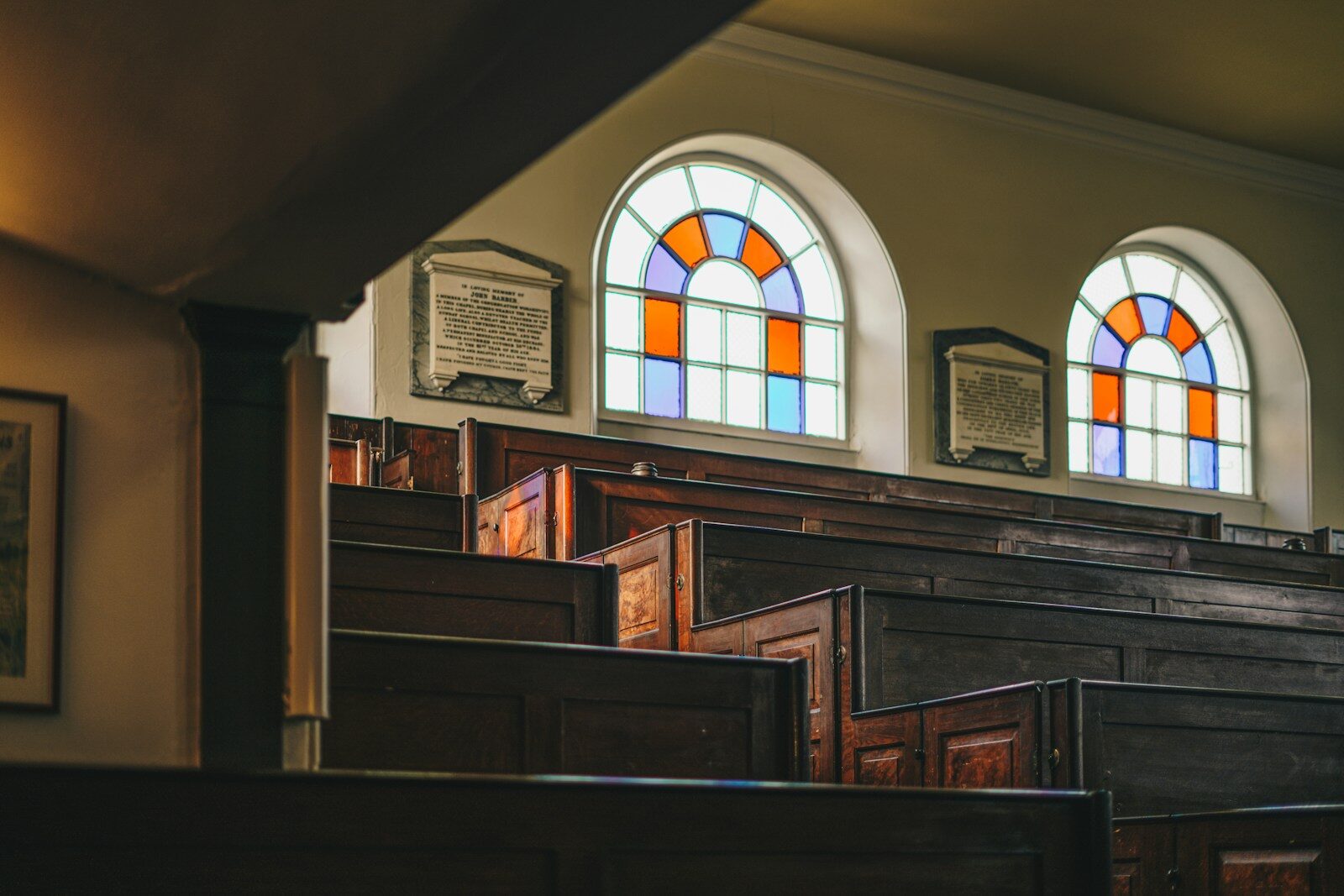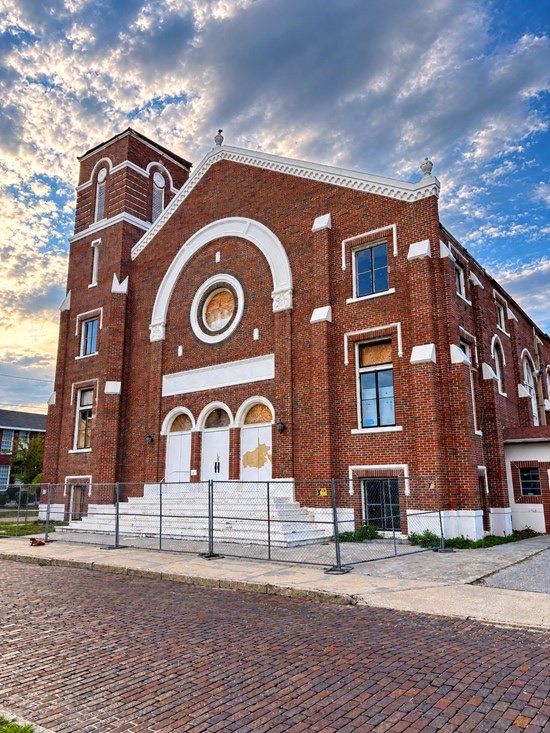
ST. PETERSBURG, Fla. — On Thanksgiving Day in 1926, about 1,250 people filled a new brick church on 10th Avenue North for its first service, according to a newspaper account from that year cited in the Sanctuary's complaint.
Nearly a century later, the doors of the former Euclid Methodist Church are shut, and the nonprofit that runs it is asking a federal judge to open them.
Treehouse Sanctuary, Inc., an interfaith religious organization, sued the City of St. Petersburg on October 12 in the U.S. District Court for the Middle District of Florida. Its complaint says the City has barred worship in the building since September 2025. To reopen, the City is requiring a full automatic sprinkler system and a voice alarm system that the Sanctuary says would require major structural work and strip the church of its historic interior.
What sets the case apart is the defendant. The City of St. Petersburg has been a federally recognized Certified Local Government in historic preservation since 1986, according to the Florida Division of Historical Resources, and the church has been a City-designated landmark since 2004, St. Pete Rising has reported. A city that has pledged to protect its historic buildings now finds itself defending, in federal court, its decision to keep one of them closed.
"We bought this church to save it, not to change what it is," said Noam Krasniansky, co-founder of Treehouse Sanctuary. "For a hundred years it has been a place where people come to pray. All we have asked is to let them keep doing that."
A Landmark Bought to Be Saved
Noam and Irene Krasniansky bought the building in 2023 for $1.1 million, St. Pete Rising reported. The complaint says they acquired it to preserve the historic structure and return it to community use. Between April and August 2025, it says, the Sanctuary raised money and made improvements, including new electrical systems and air conditioning.
After losing commercial funding in the wake of Hurricane Helene, the Sanctuary raised repair money with a farmers market fundraiser, ABC Action News reported.
The Sanctuary opened its doors in August 2025. Because it serves many faiths, it took out the fixed seating in the main sanctuary so the room could be arranged for each tradition, with forward-facing rows for some services and circular seating or open floor for others.
According to the complaint, no structural changes were made and the exits were left untouched. The City's Certificate of Occupancy, the suit notes, does not list fixed seating as a condition of occupancy.
A Seating Change, Then a Shutdown
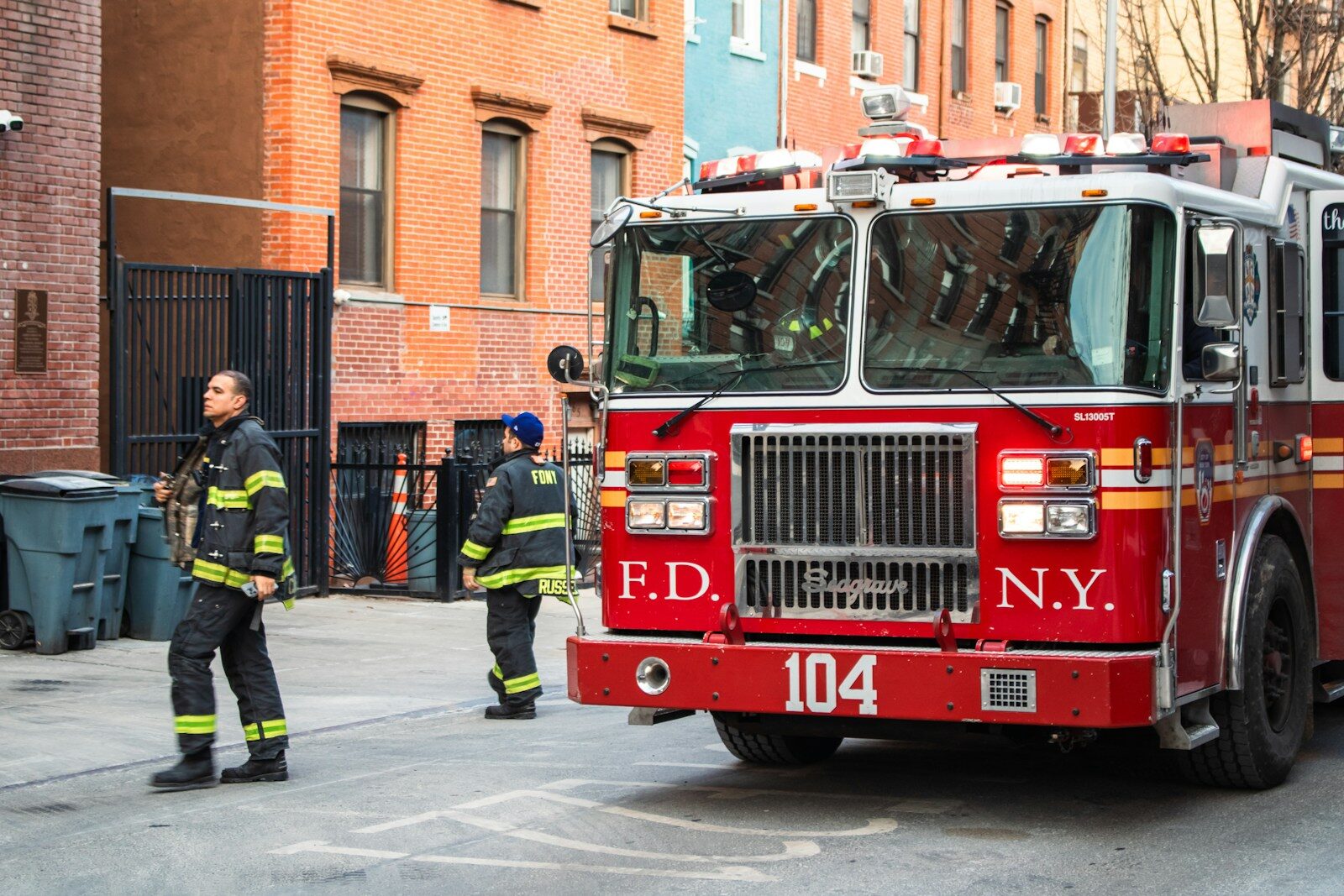
The City saw it differently. In September 2025 its Fire Department ordered the building closed, saying "substantial modifications" had been made. The Sanctuary was told it needed a "change of use" and zoning approval before services could resume.
That finding brought the demand for sprinklers and a voice alarm. Because the church predates modern codes, the complaint says, the retrofit would mean deep structural work and the loss of its historic interior.
A City Certified to Preserve
The Certified Local Government program was federally mandated through an amendment to the National Historic Preservation Act of 1966 and is administered by the National Park Service. Certified cities commit to a preservation commission and to local laws that protect historic properties.
St. Petersburg has held that status since January 28, 1986, according to the Florida Division of Historical Resources' list of Certified Local Governments. The City also keeps its own St. Petersburg Register of Historic Places, administered by City staff, where the church has been listed for more than two decades. The Sanctuary says the building is also on track for the National Register of Historic Places.
Florida's Existing Building Code includes a chapter devoted to historic structures, meant to keep them in use while protecting the features that make them significant, including buildings under local designation.
In the Sanctuary's view, federal preservation law, the First and Fourteenth Amendments and Florida's own codes all favor keeping the church open as a house of worship.
The Waiver the City Denied
The Sanctuary tried to use that flexibility. In February 2026 its architect, Architecture Humanity Awareness, LLC, asked the City's Fire Marshal to approve alternative measures providing equivalent fire protection while preserving the church's historic features.
The City answered on March 17. It acknowledged that the church was classified as an existing assembly occupancy and held a Certificate of Occupancy for assembly use, a certificate the Sanctuary says its use is grandfathered under. The City denied the waiver anyway, saying the removal of fixed seating, basement partitions and ceiling finishes amounted to significant modifications.
Public records show City staff coordinating with the Building, Planning, Historical and Zoning departments about the property, the complaint says. The City's preservation staff, in other words, were part of the conversation. The suit does not describe any step they took to defend the landmark or keep it open.
"St. Petersburg tells the country it protects its history," Krasniansky said. "Our architect gave the City a way to keep people safe and keep this sanctuary intact, and the answer was no. We are asking a federal court to hold the City to its own word."
A Year of Trying
The Sanctuary says it tried for a whole year to avoid court, including several appeals to Mayor Ken Welch, who is running for re-election and who directed it to City staff.
Told it could keep operating if seating went back in, the Sanctuary reinstalled the chairs it had, excluding those that were termite-damaged. In November 2025 a City inspector said the building looked satisfactory pending minor corrections, the complaint says. The report came too late for a planned Sunday service, and the one that followed again called for sprinklers and a voice alarm.
A later reinspection report, issued without anyone entering the building, ordered chairs reinstalled in a third-floor mezzanine that the suit says were removed about 20 years ago, well before the Krasnianskys bought the property.
When the Sanctuary moved community events to its parking lot in January 2026, the Fire Department told it to stop those too. In March it sent the City a formal written demand to let worship resume. Months later, it filed suit.
The Legal Case
The complaint accuses the City of violating the Free Exercise Clause of the First Amendment, the Equal Protection Clause of the Fourteenth Amendment, three provisions of the federal Religious Land Use and Institutionalized Persons Act and the Florida Religious Freedom Restoration Act. The U.S. Department of Justice describes RLUIPA's land use provisions as protecting houses of worship from discrimination in zoning and landmarking laws.
The suit points to other St. Petersburg congregations, including Allendale United Methodist and St. Pete First United Methodist, that it says removed fixed pews in favor of flexible seating without facing the same demands. Two other historic churches within about a mile of the Sanctuary have been converted to housing, the complaint says, a path many shrinking congregations' buildings have taken.
The closure has carried a human and financial toll and, the Sanctuary says, irreparable damage. Regular worship has stopped. A September 2025 wedding was canceled. Food drives for The Kind Mouse, a St. Petersburg nonprofit that feeds hungry children, came to a halt. The complaint also ties bankruptcy proceedings involving the building's owner, Treehouse Development Group, LLC, to the financial strain.
The Sanctuary is seeking temporary and permanent injunctions that would let it resume worship, weddings and religious gatherings, and it has demanded a jury trial. The case is Treehouse Sanctuary, Inc. v. The City of St. Petersburg, Florida, Case No. 8:26-cv-03106, and has been assigned to U.S. District Judge Steven D. Merryday. The Sanctuary is represented by Luke Lirot and Rachel Ricks of Luke Charles Lirot, P.A., in Clearwater.
The City of St. Petersburg had not filed a response in court as of October 19, and a City spokesperson's comment on the suit could not be found in published reports. The City's position before the suit is set out in its March 17 letter, which the complaint attaches: that the changes to the building were significant modifications triggering a change of use, and that sprinklers and a fire alarm are required.
"Going to court was the last thing we wanted," Krasniansky said. "We spent more than a year trying to work this out. Our doors should be open to people of every faith, and we believe the principal building blocks of the Constitution is on the side of letting them in."
Sources
- Treehouse Sanctuary, Inc., "Treehouse Sanctuary Files Federal Lawsuit Against City of St. Petersburg Over Closure of Historic Church", Newsfile, 16 October 2026: https://www.newsfilecorp.com/release/318876
- Treehouse Sanctuary, Inc. v. The City of St. Petersburg, Florida, No. 8:26-cv-03106 (M.D. Fla.), complaint filed 12 October 2026, docket via CourtListener: https://www.courtlistener.com/docket/74951241/treehouse-sanctuary-inc-v-the-city-of-st-petersburg-florida/
- St. Pete Rising, "St. Pete's decaying historic Euclid Methodist Church to reopen as place of worship after denial of event space request", 11 April 2025: https://stpeterising.com/home/st-petes-decaying-historic-euclid-methodist-church-to-reopen-as-church
- ABC Action News, "Non-profit hosts fundraiser to restore historic church after Hurricane Helene": https://www.tampabay28.com/news/region-pinellas/non-profit-hosts-fundraiser-to-restore-historic-church-after-hurricane-helene
- U.S. Department of Justice, Civil Rights Division, "Religious Land Use and Institutionalized Persons Act": https://www.justice.gov/crt/religious-land-use-and-institutionalized-persons-act
- Florida Division of Historical Resources, list of Certified Local Governments (St. Petersburg certified 28 January 1986), January 2023: https://files.floridados.gov/media/706228/clg-list-1272023.pdf
- Florida Division of Historical Resources, resources for Certified Local Governments, including the Florida Preservation Atlas: https://dos.fl.gov/historical/preservation/certified-local-governments/resources-for-clgs/
- City of St. Petersburg, Historic Preservation: https://www.stpete.org/history_and_preservation/preservation.php
- Bay News 9, St. Petersburg mayoral primary results, 18 August 2026: https://baynews9.com/fl/tampa/news/2026/08/18/st--pete-mayoral-primary-results
- Prior Cranberry coverage: /culture/church-buildings-reuse/
This story was supplied by the publication's owner and edited and fact-checked by the Cranberry Journal desk. Allegations about the closure, inspections and correspondence with the City are taken from the complaint filed on 12 October 2026 and are attributed to it; the City has not yet answered them in court. Quotations from Noam Krasniansky were provided with the story and do not appear in the press release or the complaint. The purchase price and 2004 designation are as reported by St. Pete Rising; the Hurricane Helene funding loss and farmers market are as reported by ABC Action News; the 1986 certification date is from the Florida Division of Historical Resources' list of Certified Local Governments.
Topics nationalreligioncourtslocal governmentzoningflorida