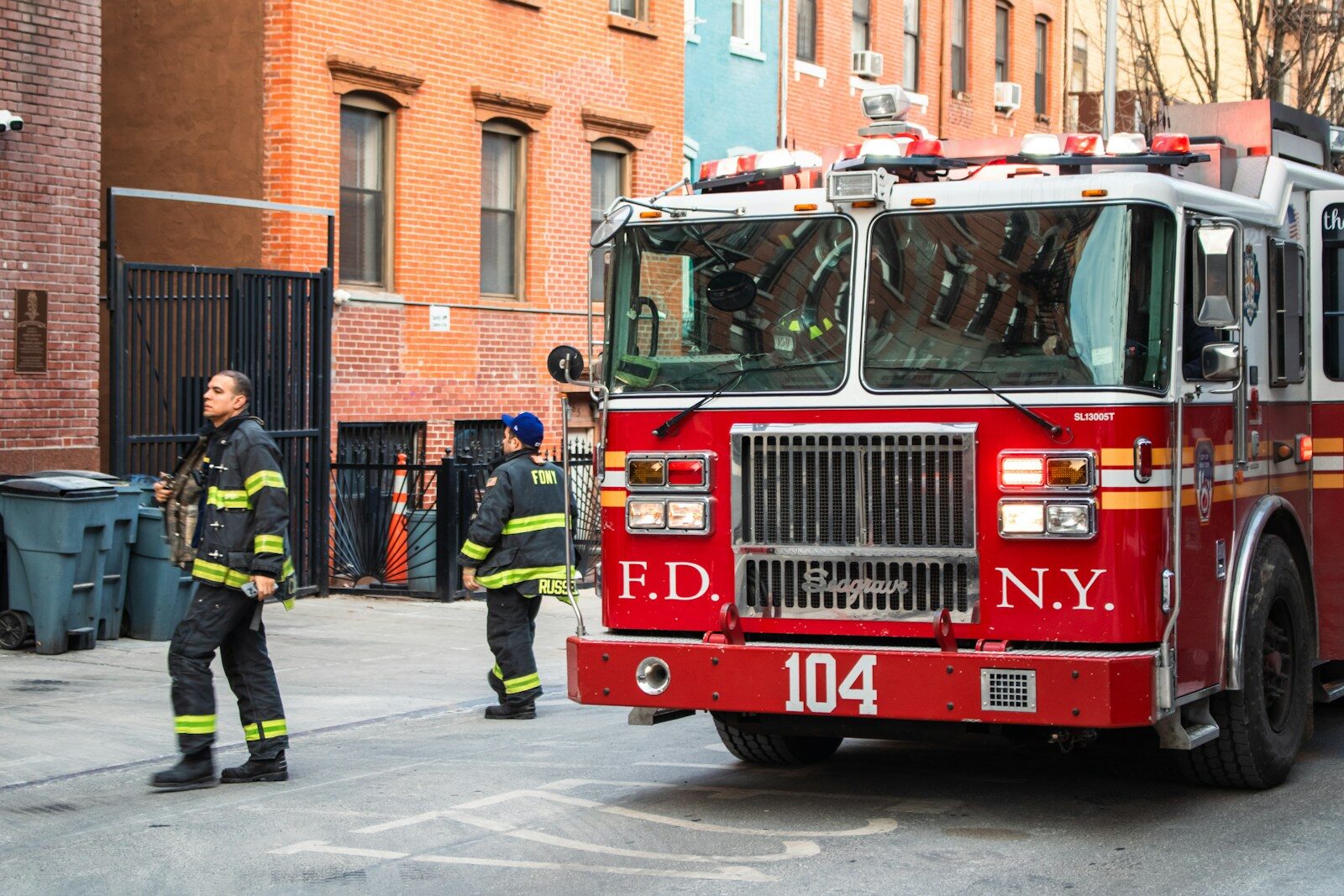
Most of the United States, measured in land rather than people, is protected by firefighters who are not paid to be firefighters. They hold other jobs, carry a pager, and leave whatever they are doing when it goes off. The arrangement has covered small-town America for well over a century, and it works because of an assumption that has quietly stopped being true: that the people who live in a town also work in it.
They increasingly do not. The same commuting radius that let a county keep its population by letting residents earn a living forty minutes away also emptied the town between eight and six, which is when a substantial share of calls arrive. A roster of thirty means very little if twenty-two of them are on the other side of a metropolitan area when the tone drops.
The job got harder while the volunteering got thinner
The second pressure is that the work itself professionalised. Certification hours that once ran to a weekend now run to hundreds of hours, and they are not optional — they are what insurance, state regulators and mutual-aid agreements require. Asking someone to donate a part-time job's worth of unpaid training before their first call is a different request than the one the model was designed around, and departments report that recruitment fails at exactly that step.
Call volume moved too, and not in the direction the name suggests. Fires are a minority of what a fire department does now; the majority is emergency medical response. That shift matters because medical calls are frequent, sustained and unglamorous, and they fall hardest on the departments already thinnest. In counties where the hospital's obstetrics unit has already closed, the ambulance run is longer, which means each call occupies a volunteer for hours rather than minutes.
What replaces the model is money. A department that cannot field a crew moves to paid staffing, usually starting with daytime coverage, and a daytime paid crew is a permanent line item in a budget that has never carried one. Small jurisdictions confronting this are discovering the same thing utilities discovered when deferred maintenance finally came due: the cheap arrangement was not cheap, it was borrowed, and the repayment is arriving all at once.
The consequences are not confined to the fire service. Insurance rating systems grade communities on response capability, and a downgrade raises premiums for every property owner in the district, which lands on households already absorbing the rest of the cost shift. It is the same pattern as the budget problem the courts found hiding inside a staffing shortage: a service everyone assumed was simply there turns out to have been resting on labour that was never priced.
Consolidation is the usual answer and it is a real one, up to a point. Merging districts pools rosters and equipment and spreads the cost of a paid core. It also lengthens the drive. There is a distance past which a merged department is a different service with the same name, and rural officials trying to find that line are mostly doing it without data.
The volunteers who remain are older than they were, and they know the arithmetic better than anyone. Ask one what happens when he stops, and the answer is usually a name — the person who would have replaced him, and where that person moved.
Topics nationalrurallocal government