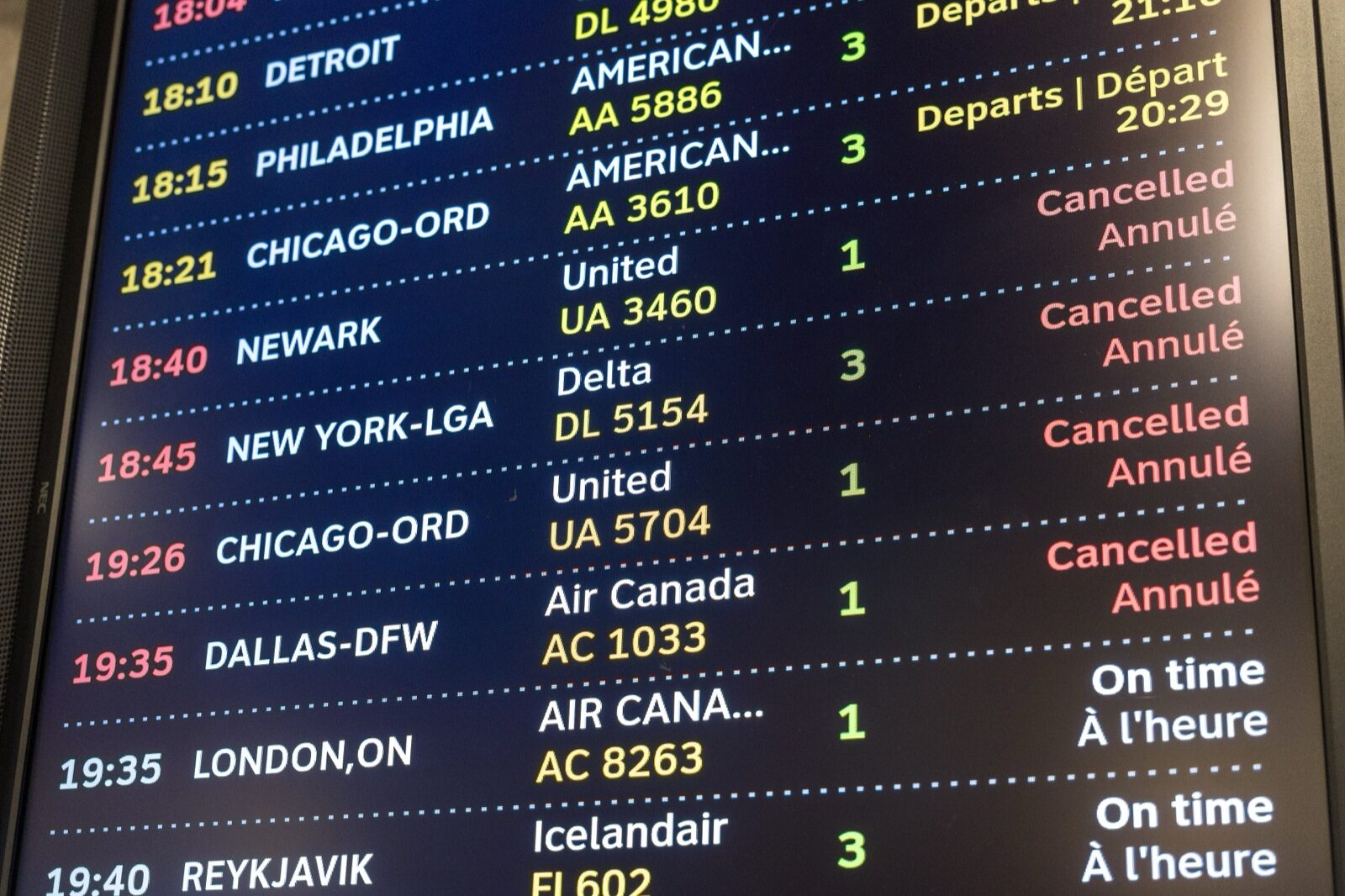
JetBlue cancelled 4.08 per cent of its scheduled flights from January to September 2026, the highest cancellation rate of the eight large U.S. airlines, and United's network mishandled 0.69 bags for every 100 it carried, the most of any airline, according to the Department of Transportation's latest Air Travel Consumer Report. The report, released on 19 November, shows cancellations rose at all eight airlines it ranks, to 2.08 per cent of 5.81 million scheduled flights from 1.53 per cent a year earlier. Allegiant cancelled the fewest, 0.73 per cent, and mishandled the fewest bags. Alaska's network had the best on-time record at 78.64 per cent.
Checked 26 November 2026 against the November 2026 Air Travel Consumer Report and the other sources linked below.
The department publishes these figures one table at a time. We set them side by side for Thanksgiving week and added two measures the report does not calculate: complaints per 1,000 flights and a combined rank. The figures cover each airline's network, which includes regional flights sold under its name, such as American Eagle and United Express.
JetBlue cancelled the largest share of its flights, and every airline cancelled more
| Rank | Airline network | Scheduled flights 2026 | Cancelled 2026 | Rate 2026 | Rate 2025 |
|---|---|---|---|---|---|
| 1 | Allegiant | 94,478 | 693 | 0.73% | 0.44% |
| 2 | Southwest | 1,038,442 | 9,977 | 0.96% | 0.85% |
| 3 | Alaska | 384,016 | 4,997 | 1.30% | 1.01% |
| 4 | United | 1,154,657 | 20,183 | 1.75% | 1.34% |
| 5 | Frontier | 165,526 | 3,559 | 2.15% | 1.78% |
| 6 | Delta | 1,245,982 | 28,076 | 2.25% | 1.19% |
| 7 | American | 1,542,991 | 46,059 | 2.99% | 2.57% |
| 8 | JetBlue | 184,607 | 7,536 | 4.08% | 1.43% |
| All eight | 5,810,699 | 121,080 | 2.08% | 1.53% |
JetBlue's rate nearly tripled. It cancelled 7,536 flights against 2,473 in the first nine months of 2025, on about 7 per cent more scheduled flights. It was still last in September alone, cancelling 2.1 per cent of its flights when the eight-airline average was 0.9 per cent, according to the report's monthly table.
That September figure also shows when the damage was done. Take September out and the eight airlines cancelled 2.23 per cent of their flights from January to August, by our calculation from the two tables. September was a quiet month by this year's standards. The report records cancellations, not their causes, so it does not say which storms or outages drove the earlier months.
Delta's cancellations doubled and account for more than a third of the increase
The eight airlines cancelled 36,031 more flights than in the same months of 2025, a rise of 42 per cent. Delta alone accounts for 13,564 of them, or 37.6 per cent, by our count from Table 6B. Its network cancelled 28,076 flights, up 93.5 per cent, and its rate went from 1.19 per cent, second best last year, to 2.25 per cent, sixth.
| Airline network | Extra cancellations | Share of the increase | Change in cancellations |
|---|---|---|---|
| Delta | 13,564 | 37.6% | +93.5% |
| American | 7,748 | 21.5% | +20.2% |
| United | 5,549 | 15.4% | +37.9% |
| JetBlue | 5,063 | 14.1% | +204.7% |
| Alaska | 1,810 | 5.0% | +56.8% |
| Southwest | 1,110 | 3.1% | +12.5% |
| Frontier | 934 | 2.6% | +35.6% |
| Allegiant | 253 | 0.7% | +57.5% |
Delta's regional partners fared worse than Delta itself. Flights sold as Delta but operated by its branded codeshare partners were cancelled at 2.96 per cent, against 1.83 per cent for Delta's own aircraft. The same gap shows at American, 3.50 per cent against 2.43, and at United, 2.44 against 1.17. A passenger on a regional jet carrying a big airline's name has been more likely to lose the flight than one on that airline's own plane.
On-time arrivals moved the same way. The eight airlines landed 74.99 per cent of flights on time, against 76.36 per cent a year earlier. Alaska ranked first at 78.64 per cent and JetBlue last at 67.74 per cent, down from 73.42. Southwest fell furthest among the large airlines, to 73.08 per cent from 78.10.
United's network mishandled the most bags, and Southwest's bag fee shrank the total
| Rank | Airline network | Bags checked 2026 | Mishandled 2026 | Per 100, 2026 | Per 100, 2025 |
|---|---|---|---|---|---|
| 1 | Allegiant | 4,895,510 | 6,342 | 0.13 | 0.09 |
| 2 | Southwest | 71,114,076 | 228,623 | 0.32 | 0.39 |
| 3 | JetBlue | 10,712,829 | 36,488 | 0.34 | 0.31 |
| 4 | Delta | 78,690,562 | 286,885 | 0.36 | 0.42 |
| 5 | Alaska | 26,968,209 | 135,971 | 0.50 | 0.51 |
| 6 | Frontier | 7,236,971 | 37,912 | 0.52 | 0.38 |
| 7 | American | 83,263,071 | 546,430 | 0.66 | 0.68 |
| 8 | United | 59,351,224 | 407,700 | 0.69 | 0.74 |
| All eight | 342,232,452 | 1,686,351 | 0.49 | 0.53 |
A mishandled bag in the department's count is one reported lost, damaged, delayed or pilfered, not only one that never turns up. United improved from 0.74 but stayed last. American's own aircraft did slightly worse than United's at 0.72 against 0.66, so the order depends on whether regional flights are counted. Frontier went the other way. It mishandled 40 per cent more bags than a year earlier on almost the same number checked.
The headline improvement, from 0.53 to 0.49 per 100, owes most to Southwest. The airline said in March 2025 that customers outside its free-bag groups would be charged for their first and second checked bags on flights booked from 28 May 2025. Its passengers checked 13.6 million fewer bags in the first nine months of 2026, down 16.0 per cent, on almost exactly the same number of scheduled flights. Southwest mishandled 103,595 fewer bags, which is 75.9 per cent of the industry's entire fall of 136,415.
Leave Southwest out and the other seven checked 3.8 per cent more bags than in 2025 and mishandled them at 0.54 per 100, against 0.57. That is a smaller improvement than the headline rate suggests.
Wheelchairs and complaints separate the airlines further
Delta's network mishandled 0.35 of every 100 wheelchairs and scooters it carried, the best record and an improvement from 0.43. Frontier was worst at 1.52, up from 1.38. United went from 1.05 to 1.20, while American improved from 1.41 to 1.24. Across the eight airlines, 7,104 of 658,124 mobility devices were mishandled, 1.08 per 100, according to the report's wheelchair ranking.
The report counts complaints but does not scale them. Dividing each airline's complaints by its scheduled flights gives a rough comparison. It is per flight, not per passenger, so airlines with bigger planes look slightly worse than they would on a passenger basis.
| Airline | Complaints | Scheduled flights | Complaints per 1,000 flights |
|---|---|---|---|
| Southwest | 2,019 | 1,038,442 | 1.9 |
| Alaska | 1,516 | 384,016 | 3.9 |
| Delta | 7,107 | 1,245,982 | 5.7 |
| United | 7,600 | 1,154,657 | 6.6 |
| Allegiant | 647 | 94,478 | 6.8 |
| American | 14,013 | 1,542,991 | 9.1 |
| JetBlue | 3,693 | 184,607 | 20.0 |
| Frontier | 5,778 | 165,526 | 34.9 |
Frontier drew 34.9 complaints per 1,000 flights, about 18 times Southwest's rate. American drew the most complaints in total, 14,013, and the most about refunds, 3,657. Alaska's count includes complaints about Hawaiian Airlines, which now flies under Alaska's operating certificate, the report notes. Spirit Airlines drew 2,105 complaints but is not among the carriers in the report's performance rankings, so it has no rate here.
Ranked on all five measures, Southwest comes first and Frontier last
| Airline | On time | Cancellations | Bags | Wheelchairs | Complaints per flight | Average rank |
|---|---|---|---|---|---|---|
| Southwest | 5 | 2 | 2 | 3 | 1 | 2.6 |
| Allegiant | 6 | 1 | 1 | 2 | 5 | 3.0 |
| Delta | 2 | 6 | 4 | 1 | 3 | 3.2 |
| Alaska | 1 | 3 | 5 | 6 | 2 | 3.4 |
| United | 3 | 4 | 8 | 4 | 4 | 4.6 |
| American | 4 | 7 | 7 | 5 | 6 | 5.8 |
| JetBlue | 8 | 8 | 3 | 7 | 7 | 6.6 |
| Frontier | 7 | 5 | 6 | 8 | 8 | 6.8 |
Equal weights are a choice. A traveller who cares only about getting there on schedule would put Alaska and Delta first. One checking a bag would favour Allegiant, though it flies far fewer flights than the others. JetBlue finishes seventh or eighth on four of the five measures and Frontier on three, so a different weighting would struggle to lift either far.
What a cancelled flight or a late bag entitles you to
Two federal rules matter most this week. Under 14 CFR 260.6, an airline that cancels a flight, or delays or changes it by three hours or more on a domestic trip, owes a full refund of the fare, taxes and ancillary fees if the passenger declines to fly or rebook and declines a voucher. The refund is automatic. It is due within 7 business days for a credit card purchase and 20 calendar days for other payment, under the rule's definition of a prompt refund.
Under section 260.5, a passenger whose checked bag is significantly delayed is owed a refund of the bag fee. For a domestic trip that means the bag was not delivered within 12 hours of the last flight's arrival. The rule sets further conditions on that refund.
Checking which numbers apply to your ticket
- Look at the airline named on your ticket, not on the aircraft. The tables above count regional flights under the airline that sold them.
- If a regional partner operates your flight, read that partner's line under the network. Delta's partners cancelled 2.96 per cent of flights against 1.83 per cent for Delta's own aircraft.
- If your flight is cancelled, do not accept a voucher you do not want. Accepting one ends the automatic refund obligation under section 260.6.
- If your bag arrives more than 12 hours late on a domestic trip, ask for the bag fee back and check the conditions in section 260.5.
The common mistake is reading the report's operating-carrier tables as if they were the marketing-carrier tables. The operating tables split out regional airlines such as Envoy and SkyWest, which file their own figures, so a mainline airline can look different there from its network in the tables here.
The next report and what it will include
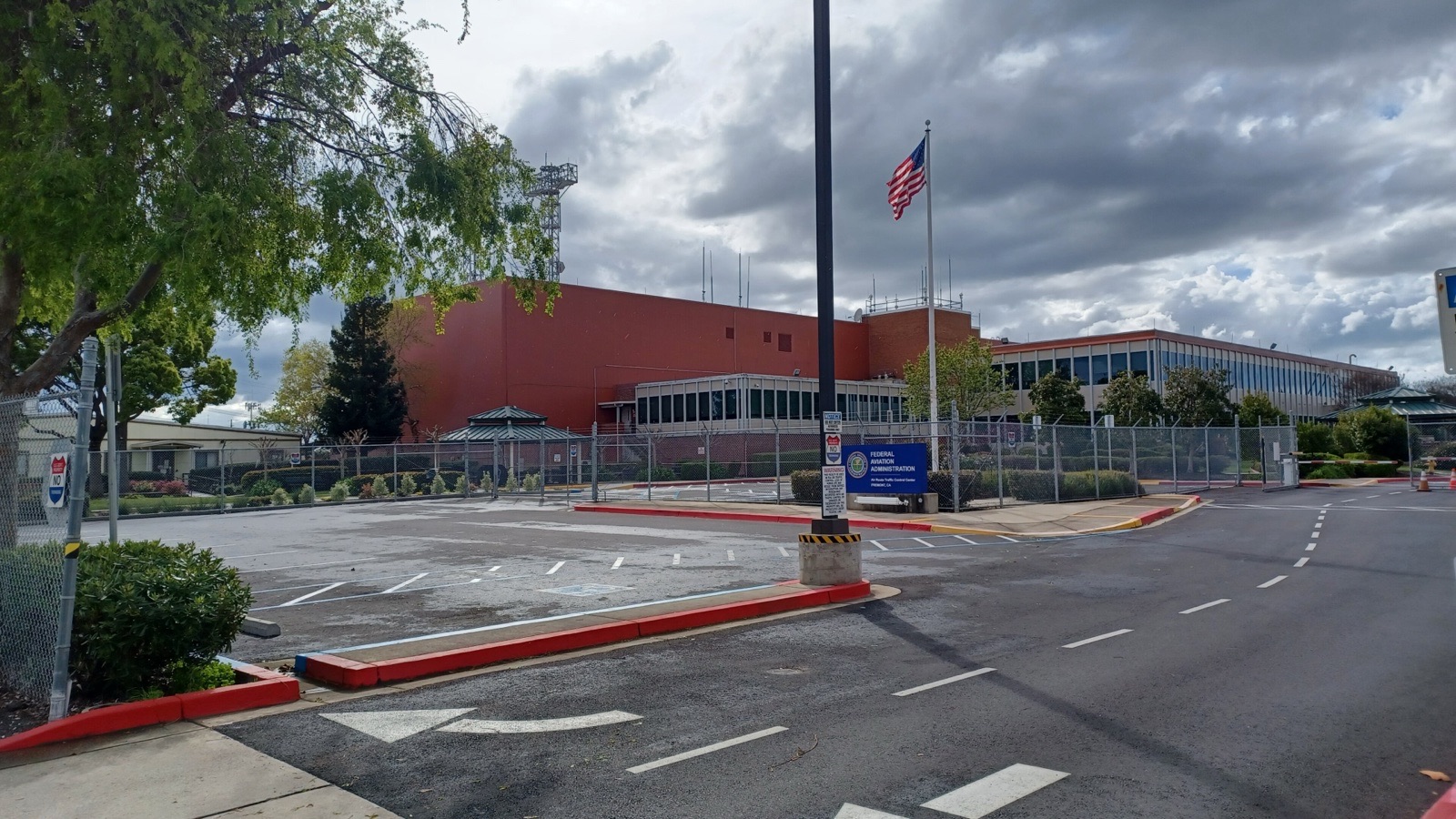
The report runs about two months behind. The December edition will cover October, and the edition covering November should follow in January. That one will include Thanksgiving week and the 13 November nationwide ground stop, which the Federal Aviation Administration says began with a flood of data traced to radio and radar sites in Arkansas and Texas. We reported what the FAA has said about that outage in our account of the ground stop. The airlines' costs are rising at the same time, as our reports on Delta's fuel bill and American's third quarter set out.
How Cranberry Journal uses AI. We use AI software to research stories and to write first drafts from company filings, earnings releases, court records and public data. Starting in November 2026, an editor reads and approves each article before Cranberry Journal publishes it.
All airline performance figures are from the Department of Transportation's November 2026 Air Travel Consumer Report, which covers September and January to September 2026, and rank the eight reporting marketing carriers, with each network including its branded codeshare partners. Complaint counts are from the report's Table 3 for January to September 2026. Complaints per 1,000 flights, the combined scorecard, the shares of the year's extra cancellations and the January to August rates are this publication's calculations from those tables. Southwest's bag policy change is from its 11 March 2025 press release filed with the SEC. Refund rules are from 14 CFR Part 260 as published in the eCFR, current to 24 November 2026. The analysis is our own.
Topics businessairlinesUnited AirlinesDelta Air LinesAmerican Airlinesflight cancellations