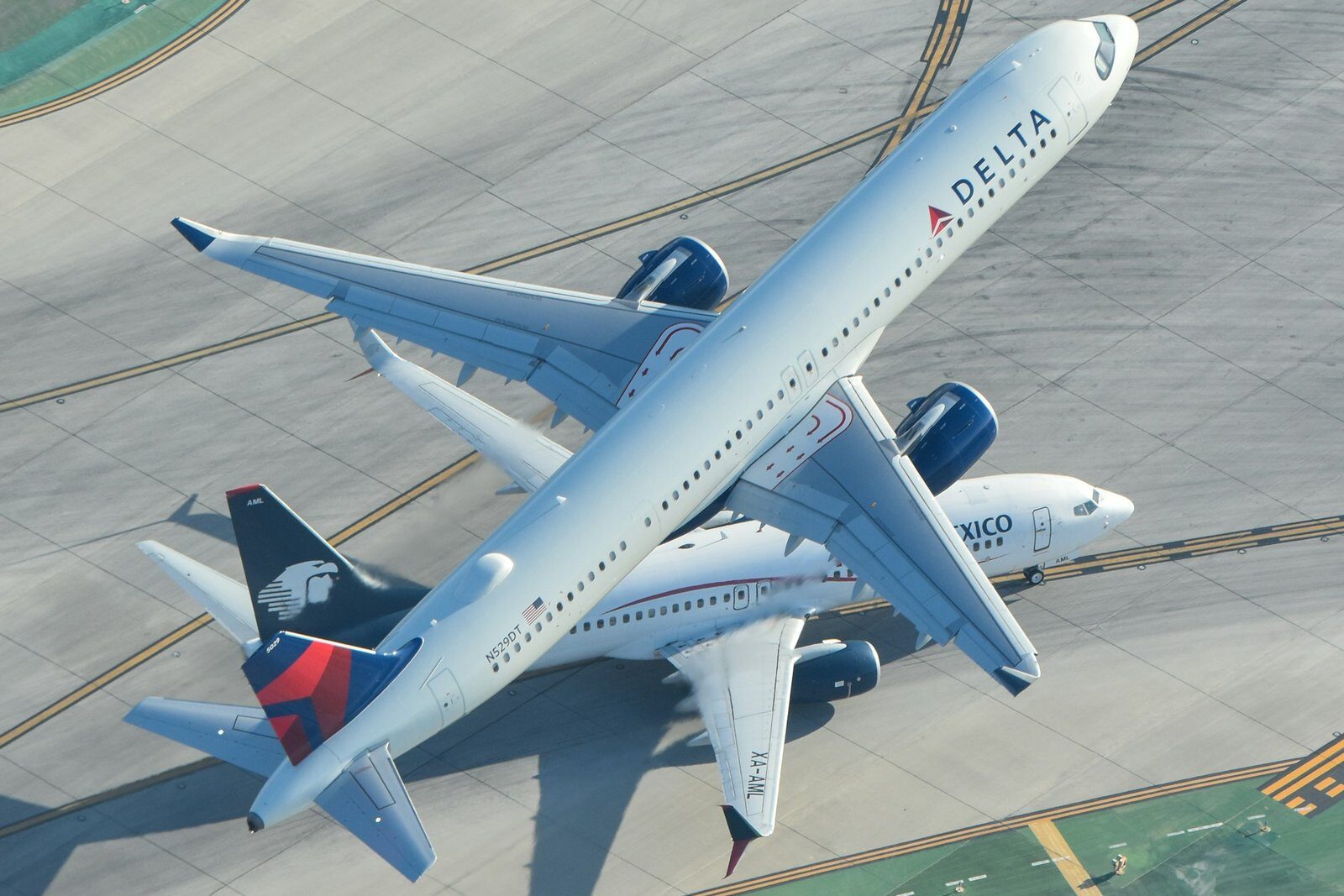
Delta Air Lines sold more tickets at higher prices in the third quarter than in any September quarter before it, and still made less money than it expected to three months ago. The reason was fuel. The airline said on Friday that it now expects adjusted earnings of $5.10 to $5.60 a share for 2026. In July it affirmed a range of $6.50 to $7.50, the guidance it had set at the start of the year. Measured at the midpoints, the forecast has fallen by about 24 per cent, by this publication's arithmetic.
Free cash flow for the year is now expected to be about $2.5 billion, down from the $3 billion to $4 billion Delta forecast in July. Ed Bastian, the chief executive, said the airline still expects a pre-tax profit of roughly $4.5 billion for the year, "absorbing a $6 billion increase in fuel costs."
Delta is the country's most profitable airline and the first of the big carriers to report on the summer quarter, CNBC noted. It was also the first time in two years that Delta had missed analysts' estimates, according to CNBC. The shares were down about 3 per cent at $79.62 in morning trading, RTTNews reported.
Revenue up $2.4 billion, costs up almost as much
Adjusted operating revenue, which strips out sales from Delta's oil refinery and some other items, rose 16 per cent to a record $17.59 billion. Delta flew essentially the same number of seat miles as a year earlier, so almost all of the growth came from price. Passenger yield, the average fare per mile flown, rose 14 per cent, and the share of seats filled was unchanged at 86 per cent.
Fuel moved faster. Adjusted fuel expense rose 62 per cent to $4.1 billion, and the average price Delta paid rose 60 per cent to $3.61 a gallon. Non-fuel costs rose 8 per cent to $11.1 billion, which the company put down mainly to crew costs and revenue-related costs, with capacity growth several points below its original plan. Summer storms cost nearly a point of capacity.
Set side by side, the figures almost cancel. Adjusted revenue rose by $2.39 billion. Adjusted fuel expense rose by $1.58 billion and non-fuel costs by $786 million, a combined $2.36 billion, by this publication's arithmetic. Adjusted operating income slipped 2 per cent to $1.66 billion, and the adjusted operating margin fell to 9.4 per cent from 11.1 per cent.
Adjusted earnings were $1.72 a share, in line with the $1.70 a year earlier but well short of the $2.00 to $2.50 Delta had forecast in July. That forecast assumed an all-in fuel price of about $3.15 a gallon. Erik Snell, the chief financial officer, said the airline had absorbed more than $500 million of higher fuel costs compared with its July guidance. On a reported basis, net income fell 47 per cent to $756 million.
Where the fares came from
Jet fuel prices have climbed since the Iran war began in February, CNBC noted. On the U.S. Gulf Coast, jet fuel cost $4.34 a gallon on Thursday, against $2.19 a year earlier, according to FactSet data cited by CNBC. Crude oil has followed a similar path, as this publication reported when oil was up 61 per cent since February.
Delta's answer has been to charge more and add few seats. Bastian told CNBC that fares had continued to tick up as the airline passed on much of the fuel increase, and that travellers kept booking.
"The consumer response continues to be quite strong. We're seeing it across all channels, all cabins of service, all geographies, business, leisure," he said.
The most recent consumer price figures showed airfares up more than 23 per cent from a year earlier, CNBC noted. Delta's own numbers show where the money came from. Premium revenue rose 18 per cent, and at $6.82 billion it was about the same size as main cabin revenue of $6.8 billion, according to CNBC. Main cabin unit revenue rose 17 per cent on slightly fewer seats. Domestic unit revenue rose 16 per cent and international 12 per cent. Cargo revenue rose 29 per cent.
Loyalty revenue rose 18 per cent. American Express, which issues Delta's co-branded cards, paid the airline 15 per cent more than a year earlier, and Delta said the full-year figure was on course to exceed $9 billion. That income does not rise and fall with the price of fuel.
The fourth quarter assumes $4.25 a gallon
For the final three months of the year Delta expects revenue to rise by about 20 per cent, an operating margin of 7 to 9 per cent and adjusted earnings of $1.15 to $1.65 a share. The guidance assumes fuel at the forward curve as of 2 October and an all-in price of about $4.25 a gallon, including a refinery benefit of about 40 cents. That is 64 cents a gallon more than Delta paid on average in the third quarter.
Joe Esposito, the chief commercial officer, said seats would grow by less than 2 per cent in the quarter, including a reduction in main cabin seats.
"With seats growing less than 2 percent, including a reduction in Main Cabin seats, our capacity positioning supports another quarter of sequential improvement in unit revenue with progression in both Domestic and International," he said.
"This positions earnings consistent with last year at the upper end of the range," Snell said. He also said Delta expects non-fuel unit cost growth to improve by 1 to 2 points in the quarter and to return to low-single-digit growth next year.
The balance sheet has absorbed some of the strain. Delta still plans to pay down more than $2 billion of debt this year, but it now expects gross leverage, its measure of debt against earnings, to end the year at about 2.2 times. In July it expected about 2 times.
What the forecast says about everyone else
Delta has advantages most of its competitors do not. It owns a refinery in Trainer, Pennsylvania, which cut its third-quarter fuel price by 13 cents a gallon and is expected to cut the fourth-quarter price by about 40 cents. Its card income and its premium cabins produce money that rises with fares and not with fuel.
Even so, its adjusted operating margin in the third quarter was 9.4 per cent, against the 11 to 13 per cent it had forecast in July. At the start of the year Delta set out to grow earnings by 20 per cent, and in July it said it was still aiming for that. Friday's announcement did not repeat the goal.
The same arithmetic has been playing out across consumer businesses this autumn. Companies facing higher input costs have been raising prices and betting that customers will pay, as PepsiCo did when it reversed its chip discounts on Thursday. Delta says its customers are paying. Its forecast shows that, at today's fuel prices, paying more only keeps profit where it was.
The third-quarter results, the guidance for the fourth quarter and the full year, the fuel prices and expense, the revenue, capacity, yield, cost and debt figures, and the quotations from Ed Bastian, Joe Esposito and Erik Snell are from Delta's announcement of its September quarter results on 9 October 2026 and its accompanying financial tables. The July guidance, the fuel assumption behind it and the earnings growth target set at the start of the year are from Delta's announcement of its June quarter results on 10 July 2026. Bastian's interview remarks, the comparison with analysts' estimates, the premium and main cabin revenue figures, the Gulf Coast jet fuel prices from FactSet and the airfare inflation figure are as reported by CNBC on 9 October 2026. The share price move is as reported by RTTNews on 9 October 2026. The reduction in the earnings forecast, and the comparison of revenue growth with fuel and other cost growth are this publication's arithmetic. The analysis is our own.
Topics businessearningsoil pricesinflationconsumer spending