PepsiCo spent much of this year trying to win back American shoppers by making its chips cheaper. On Thursday it said the effort was taking longer than planned, lowered its profit forecast for the year, and said it would raise some prices again.
The company now expects core earnings per share to grow 2.5 to 3.5 per cent in 2026, down from the low end of a 5 to 7 per cent range, according to its earnings release. Measured in constant currency, it now expects growth of 1 to 2 per cent, against an earlier expectation of the low end of a 4 to 6 per cent range, Reuters reported.
The quarter itself was better than Wall Street had expected, the Associated Press reported. Net revenue rose 5.6 per cent to $25.27 billion in the third quarter, against the $24.95 billion that analysts polled by FactSet had forecast. Net income rose 17 per cent to $3.07 billion, and adjusted earnings came to $2.34 a share, ahead of the $2.29 expected.
Two businesses moving in different directions
The growth came from outside the United States. PepsiCo's international business, which accounts for 41 per cent of its revenue, increased organic revenue by 8 per cent, its fastest rate since the first quarter of 2024, Just Drinks reported. Global snack volumes rose 4 per cent, the strongest growth since 2021, helped by World Cup demand for Lay's. Snack volumes in the Asia-Pacific region rose 11 per cent, and the company said it gained share in China and Brazil.
North America was the problem. Frito-Lay snack volumes were flat compared with a year earlier and beverage volumes fell 2 per cent. The chief executive, Ramon Laguarta, said the results were weaker than hoped, partly because of tepid sales in Canada.
Profitability in the region moved the wrong way. The core operating margin of PepsiCo Foods North America fell by 280 basis points, which the company attributed to affordability investments, an asset sale gain in the year-earlier quarter and more spending on advertising. Beverages North America increased net revenue by 5 per cent, mainly because of acquisitions made last year, but its organic revenue fell slightly.
Across the company, the core operating margin fell 35 basis points in the quarter and was 16.5 per cent for the year to date, 25 basis points lower than a year earlier. In December, after talks with the activist investor Elliott Investment Management, PepsiCo set a target of raising that margin by 100 basis points over three years.
"In North America, we remain committed to improving growth and core operating margin," PepsiCo said in prepared remarks that Reuters attributed to Steve Schmitt, the chief financial officer. "However, it is taking more time than we planned. Therefore, we expect North America's core operating margin performance to remain under pressure in the fourth quarter."
The price cut, and the reversal
Elliott took a stake worth about $4 billion in PepsiCo last year and pressed it to lower prices. Before the Super Bowl, the company cut prices on Lay's, Doritos, Cheetos and Tostitos by up to 15 per cent. Some chips had reached $7 a bag, Bloomberg News reported last month, and PepsiCo had lost shelf space because of it.
Those cuts followed a period of steep increases. PepsiCo raised prices by double-digit percentages for eight consecutive quarters in 2022 and 2023, AP noted, and sales of its drinks and Frito-Lay snacks fell as shoppers pushed back.
Laguarta said the lower prices had brought back some consumers, AP reported. Now prices are going up again. Increases on Doritos, Ruffles, SunChips and some sodas will be in the single-digit percentage range, and prices will still be lower than they were at the start of the year. PepsiCo said it had to raise prices to recover higher costs for fuel, aluminium and agricultural commodities.
Bloomberg reported on 24 September that the chip increases were expected to take effect at the end of this year or early in 2027, and a spokesperson said they would be a low-to-mid single-digit percentage, in line with inflation. Some increases had already happened. At Dollar General, according to a memo seen by Bloomberg, extra-large jars of Tostitos salsa rose to $4 from $3.80, extra-extra-large jars to $5.50 from $4.95, and Fritos canned dips to $3.75 from $3.30. By this publication's arithmetic, those are increases of about 5, 11 and 14 per cent. Campbell's and Conagra Brands have also said they are raising prices.
The quarter had help that will not recur. PepsiCo used a $178 million refund of tariffs struck down by the Supreme Court to offset rising costs, and said that money would not be available in coming quarters. In an Atlanta Fed survey, 70 per cent of firms said they would keep at least some of their refunds as cash.
Cost cuts on top
The company is also cutting costs again, on top of what Reuters described as record productivity savings.
"Additional structural cost reduction actions are being identified and will be implemented in the coming months to help fund investments that aim to accelerate organic revenue growth and mitigate the impacts of rising input cost inflation," Laguarta said in a statement. Those could include reductions in corporate costs and other initiatives not directly tied to growth, he said.
On the conference call, Laguarta said the company did not feel good about its beverage business. Hydration drinks such as Gatorade and energy drinks such as Celsius sold better in North America, but soda sales slumped.
"We're putting all the urgency of the business and the focus in improving our performance in soft drinks," he said.
Analysts were blunt about where the pressure lies. "It would seem the long-awaited 'rebase' has finally come, all in the form of a dramatic cut to implied Q4 guidance," Lauren Lieberman of Barclays said, according to The Grocer.
"The beverage business continues to disappoint, and we expect PepsiCo will continue to be a source of share to both Coca-Cola and Keurig Dr Pepper," said Nik Modi of RBC Capital Markets. "Ultimately, we believe PepsiCo will have to fully refranchise its beverage business or it will continue to lose share."
Elliott had urged PepsiCo last year to consider refranchising its North American bottling network.
What the shelf says
PepsiCo has also warned for several quarters that retailers are a threat in their own right. "Retailers and buying groups are shifting traditional value propositions, removing our products or otherwise reducing shelf space allocated to our products and focusing on introducing and developing private-label brands," the company said.
That is the bind the results describe. Lower prices won back some shoppers and some shelf space, but not enough volume to protect margins, while costs for fuel, aluminium and crops kept rising. Raising prices again recovers some of that cost, at the risk of repeating the cycle that began in 2022. Shares were up about 2 per cent in premarket trading on Thursday, Reuters reported, suggesting investors had expected worse. The test is the fourth quarter, which the company has already said will be under pressure in North America.
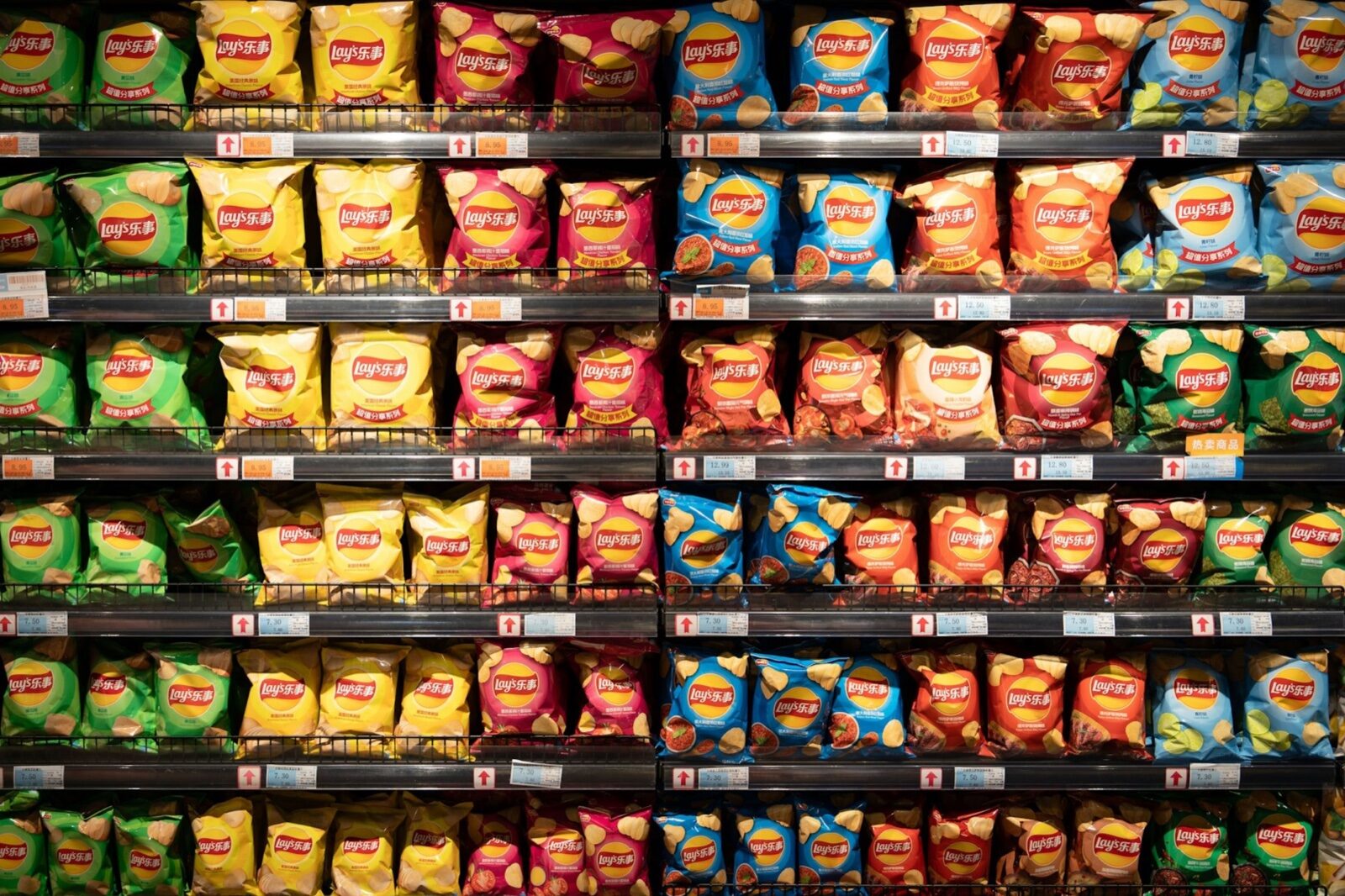
The third-quarter revenue, net income, adjusted earnings per share, analysts' estimates (from FactSet), volume figures, the share of revenue from international markets, the price increases and the reasons given for them, the $178 million tariff refund, the history of price increases in 2022 and 2023, Elliott's pressure for lower prices, and Ramon Laguarta's remarks on the conference call are as reported by the Associated Press on 8 October 2026, The earnings-per-share forecasts, current and previous, and the beverage volume figure for North America are as stated in PepsiCo's third-quarter earnings release, filed with the Securities and Exchange Commission on 8 October 2026. The organic revenue forecast, the core operating margin figures, the margin target set in December, the attribution of the prepared remarks on North America to Steve Schmitt, Laguarta's statement on structural cost cuts, Nik Modi's first remark and the company's statement on shelf space are as reported by Reuters on 8 October 2026, via BNN Bloomberg. The Atlanta Fed survey is as reported in this publication on 4 October 2026. Organic revenue growth for the quarter, the operating profit figures, the North American division margins, the Beverages North America revenue figures and the growth of international organic revenue and Laguarta's remark on reductions in corporate costs are as reported by Just Drinks on 8 October 2026, via Yahoo Finance. Lauren Lieberman's remark and both of Nik Modi's remarks as quoted are as reported by The Grocer on 8 October 2026. The planned timing of the chip price increases, the spokesperson's comments, the $7 bag, the dip prices at Dollar General and the other companies raising prices are as reported by Bloomberg News on 24 September 2026, via Transport Topics. The percentage changes in dip prices are this publication's arithmetic. The photograph does not show a PepsiCo North American product. The analysis is our own.
Topics businessearningspricinginflation