OpenAI is back in the market, and the numbers have stopped resembling a startup financing. The company is negotiating a funding round that could raise at least $30 billion at a valuation of approximately $1.4 trillion, Bloomberg reported. If completed, it would be one of the largest private financing deals in the history of the technology industry, and it would make OpenAI one of the most valuable private companies ever, trailing only SpaceX.
The investor list reads like a sovereign wealth summit. Several UAE-based funds are considering forming a consortium to invest jointly, with the total contribution from Emirati funds potentially reaching $10 billion. U.S. investment giant BlackRock is also said to be considering participation. The talks were first reported in early October and were still active as of October 6, according to AzerNews.
This is not OpenAI's first enormous raise this cycle. The company has been stacking capital at a pace that would have been unthinkable even two years ago. In March 2025 it began a $40 billion round at a $300 billion valuation led by SoftBank. The new round, at $1.4 trillion, would nearly quintuple that valuation in about eighteen months. The speed of the markup is itself the story. Investors are not pricing OpenAI on revenue. They are pricing it on the assumption that whoever controls the leading AI models controls something close to a utility.
Where the money goes
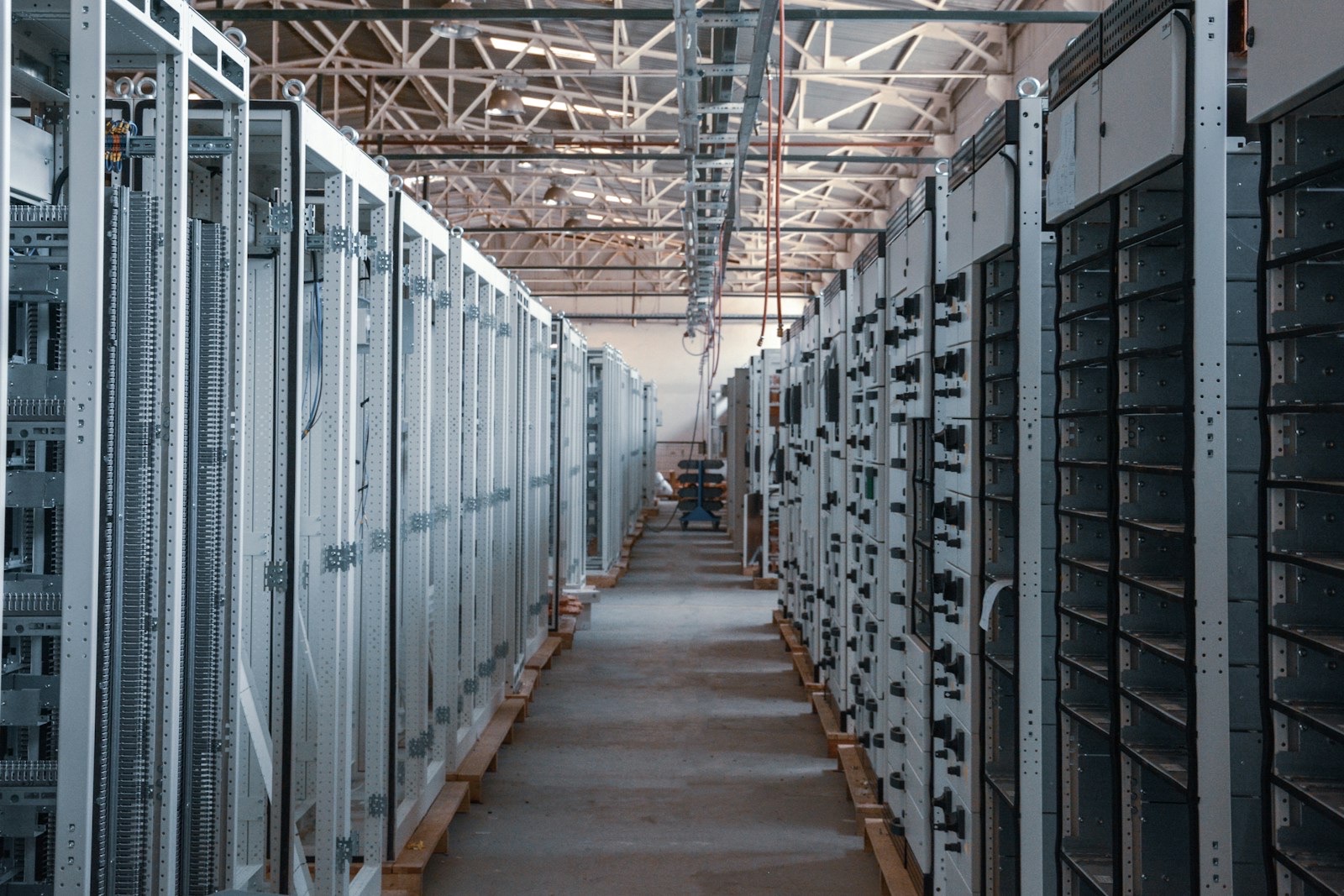
The fundraising is inseparable from Stargate, the $500 billion multi-year initiative to build AI data centers for training and inference, backed by OpenAI, SoftBank, Oracle, and Abu Dhabi's MGX, with the public support of President Trump. The commitments are already enormous and interlocking. Oracle signed a $300 billion, five-year cloud contract to supply OpenAI with compute. OpenAI locked in approximately 8 gigawatts of IT capacity at the PORTS-Pike campus in Ohio, with SB Energy building and operating the site and NVIDIA as the exclusive AI compute provider, BitcoinVersus.Tech reported. The first 800 megawatts are expected in 2028, with the buildout running through 2032.
The structure of these deals deserves scrutiny. Oracle builds the data centers, then leases the capacity back to OpenAI under the $300 billion contract. NVIDIA supplies the chips. SoftBank supplies capital and, through SB Energy, builds the sites. OpenAI signs long-term leases that convert capital expenditure into contractual obligations. Everyone in the circle is simultaneously a customer, a supplier, and an investor in everyone else. That is not fraud. It is how industrial policy gets built when the government cheers from the sidelines but does not write the checks. It does mean the revenue visibility the bulls cite is, to a meaningful degree, the industry selling to itself.
The debt question looms over all of it. Stargate's headline number is $500 billion, but the equity committed so far, roughly $38 billion from OpenAI, SoftBank, Oracle, and MGX combined, covers less than a tenth of it. The rest is expected to come from debt financing, which means the largest AI infrastructure buildout in history will be funded the way office towers get funded, with leverage. SoftBank itself carries roughly $140 billion in debt. Piling project debt on top of corporate debt works until the cash flows arrive late, and data centers that open in 2028 do not generate cash in 2027.
The question nobody can answer cheaply
The bear case is straightforward and has not gone away. OpenAI is loss-making, burning cash on training and inference at a scale no private company has ever sustained. The DeepSeek shock earlier in the cycle showed that cheaper models can undercut the investment thesis, and the company's response has been to raise more money rather than less. At a $1.4 trillion valuation, OpenAI would need to become one of the largest companies on earth by revenue to justify the price, and it would need to do it while fending off Google, Anthropic, xAI, and a Chinese lab ecosystem that keeps producing frontier models at a fraction of the cost.
The bull case is that none of that matters if AI really is the next general-purpose technology. The investors writing these checks, sovereign funds with hundred-year horizons and BlackRock with $10 trillion under management, are not buying a software company. They are buying a call option on the economic substrate of the next fifty years. A $30 billion round at $1.4 trillion is either the top of the largest bubble in history or the ground floor of the largest value creation event in history. There is no middle case at these numbers, which is exactly why the round is worth watching.