In July, Russ Vought, the White House budget director, announced at a ship christening in Philadelphia that the city's Hanwha shipyard would build two new missile-tracking ships for the Pentagon for $2 billion. This week the contract was signed. It is for one ship, with options for two more.
Hanwha Philly Shipyard said on Wednesday that it had been awarded the contract to build the Missile Defense Agency's new Missile Range Instrumentation Vessel. The award is for up to three vessels, "with one firm vessel being awarded at this time", the shipyard said. The first is scheduled for delivery in 2030.
None of the announcements this week, from the shipyard or from TOTE Services, which manages the construction, gave a price. In July, Mr Vought put two ships at $2 billion, Defense News reported, and said the first, which he called Golden Defender, would be delivered in June 2030.
What the ships are for
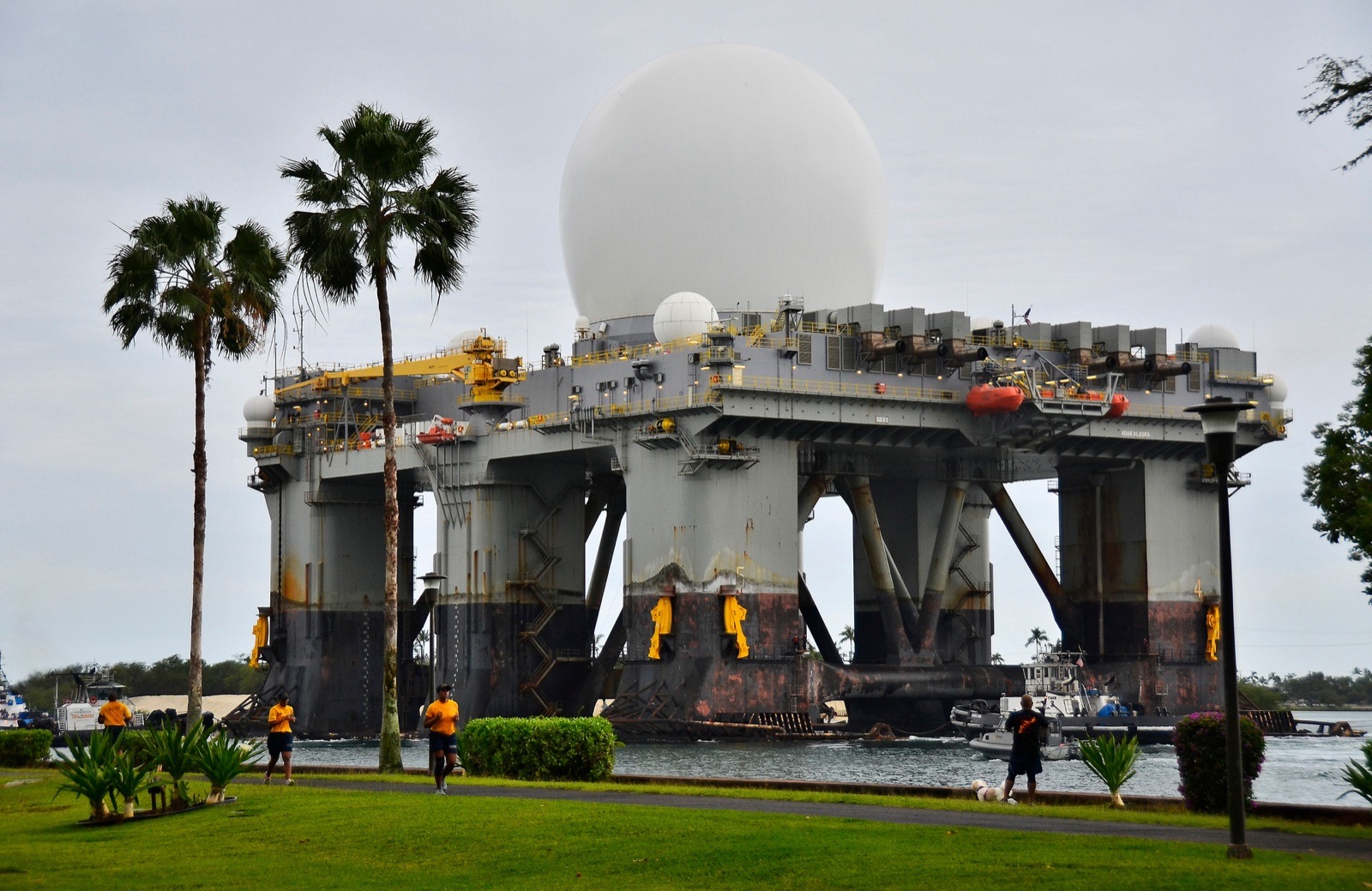
The vessels, about 525 feet long, will replace Pacific Tracker and Pacific Collector, built in 1965 and 1970, which monitor and collect data on ballistic missile tests in the Pacific. Illustrations released by TOTE show two large radomes on the foredeck and a box-shaped radar array at the stern, The Maritime Executive reported. The ships will be deployed to the agency's test ranges, including for work on the administration's Golden Dome missile defence project.
The Maritime Administration, part of the Department of Transportation, will take delivery and operate the ship for the Missile Defense Agency. The programme is shared between the Transportation Department, MARAD, the Department of War and the agency.
Who is buying, and how
The purchase runs through a civilian agency and a private manager. TOTE Services, a Jacksonville, Florida, ship manager, signed a contract with MARAD to act as vessel construction manager and immediately executed a subcontract with Hanwha Philly to build the first ship, Marine Log reported.
TOTE said it negotiated the contract terms, advanced the design and secured firm fixed pricing in less than three months, a process it said could take a year or more in traditional government shipbuilding. It claims the model reduces acquisition costs by at least 50 per cent.
"Signing the Missile Range Instrumentation Vessel contract and executing the shipyard subcontract brings us closer to delivering the next generation of U.S. defense capability," said Jeff Dixon, president of TOTE Services, according to WorkBoat.
A hull the yard already builds
The design is based on the National Security Multi-Mission Vessel, the training ship that Hanwha Philly is building for state maritime academies under TOTE's management. The tracking ship uses the same hull and has about 70 per cent commonality with it, TOTE said.
That programme turned the yard from a dormant site with a few dozen workers into one with more than 2,000 production workers, according to TOTE. The tracking ship gives it defence work to follow on from the same production line, supply chain and workforce. Another Hanwha business, Hanwha Defense USA, said in September that it would build a $2.2 billion munitions campus making 155mm propellant charges at Pine Bluff Arsenal in Arkansas, where the Army awarded it a lease in January.
"The MRIV program demonstrates the value of maintaining an active, capable U.S. shipbuilding industrial base, one that can take proven platforms, experienced people and established production infrastructure and put them to work for new and increasingly important missions," said David Kim, the shipyard's chief executive.
The shipyard is a subsidiary of South Korea's Hanwha Group. It says it has delivered around half of the large ocean-going commercial ships built in the United States under the Jones Act since 2000.
The gap between July's announcement and this week's contract is not necessarily a cut. Options are a common way to buy a series of ships, and TOTE describes this ship as the first of a planned series. But the commitment on paper is now one ship, and its price has not been made public.
The contract for up to three vessels with one firm, the ship's length, the replaced vessels and their build years, the 2030 delivery, the interagency arrangement and David Kim's remarks are from Hanwha Philly Shipyard's announcement of 7 October 2026 on ACCESS Newswire. TOTE Services' contract with MARAD, the shipyard subcontract, the negotiation period, the 70 per cent commonality with the National Security Multi-Mission Vessel, the claimed cost saving, the shipyard's workforce and Jeff Dixon's remarks are as reported by Marine Log and WorkBoat on 7 October 2026. The description of the first hull and two options, the radars and the link to Golden Dome are as reported by The Maritime Executive on 7 October 2026. The July announcement by Russ Vought at a christening in Philadelphia, the $2 billion figure for two ships, the name Golden Defender, the June 2030 date and the existing ships' role in monitoring ballistic missile tests in the Pacific are as reported by Defense News on 21 July 2026. Hanwha Defense USA's Pine Bluff campus, its $2.2 billion cost and its products are from the company's announcement of 21 September 2026. The analysis is our own.
Topics businessdefenceshipbuilding