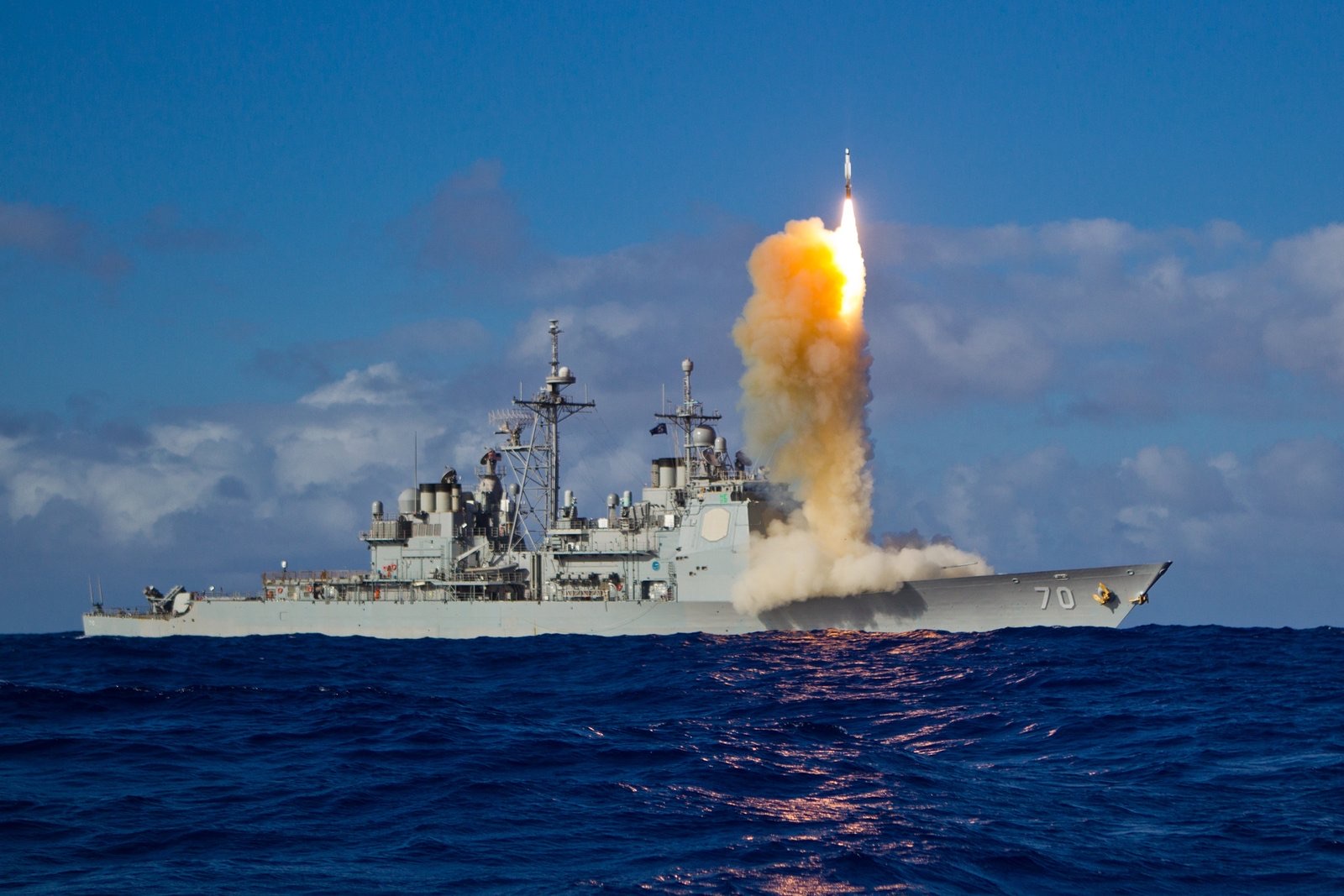
The Pentagon has signed another long contract with Raytheon, this time for the interceptor that the U.S. Navy fires at ballistic missiles in mid-flight. The Missile Defense Agency awarded the RTX business a five-year contract, with two further option years, worth up to $6.3 billion for production and sustainment of the Standard Missile-3 Block IB, the company said on Thursday.
The five-year base is worth $4.4 billion, and options add nearly $2 billion more for additional missiles over another two years, Breaking Defense reported. The department's contract announcement gives a base value of $4,432,040,944 and a total, including options, of $6,342,404,516, which puts the options at about $1.9 billion. It says $454 million of fiscal 2026 procurement funds were obligated at award. Neither the Department of War's contract announcement nor RTX said how many missiles are on order.
The SM-3 Block IB is fired from ships and from land to destroy short- to intermediate-range ballistic missiles during the middle phase of their flight. It was first used in combat in 2024, according to RTX. Production will take place mainly at Raytheon's plants in Tucson, Arizona, and Huntsville, Alabama, and the work has an estimated completion date of 31 October 2034, according to the department's contract announcement.
"SM-3 Block IB has proven its relevance in combat and this contract helps ensure we can replenish inventories and keep pace with the evolving threats the U.S. Navy, MDA and their partners face around the world," said Phil Jasper, Raytheon's president.
Signed before it is priced
The award is a noncompetitive, multi-year undefinitized contract action, meaning work starts before the final price and terms are settled. The department said it authorises Raytheon to begin work immediately in Tucson and Huntsville, according to its announcement. The contract was awarded on 7 October and announced on 8 October.
The department framed the contract as a way of moving money into factories and their suppliers. It said the agreement gives multi-year stability to the joint force's main ballistic missile defence capabilities and removes programme and supply-chain friction that constrains private-sector capacity, pushing capital directly into assembly lines, solid-rocket motor suppliers and lower-tier domestic vendors.
"Our warfighters must never face a fair fight, and the SM-3 Blk IB has proven its operational superiority to dominate any adversary across the globe," said Michael Duffey, Under Secretary of War for Acquisition and Sustainment. He said the contract would provide production certainty to the defence industrial base and break bottlenecks among lower-tier manufacturers.
RTX said the award supports urgent replenishment of a missile defence inventory that has been used in combat. The Pentagon lists the SM-3 Block IB among the critical munitions it wants to scale up as quickly as possible, Breaking Defense noted.
The fourth deal in weeks
The contract is the latest in a run of long-term munitions deals between the department and Raytheon. In February the two signed a framework agreement meant to prepare the way for this multi-year award, according to Breaking Defense. In recent weeks they have signed a $24.4 billion deal to accelerate production of the Standard Missile-6, a $22.9 billion contract to raise Tomahawk cruise missile output to 1,000 a year, and a deal worth up to nearly $20.7 billion for the Advanced Medium-Range Air-to-Air Missile, or AMRAAM.
Taken together, the four contracts are worth about $74 billion at their stated maximum values, by this publication's arithmetic, against RTX's total sales of more than $88 billion in 2025. They run over several years, so the comparison is a measure of scale rather than of annual revenue.
The pattern matches the approach the department took with Lockheed Martin and General Dynamics in August, when it signed seven-year framework agreements for Patriot and THAAD interceptors. The idea in each case is that a contractor will not build new production lines on the strength of one year's order, and a supplier of rocket motors will not either. A contract that covers five or seven years gives them a reason to.
What the contract does not settle is the number that matters most for a stockpile: how many interceptors will be delivered, and how quickly. The announcements so far have not said.
The contract's value, its five-year term and two option years, the production sites, the description of the SM-3 Block IB, its first combat use in 2024, the quotation from Phil Jasper and RTX's 2025 sales are from RTX's announcement of 8 October 2026. The base and total values, the contract type, the absence of a quantity, the funds obligated, the award date, the estimated completion date and the Missile Defense Agency's role as contracting activity are from the Department of War's contract announcements for 8 October 2026. The quotations from Michael Duffey and the department's description of the contract are from the department's news release of 8 October 2026. The description of the base and option values, the February framework agreement, the Pentagon's list of critical munitions and the earlier SM-6, Tomahawk and AMRAAM deals are as reported by Breaking Defense on 8 October 2026. That the options are worth about $1.9 billion and the combined value of the four contracts are this publication's arithmetic. The analysis is our own.
Topics businessdefencemissile defense agency