This publication has spent months describing the same failure in different industries. Nobody builds a second production line, a spare drydock, a redundant supplier or a standby plant, because the asset takes years and the demand signal lasts months. The capacity is missing when it is wanted, everyone calls it a surprise, and the arithmetic that produced it was legible the whole time.
The Pentagon has just done the opposite, and it is worth reading closely because the mechanism is more transferable than the subject.
Seven-year framework agreements announced on 31 August, with Lockheed Martin and with General Dynamics Ordnance and Tactical Systems, are meant to triple PAC-3 MSE interceptor capacity and quadruple THAAD. Inventory estimates put the United States below a thousand Patriot interceptors and around 250 THAAD, against consumption in Ukraine and the Middle East that production has not matched. Michael Duffey, the Under Secretary of War for Acquisition and Sustainment, describes it as cutting red tape and rapidly scaling.
The clause that matters is not the money
The number that will be quoted is the money — Lockheed Martin separately received a seven-year contract worth up to $35 billion in June. The number that will actually cause a factory to exist is elsewhere in the document: the agreements guarantee minimum annual procurement quantities.
That is the whole difference. A manufacturer does not add a line because demand is high; high demand is a fact about this year, and a line is a decision about the next fifteen. It adds a line when somebody else carries the risk that demand stops. A guaranteed minimum converts an uncertain market into a financeable asset, which is precisely the conversion that never happens in the industries where capacity keeps failing.
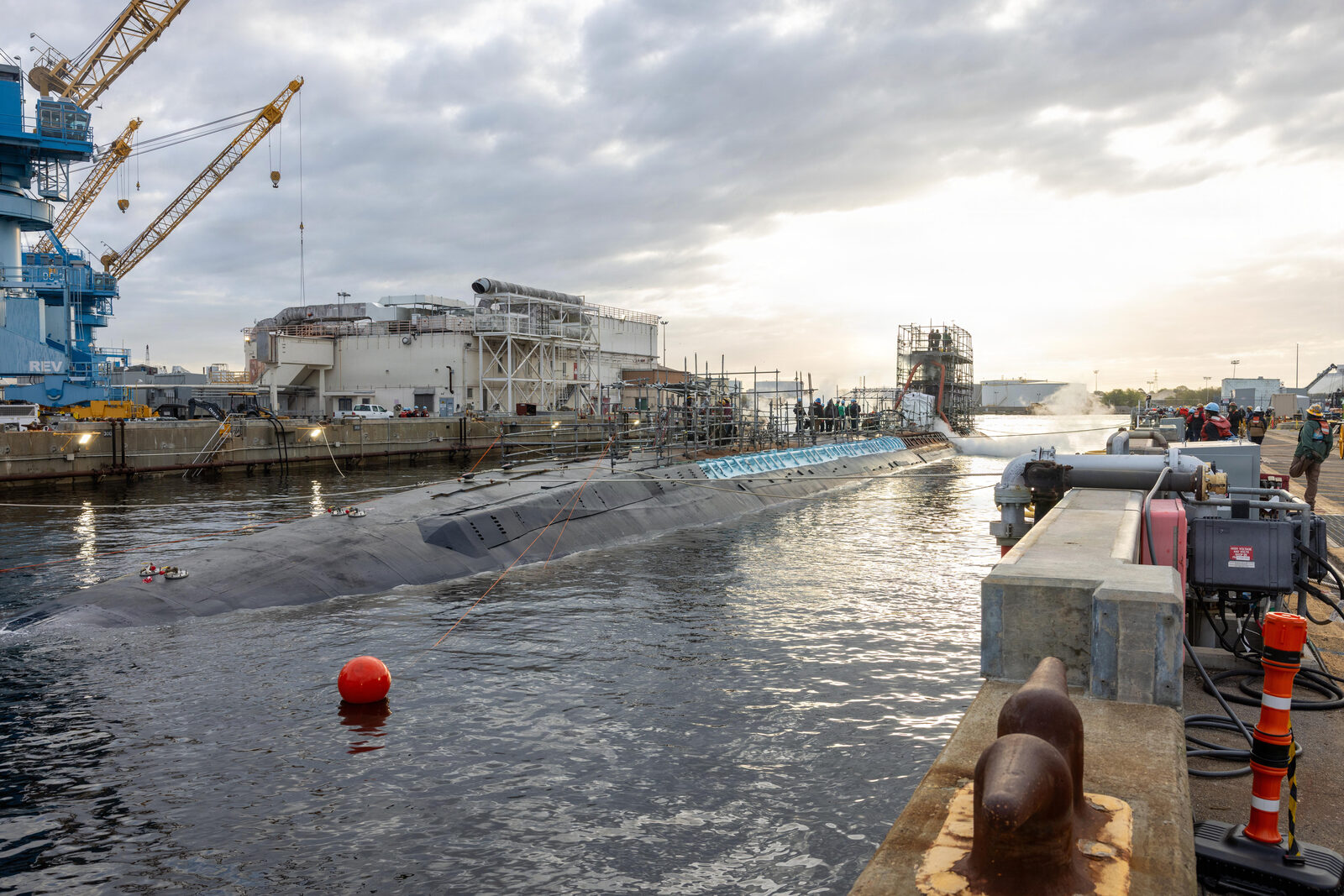
Set it against the cases where nobody wrote that clause. The drydock is the constraint and it is booked years out because dock capacity answers a decade and no customer will underwrite one. A hospital runs on a supply chain with one of everything because a second source is a cost in every year but the one that matters, and no purchasing group has ever guaranteed a second supplier a minimum. The generic injectables that run short are short for the same reason in a different currency.
The defence case is not evidence that government is better at this than industry. It is evidence that the buyer was finally large enough, and frightened enough, to sign the one term that makes capacity rational. That is a fact about market structure, not about competence.
There is a real caveat and it is in the same paragraph as the guarantee: funding remains subject to annual congressional appropriations. A seven-year framework whose money is voted twelve months at a time is a strong signal rather than a binding commitment, and every supplier reading it knows the difference. It is considerably better than the annual purchasing that preceded it and it is not the same thing as certainty.
The transferable lesson is narrow and unglamorous. If a country wants capacity to exist before it is needed — in interceptors, in sterile injectables, in transformers, in dry docks — the instrument is not exhortation, an industrial strategy document or a tariff. It is somebody agreeing in writing to buy a minimum quantity for longer than the asset takes to build. It has been available the entire time. It is simply expensive, and it only gets signed when the alternative has become frightening enough to price.
The seven-year framework agreements, the companies involved, the tripling and quadrupling targets, the inventory estimates, the June 2026 Lockheed Martin contract worth up to $35bn and the quotation from Michael Duffey, Under Secretary of War for Acquisition and Sustainment, are as reported by AeroTime on 31 August 2026. The analysis is our own.
Topics businessdefenceprocurementmanufacturingcapacity