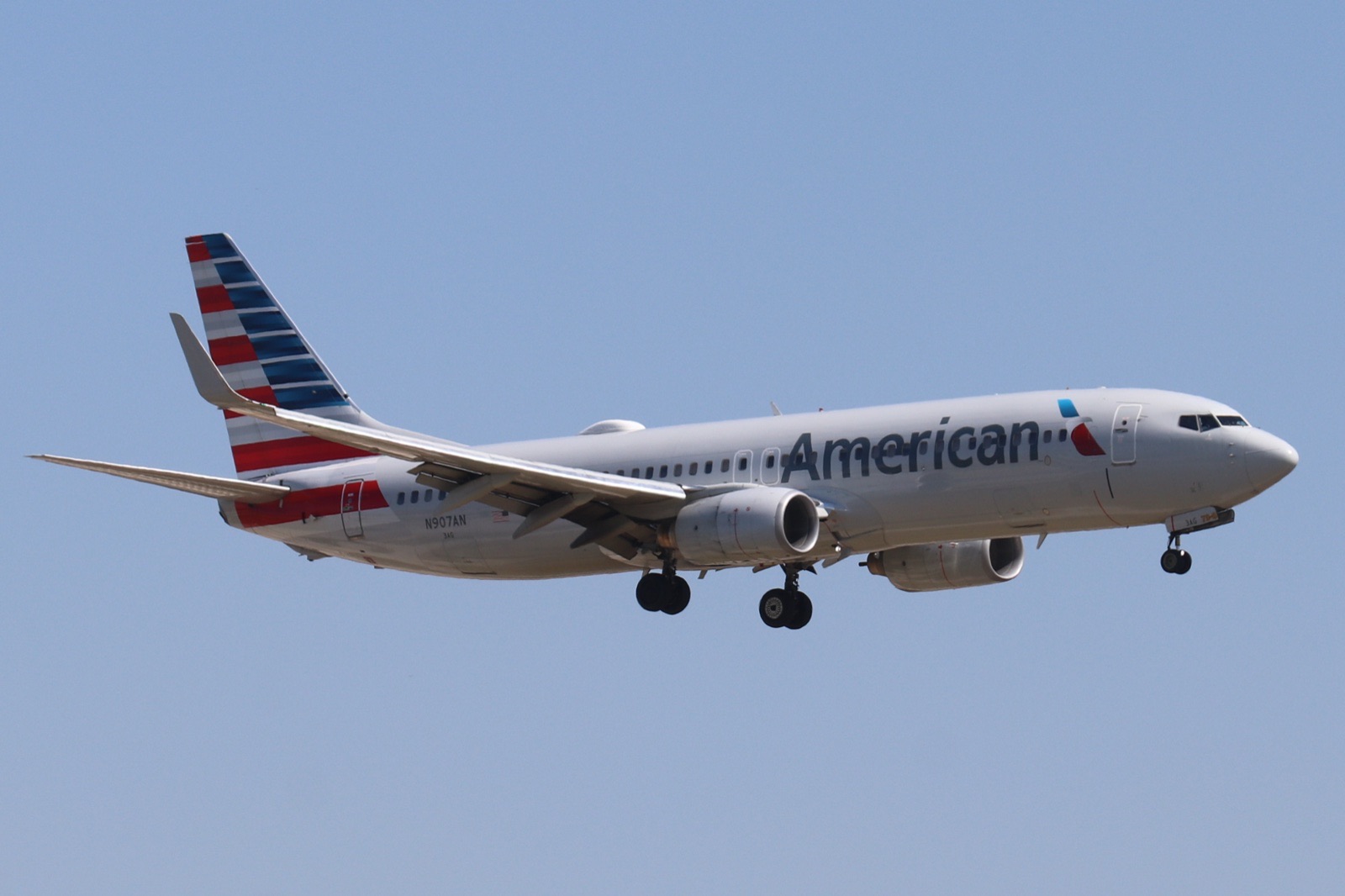
American Airlines made money flying passengers in the third quarter of 2026. It lost money once it paid its lenders. Operating income was $115 million on record third-quarter revenue of $16.3 billion, up 19.3 per cent, the company said on Thursday in its earnings release. Net interest expense of $435 million, partly offset by $87 million of interest income, and $101 million of other non-operating costs left a pre-tax loss of $334 million and a net loss of $269 million, or $0.41 a share.
Excluding special items, the loss was $182 million, or $0.28 a share. Fuel is the reason the operating profit was so thin. American's fuel bill rose $1.9 billion, or 67.5 per cent, to $4.635 billion, as the average price it paid climbed to $3.85 a gallon from $2.37.
Why does American lose money when Delta did not?
Both airlines passed most of the fuel increase on to passengers. Delta's fuel bill rose 62 per cent in the same quarter, and its adjusted operating income slipped only 2 per cent, to $1.66 billion, a margin of 9.4 per cent. American's revenue grew faster, by 19.3 per cent against Delta's 16 per cent, but its operating margin was 0.7 per cent, by this publication's arithmetic. Delta started the summer with far more profit between it and a fuel shock.
At a margin that thin, the interest bill decides the result. American's net interest expense was $435 million in the quarter, almost four times its operating profit and nearly unchanged from a year earlier. Devon May, the chief financial officer, said on the call that American expects to end the year with net debt of about $30.5 billion, "flat to where we closed 2025." The release says the company remains committed to reducing debt and reaching 3 times net debt to EBITDAR, "in line with BB credit metrics."
The revenue side held up. Total revenue per available seat mile rose 14.5 per cent, and yield, the average fare per mile flown, rose 18.3 per cent. Premium revenue rose 22.9 per cent and Main Cabin revenue 19.5 per cent. American deliberately gave up some passengers to get there: its load factor fell to 83.4 per cent from 86.0 per cent. "We prioritized yield over load factor," Chief Commercial Officer Nathaniel Pieper said on the call, according to a transcript published by The Motley Fool.
| Measure | Third quarter 2026 | Third quarter 2025 | Change | |---|---|---|---| | Total revenue | $16.335 billion | $13.691 billion | up 19.3% | | Fuel expense | $4.635 billion | $2.767 billion | up 67.5% | | Average fuel price | $3.85 a gallon | $2.37 a gallon | up 62.7% | | Operating income | $115 million | $151 million | down 23.4% | | Net interest expense | $435 million | $432 million | up 0.7% | | Net loss | ($269 million) | ($114 million) | wider |
Source: American Airlines Group third-quarter 2026 earnings release.
How much worse does fuel get?
Considerably. Based on the forward curve of 19 October, American assumes about $4.70 a gallon for the fourth quarter, nearly double what it paid a year earlier and about 22 per cent above the third-quarter average, by our arithmetic. At that price it expects fourth-quarter fuel expense to rise about $2.8 billion. For the full year, Chief Financial Officer Devon May said on the call, "we now expect fuel expense to be more than $7 billion higher than in 2025."
For the fourth quarter American guides to revenue growth of 19.5 to 22.5 per cent and an adjusted loss of $0.50 to $1.10 a share. For the year it now expects an adjusted loss of $1.00 to $1.60 a share.
What does American plan to do about it?
Grow more slowly. "Given today's elevated fuel prices, we now expect our growth rate in 2027 to decelerate considerably," Chief Executive Robert Isom said on the call. He said aircraft utilisation would be the first lever: "We can step that down quite a bit." He also said "we think we can be profitable next year." Fourth-quarter capacity is still guided up 5.5 to 6.5 per cent, so the slowdown is a 2027 decision, not an immediate one.
The airline has room to wait. It ended the quarter with $11.8 billion of total available liquidity and more than $26 billion of unencumbered assets and first-lien capacity. It expects nearly $1 billion of annual run-rate savings from its cost programmes by the end of the year.
What to watch
Two numbers. The first is the fuel price American assumed: $4.70 a gallon rests on a single day's forward curve. The second is the interest line, which does not move with fares. If fuel eases, the operating profit American is already earning could cover its lenders again. If it does not, the $30.5 billion of net debt it expects to carry into 2027 sets the floor under how much the airline has to earn before it shows a profit. Fuel is also feeding through to freight: see our report on how surcharges lifted railroad revenue.
Third-quarter results, the income statement, operating statistics, liquidity, fourth-quarter and full-year guidance and the Isom and May quotations in the release are from American Airlines Group's earnings release of 22 October 2026, filed as Exhibit 99.1 to its Form 8-K. The full-year fuel figure, the year-end net debt figure, the Pieper remark and Isom's remarks on 2027 growth, utilisation and profitability are from a transcript of the earnings call published by The Motley Fool on 22 October 2026. The Delta comparison draws on this publication's report of 9 October. The pre-interest arithmetic and percentage comparisons are this publication's own. The analysis is our own.
Topics businessairlinesjet fuelearningsdebtairfares