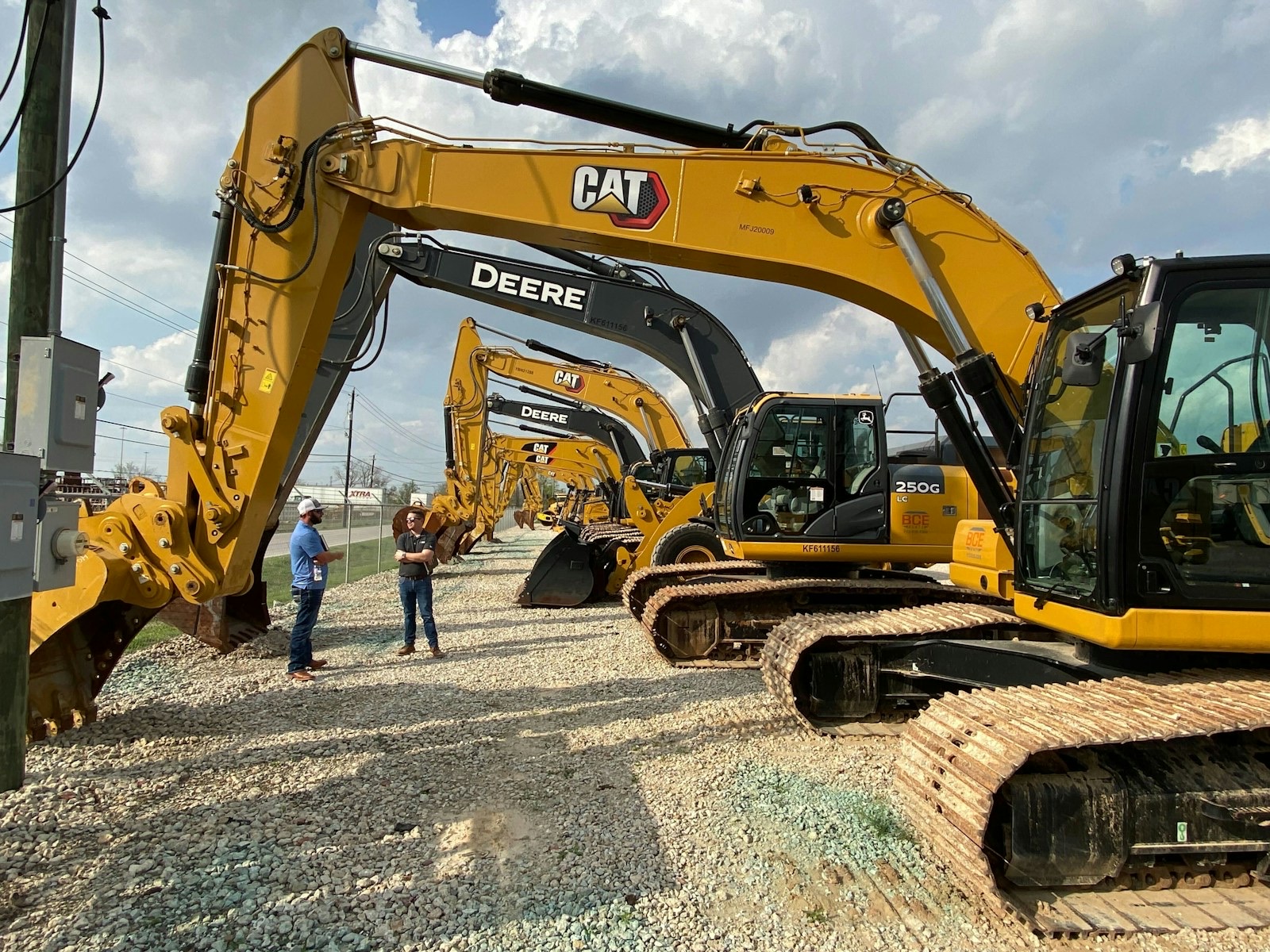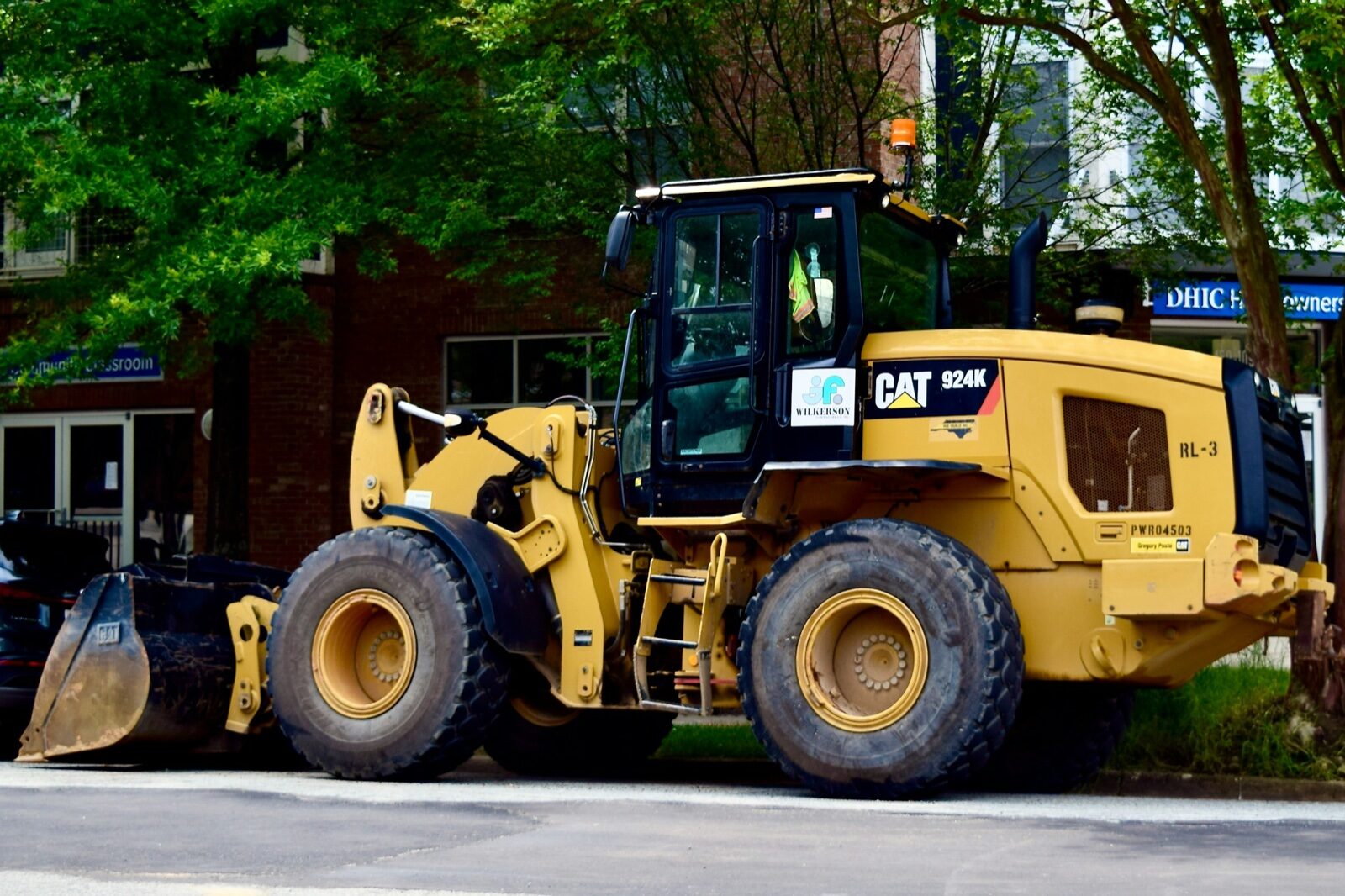
Caterpillar said on Wednesday that it intends to invest about $1 billion in North Carolina, including a new plant in Sanford, a town of about 30,000 in Lee County, roughly 40 miles south-west of Raleigh. The plant will build compact track loaders and telehandlers, the small, versatile machines that contractors, landscapers and farmers use to move material around a site.
"As demand for compact equipment continues to increase, we're investing to better serve this growing segment of customers," said Rod Shurman, president of Caterpillar's construction industries group.
The company's release talks about automation, robotics and digital production systems. It does not give a jobs number. That is not an oversight. A company spokeswoman, Lisa Miller, told WRAL that the new facility will not increase the workforce. Caterpillar employs about 2,000 people at its existing Sanford plant, including roughly 600 hired since it announced an expansion in May. The new plant is for them.
"Our existing workforce will be upskilled to be ready to operate in a more technology-enabled manufacturing environment," Miller said.
What the county and city are paying for
Over the past month, before Caterpillar's name was public, the Sanford City Council and the Lee County Board of Commissioners approved incentives for a project known only as Project Paragon. The city's package is worth up to $39.5 million and the county's up to $46 million: $85.5 million in all, WRAL reported. The state is adding $2.6 million from its Industrial Development Fund utility account and $500,000 from the transportation department's rail division.
The local money is structured as tax rebates. The county expects to make 12 annual payments totalling about 80 per cent of the property taxes Caterpillar pays, and Sanford plans a similar 12-year schedule. To collect in full, the company has to invest the $1 billion and keep at least 1,950 full-time jobs at an average annual wage of about $65,500.
Note the verb. The condition is to keep 1,950 jobs, not to create them. The incentive is a retention payment.
The local officials who approved it were candid about that. Caterpillar had looked at other states, including South Carolina, they said. "In my professional opinion, we dodged a bullet," Kirk Smith, a Lee County commissioner, told WRAL. Without the incentives, he said, officials feared the company would have left. "It would have been devastating to Lee County because Caterpillar is one of our largest employers."
The arithmetic of keeping a plant
Divide $85.5 million by 1,950 jobs and the local incentive comes to about $43,800 per job kept, paid over 12 years. That is roughly $3,650 a job per year, or a little over $7 million a year across the two local governments, provided Caterpillar meets its targets.
Against a $1 billion investment, the incentives are about 8.6 per cent of the project. That is large enough to influence where a plant goes between two otherwise similar sites. It is far too small to explain why a company would build one at all. Caterpillar's own reasons are demand, its long presence in the state and the workforce it has already trained. Sanford is the only place the company makes compact track loaders, The News & Observer reported. Telehandlers are also built at Desford, in the English Midlands.
What the incentives bought, then, was not the investment. It was the location of the investment, and the assurance that the existing jobs would stay attached to it.
From a county's side, that can be a rational purchase. A plant employing 2,000 people at an average of $65,500 is a payroll of about $130 million a year in a county that cannot easily replace it. Rebating most of a new plant's property tax for 12 years is cheaper than losing the old plant's payroll. But it is worth being clear about what kind of deal it is, because the headlines will say "$1 billion investment" and readers will hear "new jobs".
What a modern capital project looks like
The Sanford plant fits a pattern that runs through much of the current wave of American factory building. The money is going into capacity and equipment, not headcount. Caterpillar's senior vice president for building construction products, Rob Janssen, said in a company video quoted by The News & Observer that the new plant would bring AI assistance, robotics and new painting and welding technologies. Starting wages for the 600 jobs announced in May were around $18 an hour, the paper reported, higher for skilled trades such as welding.
That combination is the economics of modern manufacturing in one plant. More output per worker, fewer new workers, and an existing workforce asked to retrain into the jobs automation leaves behind. For a community, the payoff is stability rather than growth: the jobs stay, and they may become better paid and harder to replace.
The other half of the story is demand. Compact equipment is sold largely to small contractors, many of whom finance or rent it. Caterpillar is betting on that customer at a time when, as this publication has reported, the credit those buyers rely on has become harder to get. A billion dollars of new capacity assumes the small builders, landscapers and rental yards will keep buying. The incentive agreement, sensibly, does not depend on that. It depends only on the 1,950 jobs.
The company is evaluating a 500-acre site at the Regional Crossroads Park off US 1, WRAL reported. It has not given a construction timetable.
The investment, the products, the description of the planned facility and the quotations from Rod Shurman are from Caterpillar's release "Caterpillar to Invest $1 Billion in North Carolina to Expand Cat Compact Manufacturing Capacity" (PR Newswire, 30 September 2026). The incentive amounts and terms, the job and wage thresholds, the 12-year payment schedule, the Regional Crossroads Park site, the consideration of South Carolina, the Project Paragon code name, the state contributions and the quotations from Kirk Smith, Jimmy Randolph, Lisa Miller, Rob Janssen and Lee Lilley are as reported by WRAL ("Caterpillar to invest $1B in new Sanford factory, buoyed by $85M in local incentives", 30 September 2026). That Sanford is the company's only compact track loader plant, that telehandlers are also made in Desford, England, the starting wage of about $18 an hour and the timing of the 600 hires are as reported by The News & Observer (30 September 2026), with Janssen's remark about AI assistance and robotics taken from a company video it quoted. The per-job and annual figures are this publication's arithmetic. This publication has not read the Lee County or Sanford incentive agreements. Accurate to 9.30am ET on 1 October 2026.
Topics businessmanufacturing