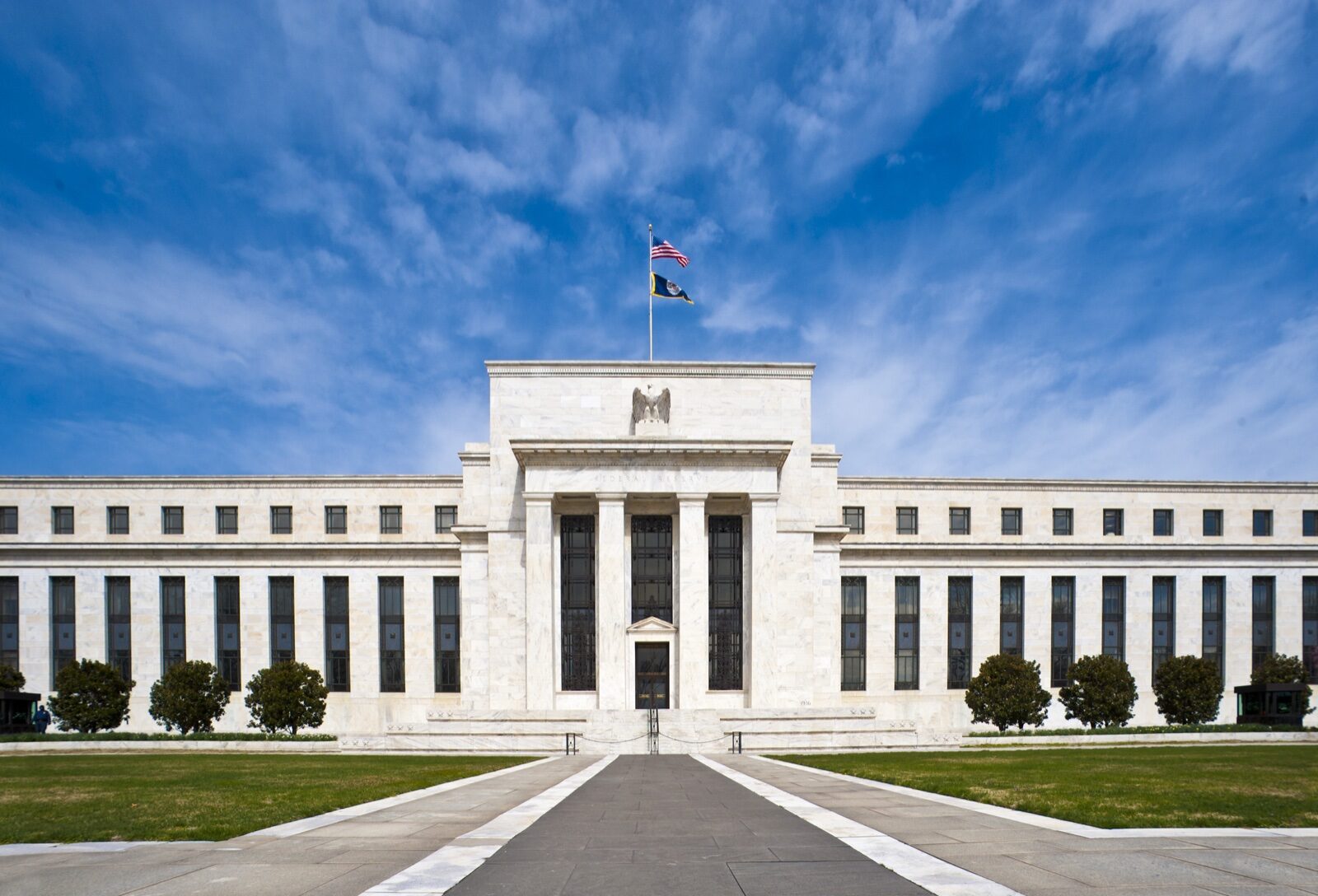
Since the financial crisis, the largest American banks have been put through a hypothetical recession designed by the Federal Reserve. Their projected losses decide how much extra capital each must hold, a figure called the stress capital buffer. The banks have never had the Fed's models in full, and they have had no formal say in the scenarios.
On Wednesday the Fed's Board of Governors finalised two rules that change both of those things.
The first requires the Board to invite public comment each year on the scenarios it plans to use, and on any material change to its models. It updates the framework the Fed uses to design the scenarios, adopts the models that will run the 2027 test, and rearranges the calendar. It also changes the "global market shock", the part of the exercise that hits banks with big trading books with a sudden repricing of markets. Those banks will now face two such shocks each year, and the Fed will use whichever one produces the larger loss.
The second rule changes how the buffer is calculated. Instead of resetting each bank's requirement on the result of a single year's test, the Board will average the two most recent tests. It will start doing that in 2028, so that only models that have been through public comment feed the average.
Alongside the rules, the Board proposed replacing the model it uses to project banks' fee income under stress with one meant to capture differences in how banks earn it. Comments will be due 60 days after the proposal appears in the Federal Register.
What the Fed says it will and will not do
The Board's own summary is two sentences long. Taken together, it says, the changes "are likely to reduce year-over-year volatility in capital requirements by approximately 50 percent and are not expected to materially affect aggregate capital requirements."
Both halves matter. Volatility has been the banks' central complaint. A bank's buffer could jump or fall by a large amount from one June to the next because of a change in scenario design or a model the bank could not see, and banks plan dividends and buybacks around that number. Averaging two years smooths the swings by construction. The second half of the sentence is the Fed's answer to the charge that this is deregulation by another name: the system as a whole, it says, will hold about as much capital as before.
"The stress test is an essential component of our regulatory capital framework," said Michelle W. Bowman, the Fed's vice chair for supervision. "Today's changes preserve its resilience by ensuring that it is transparent, granular, and risk-sensitive."
The rules take effect on 31 December, according to Banking Dive, which reported that the Fed expects to publish next year's scenarios for comment on 10 January and finalise them on 28 February.
The dissent
Banking Dive reported the vote on the first rule as six to one. The one was Michael Barr, Bowman's predecessor in the supervision job.
His statement is short and specific. He supports some of the changes, including testing trading banks against more than one market shock and using the larger loss. But he wrote that the rule "will reduce the dynamism, rigor, conservatism, and credibility of the stress test and thus undermine financial stability."
His reasoning is about what happens to a test when the people taking it know how it is marked. "Disclosure of the stress test models and annual public comment processes on model changes and scenarios will make the stress tests less responsive to emerging risks," he wrote. "Calcified models will also allow banks to optimize their balance sheets to the test, rather than focusing on underlying risk."
He then makes a point about concentration that is easy to miss. If every large bank is measured by the same published models, every large bank has an incentive to hold whatever those models treat kindly. Barr compares this to the years before 2008, when financial institutions treated mortgage-backed securities as safe and liquid. A shared yardstick, on this view, does not just let individual banks game the test. It herds them into the same positions.
Governor Lisa D. Cook did not dissent, but her statement reads as a set of conditions. She wrote that the framework contains features meant to reduce "gaming" or "window-dressing", and that the Board has other supervisory tools for anomalous results. Then she added: "Market confidence in the stress tests comes from the fact that the scenarios are indeed stressful." Should the tests become "less severe or overly predictable over time," she wrote, "we may need to contemplate other options to maintain resilience."
Who asked for this
The changes did not come from nowhere. The Fed announced in December 2024 that it would rework the test, and trade groups including the American Bankers Association and the Bank Policy Institute sued over it, Banking Dive noted. On Wednesday those groups said the rules showed how opening the process to public comment produces better policy.
Better Markets, which advocates for tighter financial regulation, said the opposite, calling the process increasingly hollow and disconnected from the risks facing the banking system.
Both sides are describing the same trade. A test that is published, commented on and averaged is fairer, more predictable and easier to plan around. It is also, by design, less able to surprise anyone. Whether that matters depends on whether the next serious loss in the banking system comes from somewhere the scenario designers, the banks and the public commenters have all already looked.
A useful contrast this week
The same week offered a reminder of what an unwelcome surprise looks like. In Australia, the private lender Metrics Credit Partners suspended redemptions after its auditor gave more weight to downside outcomes than the manager had, and then declined to sign on the deadline. Nobody had defaulted; the assumptions had changed.
That is the kind of reassessment a stress test exists to force. The Fed's new framework makes the assumptions visible and stable. Barr's objection is that stable is the wrong property for a test whose purpose is to find what everyone has missed. Cook's position is that the Board can keep the test honest within the new rules, and will have to show it can.
The first scenarios written under the new process will be published for comment in January. How severe they are will be the first evidence of which of them is right.
The content of the two final rules and the proposal, the Board's estimate of the effect on volatility and aggregate capital, and the quotation from Vice Chair for Supervision Michelle W. Bowman are from the Federal Reserve Board's press release "Federal Reserve Board finalizes changes to enhance the transparency and public accountability of its stress test and reduce volatility in its stress test-related capital requirements" (30 September 2026). The quotations from Governor Michael S. Barr and Governor Lisa D. Cook are from their statements published by the Board the same day, read in full on federalreserve.gov. The 6-1 vote on the first rule, the effective date of 31 December, the January and February dates for scenario comment and finalisation, and the statements from the American Bankers Association, the Bank Policy Institute and Better Markets are as reported by Banking Dive ("Fed finalizes stress-test changes", 30 September 2026); this publication has not read the Federal Register notices in full. Accurate to 9.30am ET on 1 October 2026.
Topics marketsbankingfederal reserveregulation