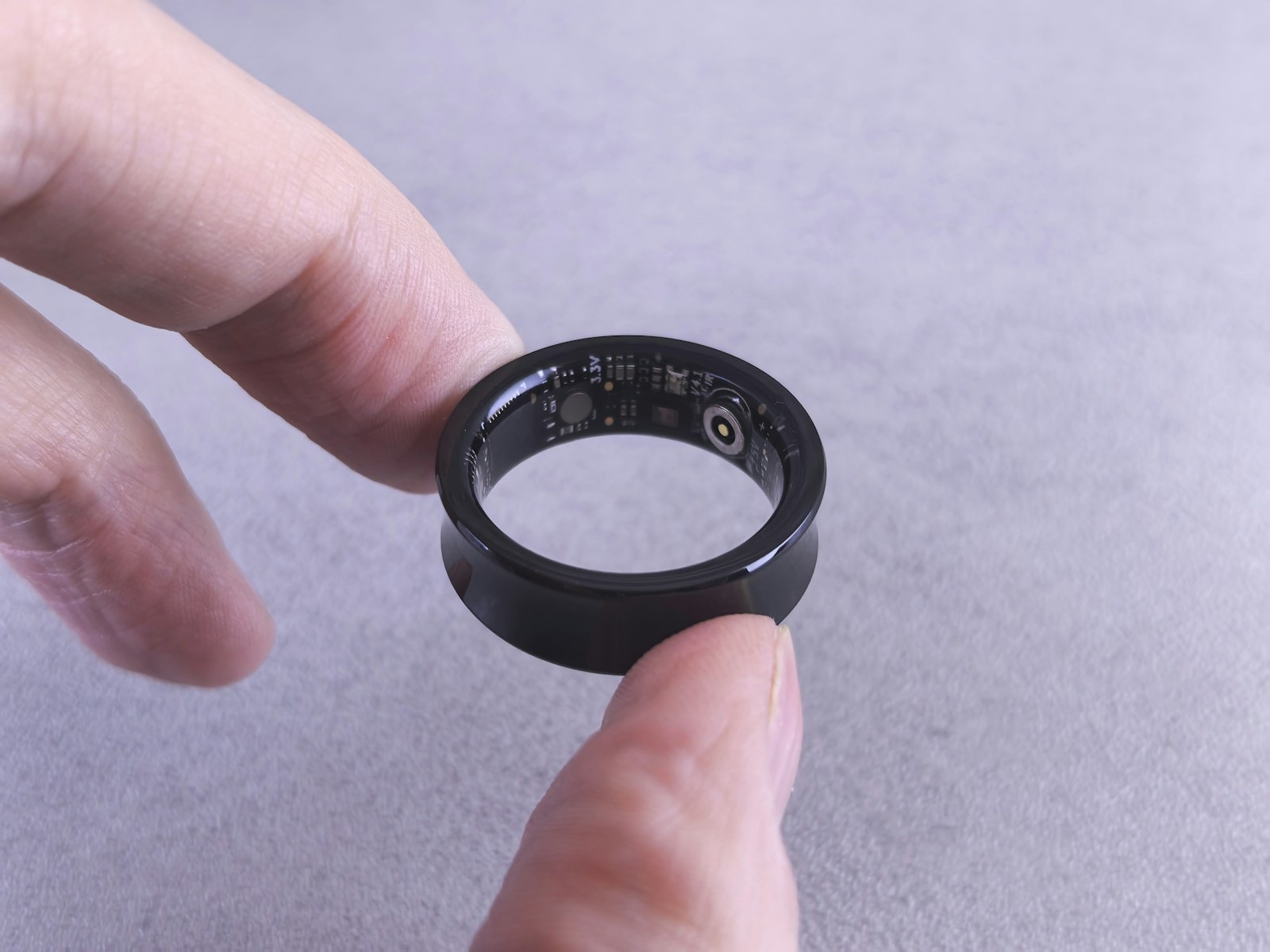
Oura will sell 50 million shares on the Nasdaq at an indicated $40 to $44. Thirteen and a half million of them are new shares issued by the company. The other 36.5 million belong to people who already own them.
That ratio — 73 per cent secondary — is the headline most coverage has settled on since the amended registration statement went to the Securities and Exchange Commission on 21 September, and it is the right one. But it understates the case, in two ways that only appear if you read past the cover page.
The first is the overallotment. Where an underwriters' option is usually filled with fresh stock, Oura's 7.5 million-share greenshoe is drawn entirely from the selling stockholders. Exercise it in full and the deal is 44 million secondary shares out of 57.5 million: 76.5 per cent.
The second is what the company does with its own share of the money.
The $6 million round
Oura estimates net proceeds to itself of approximately $532.6m at the $42 midpoint. The use-of-proceeds section then states that it intends to apply approximately $526.4m of that to satisfy tax withholding on the net settlement of restricted stock units, at an assumed rate of 47.7 per cent.
Subtract one from the other and the company is left with about $6.2m — a little over 1 per cent of what it raised — for what the filing calls general corporate purposes, including technology development, working capital, operating expenses and capital expenditure.
This is not a criticism of the structure. RSU net settlement is standard, the withholding is a genuine obligation, and paying it out of primary proceeds rather than cash on the balance sheet is a defensible choice. But it changes what the transaction is. A $2.1bn offering at the midpoint puts roughly $1.53bn into the pockets of existing holders, about $526m into the hands of tax authorities, and something close to a rounding error into the business.
Who is leaving and who is staying
The beneficial ownership table, struck as of 15 September, is the most informative page in the document.
Forerunner Ventures, which led the Series B, holds 28,679,908 shares, or 9.3 per cent. It is selling every one of them and will own nothing the day trading opens. Eurie Kim, Forerunner's managing partner, sits on the board and is listed against the same block. Lifeline Ventures and Timo Ahopelto are selling 6,947,864 of 22,564,156, with another 4,334,214 if the option is exercised — roughly half the position at full exercise.
Set against that, the two largest holders are not selling at all. Entities affiliated with FMR — Fidelity — hold 33,609,862 shares, 10.9 per cent, and are selling none; they end up at 10.4 per cent. Bedford Ridge Investment Company holds 28,510,954 and is selling none. Thomas Hale, the chief executive, and David Shuman are each down for nothing in the base deal, with a small tranche from Hale only if the option is exercised. Executives, directors and nominees as a group are selling 35.6 million of 75.5 million shares, but 28.7 million of that is the Forerunner block sitting against a director's name.
So the picture is not insiders cashing out. It is one venture fund exiting completely on a position it entered in 2020, alongside a partial trim by another, while the crossover money and the operators stay. That distinction matters to anyone pricing the deal, and it is the distinction the 73 per cent figure obscures.
What the company actually earns
The business is better than the offering structure implies, and better than most consumer hardware that has come through this year's listing window.
Revenue was $1,214.5m in the nine months to 30 June, against $697.6m a year earlier — 74 per cent growth, on top of 123 per cent in fiscal 2025, when the full year went from $406.8m to $907.9m. Gross margin was 55 per cent against 51. Net income was $60.8m, against $1.6m. Adjusted EBITDA was $106.7m.
A profitable consumer hardware company growing at 74 per cent is rare enough to be worth stating plainly.
The composition is the thing to watch. Hardware is 80 per cent of revenue and membership 20 per cent, and membership is the faster line — up 121 per cent year on year to $240.5m, against 65 per cent for hardware. Paid members went from 1.5 million in December 2024 to 5.0 million at the end of June, with the company guiding to about 5.7 million by the end of fiscal 2026. More than 94 per cent of ring activations convert to a paid membership, and weighted-average 12-month retention is about 85 per cent. Rings are sold in 56 markets through roughly 8,400 retail doors, and about 40 per cent of members arrive by word of mouth.
That is a subscription business with a hardware customer-acquisition cost recovered on day one — which is how Oura describes it, and which the numbers support.
The risk is on the hardware side, and the filing is candid about it. Gross margin fell from 65 per cent in fiscal 2024 to 52 per cent in fiscal 2025, driven in part by an $84.4m increase in warranty expense on "battery performance issues affecting certain cohorts of Oura Ring 4 devices." Rings sold rose from 1.0 million to 2.3 million over the same period, so the margin damage came while volume was doubling. The recovery to 55 per cent in the nine months since is the single most important number in the document after the member count.
Where the valuation sits
The filing states 320,945,459 shares outstanding immediately after the offering. At the $42 midpoint that is about $13.5bn; at the top of the range, about $14.1bn, which is the figure Bloomberg arrived at. Annualising nine-month revenue gives roughly ten times sales for a business growing 74 per cent with 55 per cent gross margins and positive net income.
Two cornerstone indications sit on the cover, both non-binding: Eli Lilly for up to $100m, and funds affiliated with Dragoneer for up to $300m. Lilly is also a commercial partner — LillyDirect account holders can get Oura sizing kits — which is worth noting in both directions. Up to 7.5 per cent of the deal is reserved for a directed share programme. Goldman Sachs leads.
The offering has not priced. What is already fixed is its shape: a large, well-run, growing company using the public markets to give one early backer a complete exit and its employees a way to pay their tax bill, and asking the new shareholder to fund both. There is nothing improper in that. There is also no reason for a buyer to pretend it is a growth round.
Share counts, the price range, the underwriters' option, use of proceeds, the beneficial ownership table, revenue, margins, net income, Adjusted EBITDA, paid member counts, retention, conversion rates, rings sold and the warranty charge are taken directly from Amendment No. 1 to Oura Inc.'s Form S-1, Registration No. 333-298734, filed with the Securities and Exchange Commission on 21 September 2026 and available on EDGAR under CIK 0002133022. The $526.4m withholding figure, the assumed 47.7 per cent withholding rate and the $532.6m of net proceeds are the company's own estimates at the $42 midpoint and will move with the final price; the filing states that each $1.00 change in price moves net proceeds by about $12.7m and the withholding obligation by about $12.5m. Eli Lilly's indication of interest of up to $100.0m and Dragoneer's of up to $300.0m are disclosed on the prospectus cover and are non-binding. The implied market capitalisation is our own calculation from the 320,945,459 shares stated to be outstanding immediately after the offering and does not account for unvested equity or the underwriters' option. Bloomberg's $14.1bn figure and the characterisation of Forerunner's return were reported by The Next Web on 22 September; BigGo Finance carried the secondary-share ratio the same week. Oura has not priced the offering and the terms may change. Nothing here is investment advice.
Topics marketsipoventure capitalwearablessecondaries