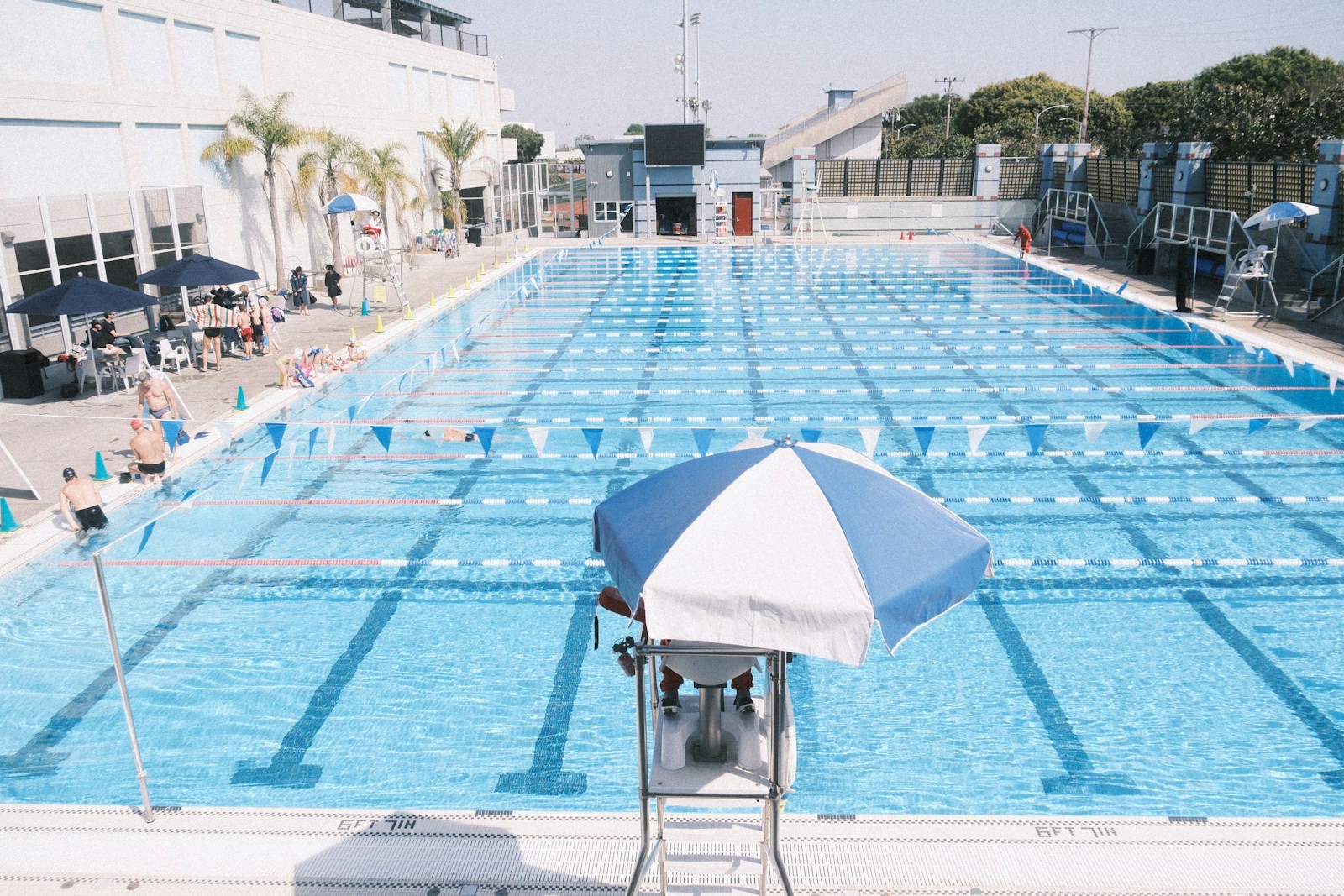
A municipal pool loses money. This is not a failure of management or a sign of declining interest; it is the design. Admission has never covered chemicals, pumps, lifeguards and insurance, and no town has ever claimed otherwise. The pool is a service the town buys for its residents, priced like a library rather than a business.
What has changed is the size of the bill, and its timing. An enormous share of America's public pools were built within the same few decades, which means they are reaching the end of their engineering lives within the same few years. A pool shell, its plumbing and its filtration have a service life, and past it the choice is not repair or replace but replace or close.
The number that ends the conversation
Replacement figures land in the millions, often the high single digits for anything beyond a basic rectangle, and they arrive in towns whose entire annual capital budget is a fraction of that. The engineering report is usually what starts the fight, because it converts a vague sense that the pool is old into a specific number attached to a specific year.
Closing is cheaper in every respect except the one that matters locally. Towns that close a pool do not save the operating subsidy cleanly; they inherit a fenced hole, a demolition cost, and a decade of being the council that closed the pool. Officials describe the politics as unlike anything else they handle, and the reason is that a pool is one of the few municipal assets residents have a childhood memory of.
The distributional argument is the strongest one and the least often made well. A closed public pool does not remove swimming from a community, it removes it from the households without access to a private one, and it removes the setting where children learn to swim at all — a fact that shows up later in drowning statistics that fall unevenly and are rarely connected back to a budget vote taken years earlier.
It is the same municipal arithmetic playing out across every free room a town still owns. The library has become the last free space in many places precisely because everything comparable has closed or started charging, and the pool is the outdoor version of that story — heavily used, impossible to monetise, and defended by people who cannot easily articulate why it matters until it is gone. Even commercial operators have noticed what is scarce here, which is why retailers have concluded they are selling belonging rather than goods.
The towns finding a way through are mostly not funding pools on their own. Regional authorities spanning several jurisdictions, school district partnerships that put the competitive pool where the swim team already is, and county recreation levies all spread a cost no single small town can carry. Each requires a level of intergovernmental cooperation that is easier to describe than to achieve, and each takes years — which is a problem when the engineering report has given a date.
What is not working is deferral, though deferral is what mostly happens. A pool kept open one more season on emergency repairs is a pool that will cost more to replace and may fail mid-summer, which is the worst version of the decision: the closure happens anyway, without the years of planning that might have produced the replacement.
Topics culturelocal governmentrecreationpublic space