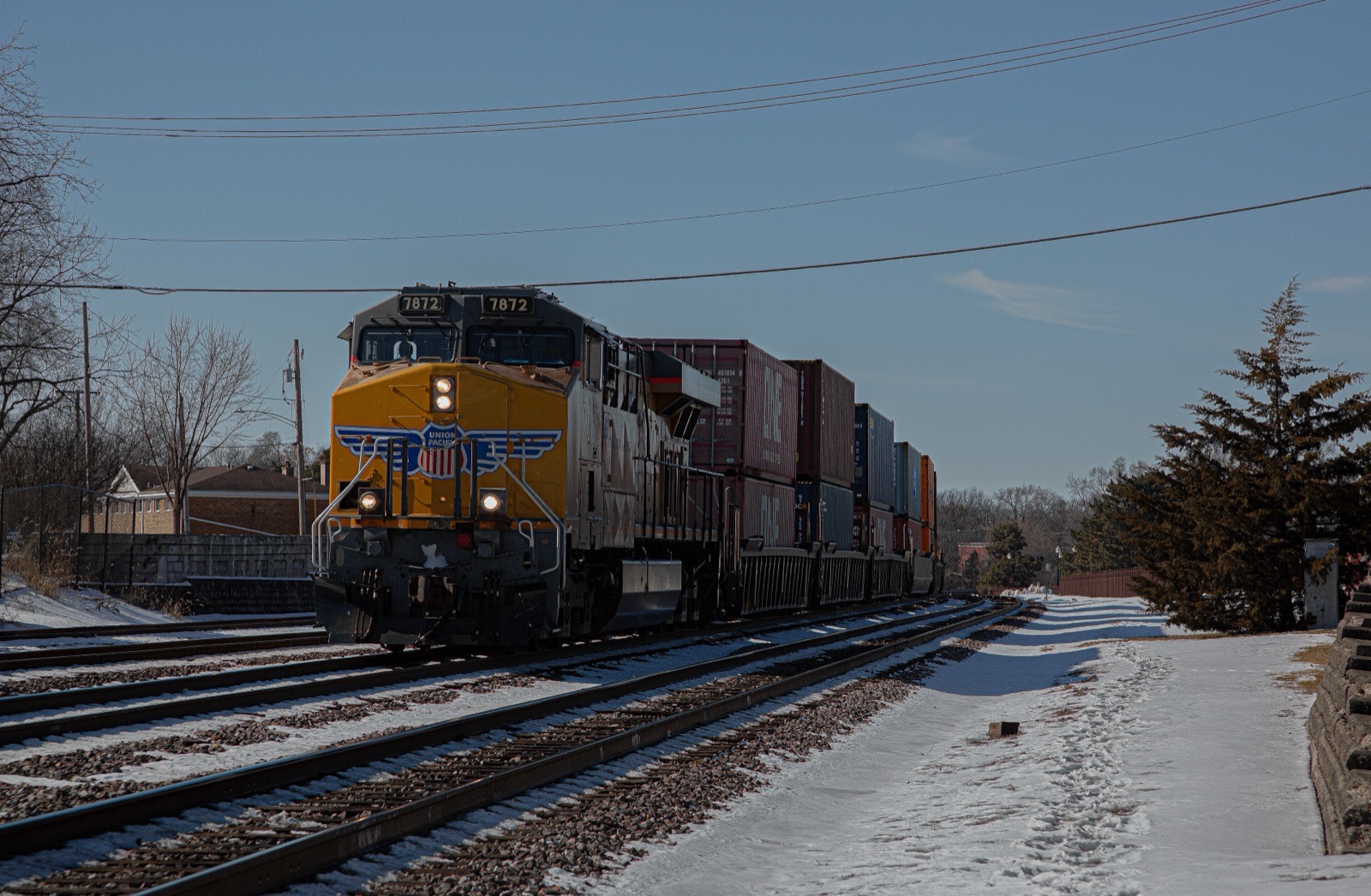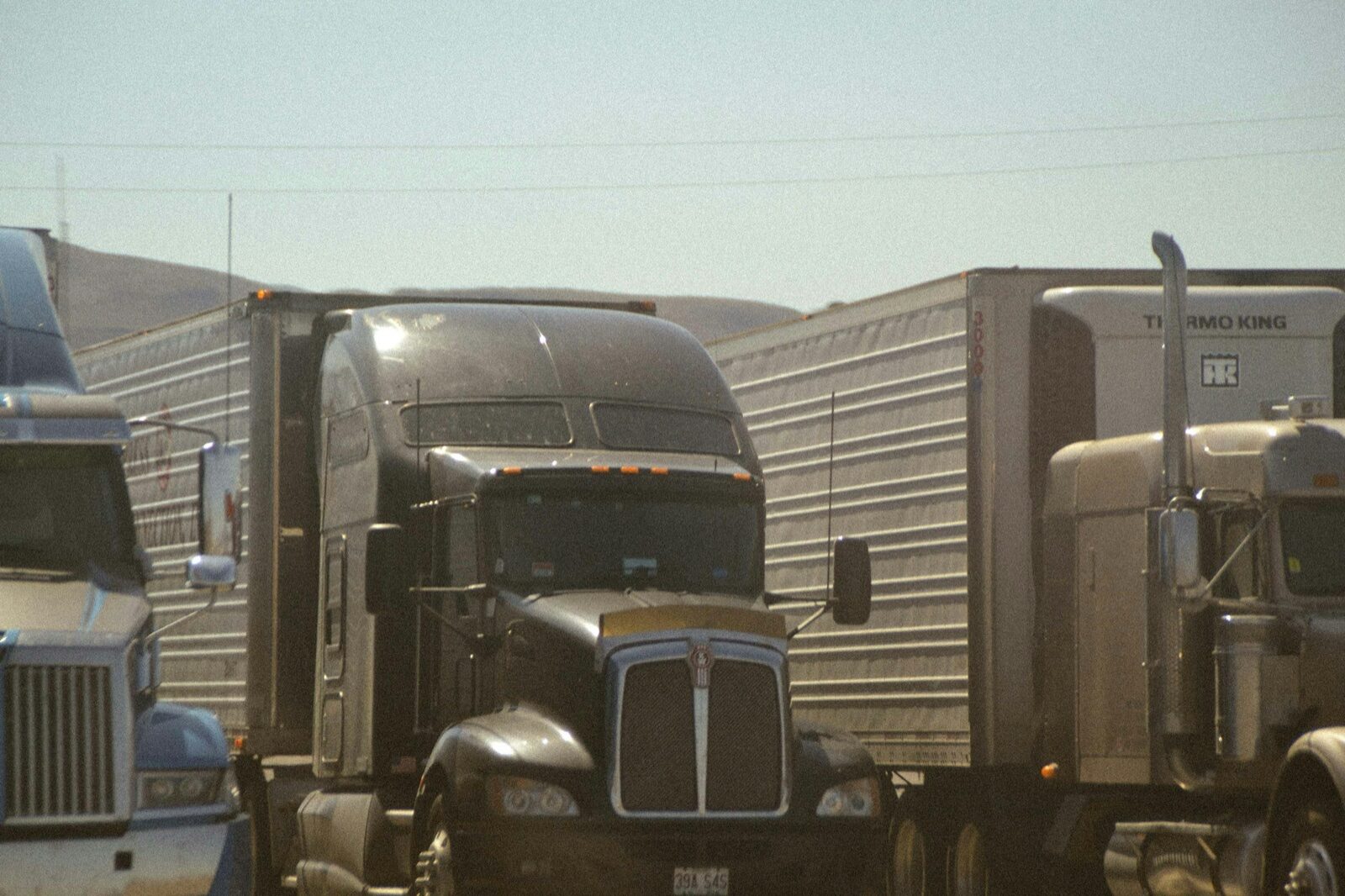
Jackdollars Transport of McKinney, Texas, had one truck and one driver. So did Rothchild Transportation of South Gate, California, and C. Pride Transport in Illinois. All three filed under Chapter 7, which typically means liquidation. They were among at least 16 trucking, delivery and transportation companies that entered bankruptcy between late August and 21 September, according to court filings and carrier records reviewed by FreightWaves.
The list is not a roll call of large fleets. Seven of the 16 were listed with six trucks or fewer. The biggest by current fleet were Globemaster, a long-haul carrier in Bolingbrook, Illinois, with 51 power units, and Xoco Transport of Hidalgo, Texas, with more than 40 tractors and 65 drivers. Both filed for Chapter 11, which lets a company keep operating while it restructures. Several of the Chapter 11 filers reported liabilities of $1 million to $10 million.
The filings landed as diesel climbed to the highest prices on record. The Energy Information Administration's weekly average for retail diesel reached $6.53 a gallon on 21 September, a record in its series, and was $6.38 a week later. A year earlier it was $3.75. In late February, before the war with Iran closed the Strait of Hormuz, it was $3.81.
Diesel cannot be shown to have caused any single one of these bankruptcies, and FreightWaves noted that a filing does not necessarily mean a carrier has stopped operating. But the price of fuel is not, on its own, the whole story either.
Rates went up too
Trucking spent 2023 and 2024 in a long freight recession, and many carriers came into this year already thin. The American Transportation Research Institute put the average cost of running a truck in 2025 at $2.336 a mile, the highest in the history of its survey. Truckload and refrigerated carriers had operating margins below 1 per cent. Flatbed carriers, on average, lost money. Fleets cut their truck counts by 2.4 per cent and left another 10 per cent of trucks without drivers.
In ATRI's 2025 figures, fuel was about 48 cents of each mile's cost. Diesel has since risen roughly three-quarters above its 2025 average. Assuming trucks burn fuel at the same rate, that would put fuel at something like 84 cents a mile now, about 36 cents more. That is our rough arithmetic, not ATRI's.
Freight rates have risen by more. Spot truckload rates, the price for loads booked one at a time, have gone from about $2.40 a mile a year ago to $3.42, according to FreightWaves' SONAR data, and its index of linehaul rates with fuel stripped out is about 70 cents a mile above where it was in 2024.
"I know I'm going to get some hate on this because I have — carriers are doing better this year despite higher fuel prices," Craig Fuller, FreightWaves' chief executive, said on the company's market programme on 21 September, "because there's more demand, and rates are more higher on the spot market."
His colleague Julie Van de Kamp agreed that "the market is absolutely healthier," then added the condition. "I think the question is, have rates risen enough for carriers to be comfortable? And the answer is no, not yet."
The timing problem
The difference between a large carrier and a one-truck operator is not mainly the rate per mile. It is cash.
Fuel is paid for at the pump or within two or three days, Fuller said. Freight payments can take 60 to 90 days to arrive. A carrier that buys diesel at $6.50 a gallon is, in effect, lending that money to its customer for two or three months. Fuel surcharges, which pass some of the cost on, do not cover the miles a truck drives empty to its next load, Van de Kamp said, so the carrier pays for those directly. And banks, Fuller said, are "getting a little bit skittish right now in terms of lending money."
Large carriers on contract freight are better placed. "Your large contract carriers are somewhat insulated from this discussion about diesel prices," Dean Croke, principal analyst at DAT Freight & Analytics, told Transport Topics. "But your spot market carriers are getting crushed."
Fewer firms, not fewer jobs
The bankruptcies have not shown up as a fall in trucking employment. The Bureau of Labor Statistics' preliminary estimate puts truck transportation jobs at 1.47 million in September, about 8,000 more than in February. That is still 115,000 below the peak of October 2022. Employment counts payroll jobs at trucking firms, though, and owner-operators who drive their own truck are not on a payroll.
Fuller expects capacity to keep leaving the market. "I think we're going to see more and more reductions in capacity," he said, pointing to regulatory enforcement, insurance and driver costs and the cash strain from diesel. Fewer trucks tends to mean higher rates for those that remain, which is part of why the survivors' numbers look better.
Relief on the price of diesel may be coming from Washington and Europe. The Group of Seven agreed on Friday to release up to 100 million barrels of diesel and crude from emergency stocks, and the White House is preparing an executive order to widen the use of tax-exempt diesel, Reuters reported. Neither changes when a shipper pays its invoice.
The list of bankruptcy filings, fleet sizes, asset and liability ranges and filing dates are from FreightWaves, "16 trucking companies hit bankruptcy court in less than a month" (22 September 2026), which drew on federal court filings and carrier records; the count of fleets with six trucks or fewer is ours from its table. Spot rate, net-of-fuel and tender rejection figures and the quotations from Craig Fuller and Julie Van de Kamp are from FreightWaves' SONAR market update of 21 September 2026. The quotation from Dean Croke of DAT Freight & Analytics was given to Transport Topics and is quoted as republished by TheStreet (25 September). Operating cost, margin and capacity figures are from the American Transportation Research Institute's 2026 Analysis of the Operational Costs of Trucking, as summarised in ATRI's release of 15 July 2026. Diesel prices are from the Energy Information Administration's weekly retail series (data to 28 September 2026); the record is against the series' history. The estimate of current fuel cost per mile is this publication's rough calculation, scaling ATRI's 2025 fuel cost by the change in average diesel prices and assuming unchanged fuel economy. Employment is from the Bureau of Labor Statistics' Current Employment Statistics (truck transportation, seasonally adjusted; September 2026 preliminary). The G-7 release and the planned executive order are from Reuters, as published by The Straits Times on 2 October. Accurate to 9pm ET on 3 October 2026.
Topics businesstruckingdieselbankruptcyfreightsupply chainsmall businessfuel priceslogistics