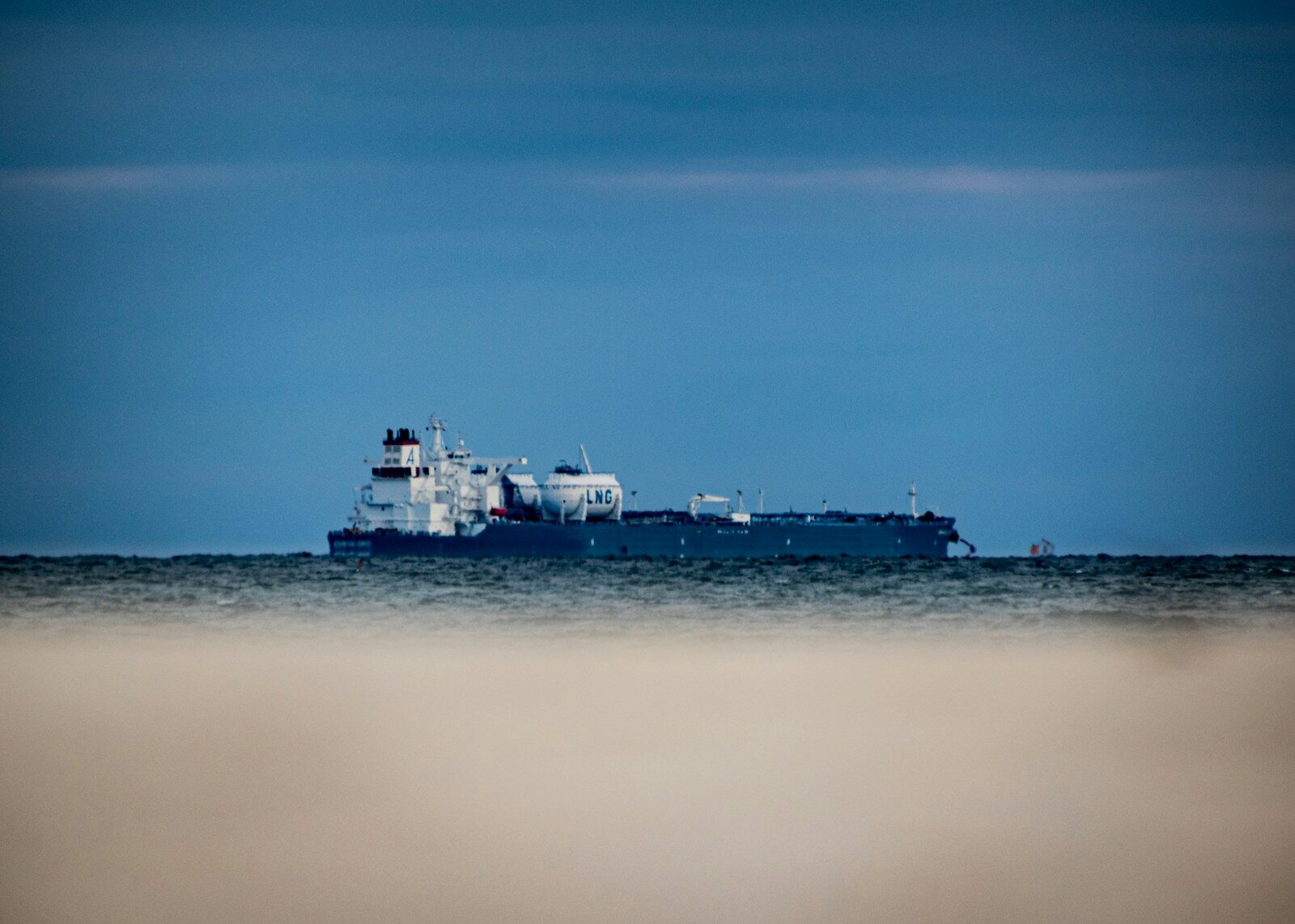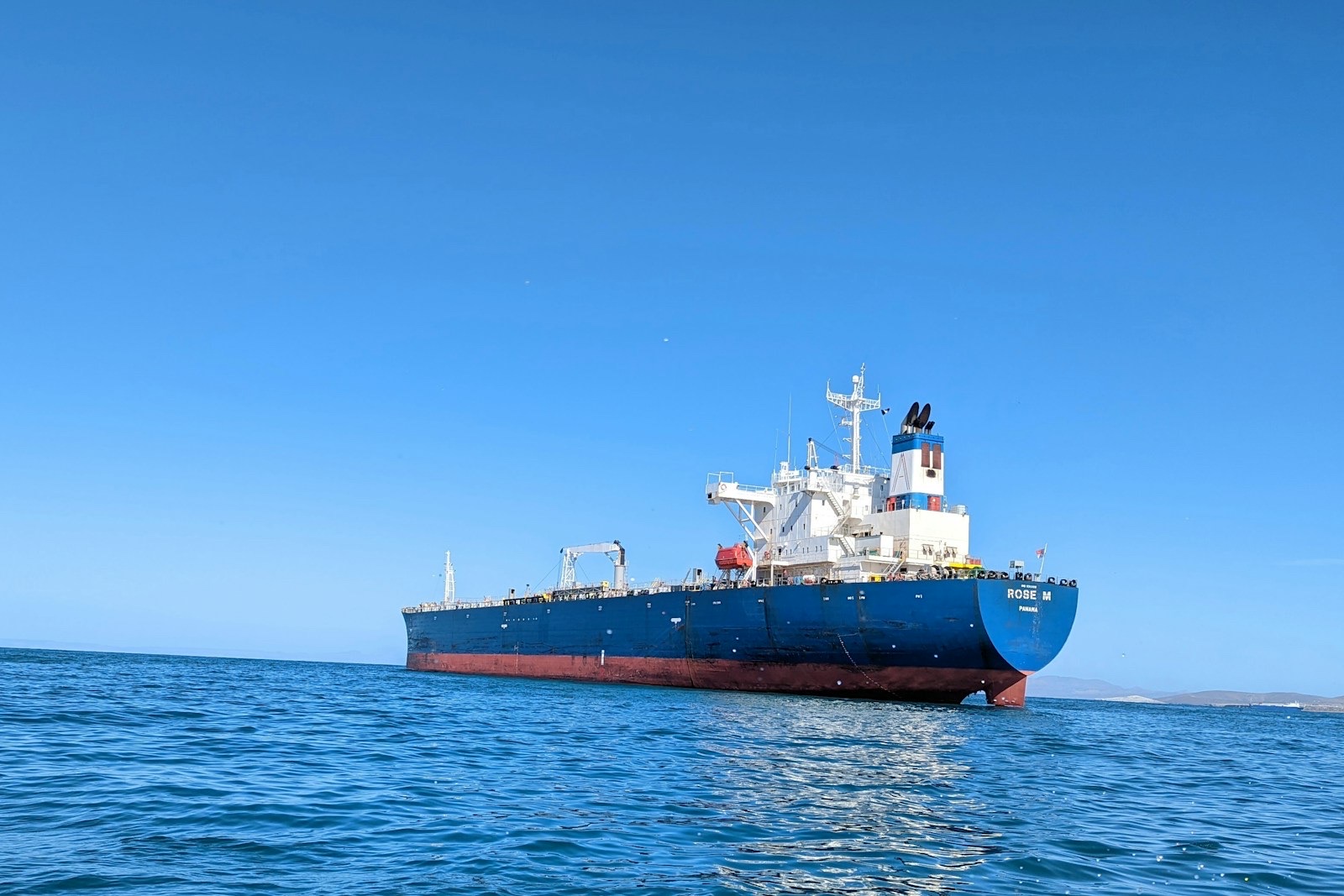
President Trump said on Saturday that he had turned down Iran's offer to reopen the Strait of Hormuz within a week. By Monday morning in Asia, Brent crude had recovered all of Friday's fall and more, trading at $107.35 a barrel shortly before 8am London time, according to Al Jazeera, against about $104 at the end of last week.
"I rejected their deal," Trump told reporters on the South Lawn of the White House, as reported by NBC News. "They want to make a deal where they open the strait immediately because they're losing so badly."
That is the news. The more useful question for anyone reading an oil price this week is what, exactly, the market thinks it has lost. The honest answer depends on whose count of the strait you believe, and the two counts on the public record are about as far apart as it is possible for two counts to be.
What Iran offered
Abbas Araghchi, Iran's foreign minister, set out the plan in New York during the United Nations General Assembly last week. Its shape, as reported by Al Jazeera and CBS News, is a compressed version of the memorandum of understanding the two governments agreed in June, which collapsed within days.
The United States would lift its naval blockade of Iranian ports, waive sanctions on Iranian oil sales, observe a ceasefire that extends to Lebanon, and release frozen Iranian assets. Shipping would then resume along a route agreed between Iran and Oman, and nuclear talks would restart. "If certain conditions are met," Araghchi said, "the Strait of Hormuz would be open on the end of the seventh day."
Iran has not said the plan is withdrawn. Araghchi's response to Saturday's remarks, reported by NBC News, was that "nothing has yet been conveyed to us from the mediators", and that Tehran would decide once it had. Which mediator is not settled on the record: NBC News reports that the plan went through Qatar, while BBC reporting names Oman.
Trump, for his part, told Axios on Sunday, according to CBS News, that he expected talks to resume "in the coming week". Asked whether strikes might resume before the November midterms, he said: "It's possible, but I just don't want to say that."
The official count
On Friday, a US official said that nearly 40 million barrels of crude had crossed the strait under military escort in the previous 48 hours. NBC News attributed the figure to an unnamed official; CBS News attributed it to US Central Command and described it as matching pre-war levels.
The arithmetic supports that description, as far as it goes. Forty million barrels in two days is 20 million barrels a day, and 20 million barrels a day is precisely the average the US Energy Information Administration gives for oil flow through Hormuz in 2024: about a fifth of all the petroleum liquids the world consumes.
It is also the sentence Trump was leaning on when he said on Saturday that the United States had "total control" of the waterway. If escorted convoys can move a normal day's oil, the argument runs, an Iranian offer to reopen the strait is an offer to give Washington something it already has.
The satellite count
IMF PortWatch, run by the International Monetary Fund with the University of Oxford, counts every vessel whose transponder signal is picked up crossing the strait. Its daily data, queried by this desk on Monday morning and running to 20 September, tells a very different story.
In the first 20 days of September, PortWatch logged 78 transits of the Strait of Hormuz. Nineteen of them were tankers. On 16 September and again on 20 September it logged one ship all day.
In the same 20 days of September 2025, it logged 1,731 transits, 976 of them tankers. Over the whole of 2025 the strait averaged a little over 85 ships a day.
The break is visible to the day. PortWatch recorded 116 transits on 25 February, 57 on 28 February, the day the war began, 20 on 1 March and none at all on 4 March. Monthly averages since have run between about 3 and 13 ships a day, the high points in June and July around the collapsed memorandum. September so far averages under four.
Why both can be true
PortWatch sees what transmits. A ship that switches its automatic identification system off does not appear in its count, and the incentive to switch off has rarely been stronger: both Iranian cargoes running the blockade and escorted cargoes that would rather not advertise their position have reason to go dark. Kpler, the commodity tracking firm, told The Asia Business Daily that a shadow fleet sailing with transponders disabled was part of why Gulf supply had held up at all.
So the transponder count is a floor, not a measurement. The official figure, meanwhile, is a single 48-hour window chosen and announced by one side of a war, not a rate. Nobody has claimed that convoys move 20 million barrels every day, and Central Command has published no series that would let anyone check.
The third number sits between them. Kpler puts September exports from the seven Gulf producers, Saudi Arabia, the United Arab Emirates, Iraq, Oman, Qatar, Kuwait and Iran, at 12.8 million barrels a day: the highest since February, and still 6 million a day below the pre-war 18.8 million. Some of that does not touch Hormuz at all. Saudi Arabia can pipe crude west to the Red Sea at Yanbu, and the UAE can pipe it to Fujairah on the Gulf of Oman, and both routes exist for exactly this contingency.
A market reading those three figures is not pricing a strait that is shut, or one that is working. It is pricing a strait that moves a large but unverifiable amount of oil under escort, in convoys whose frequency is set by the US Navy and whose safety depends on a war that one side has just declined to pause.
What Monday's price is paying for
That is why a rejected offer can move Brent by several dollars even if not a single escorted barrel is lost. What Iran offered was not oil. It was the end of the conditions under which oil moves only by convoy, and with it the insurance premiums, the rerouting and the question of what happens to a cargo if the escorts are needed somewhere else. When Brent first passed $100 this month, it was strikes on the places tankers load that pushed it there. This time it is the absence of a date.
Iran says it is waiting for a formal answer. Trump says talks will resume this week. The strait, on the only count anyone outside a government can check, carried fewer ships in 20 days than it used to carry in one.
President Trump's South Lawn remarks and Abbas Araghchi's response are as reported by NBC News ("Trump says he has rejected Iranian proposal to reopen Strait of Hormuz", Freddie Clayton, updated 12.10pm ET on 26 September 2026). Trump's remark to Axios that talks would resume "in the coming week", his answer on strikes before the November elections, US Central Command's figure of 122 vessels redirected since the blockade was reinstated on 14 July, and the end-of-week Brent price of about $104 are as reported on CBS News's live coverage of 25 to 27 September. The terms of the seven-day plan are as reported by Al Jazeera ("What's in Iran's seven-day plan to reopen the Strait of Hormuz?", Caolán Magee, 25 September) and CBS News; Araghchi's quotation on the seventh day is from Al Jazeera. NBC News reports that the plan was conveyed through Qatar; BBC reporting carried by Yahoo News describes Oman as the mediator. We have not resolved that discrepancy and say so. Monday's Brent price is as reported by Al Jazeera ("Oil prices surge after Trump rejects Iran's plan to reopen Strait of Hormuz", John Power, 28 September), which also reported 132 transits for 21 to 27 September without naming the tracker. The figure of about 40 million barrels in 48 hours is attributed by NBC News to an unnamed US official and by CBS News to US Central Command; it has not been independently confirmed by this publication. The September export figures of 12.8 million and 18.8 million barrels a day are Kpler's, as reported by The Asia Business Daily (Lee Hyunwoo, 28 September). Daily transit counts are from IMF PortWatch's Daily Chokepoints dataset, queried directly by this desk on the morning of 28 September; the latest date published was 20 September. The 2024 average of 20 million barrels a day is from the US Energy Information Administration's "Amid regional conflict, the Strait of Hormuz remains critical oil chokepoint", 16 June 2025. CNBC, CNN and The Hill refused automated retrieval and nothing here rests on them. Accurate to 8.55am ET on Monday 28 September 2026.
Topics worldiranstrait of hormuzoilenergyshippingunited states