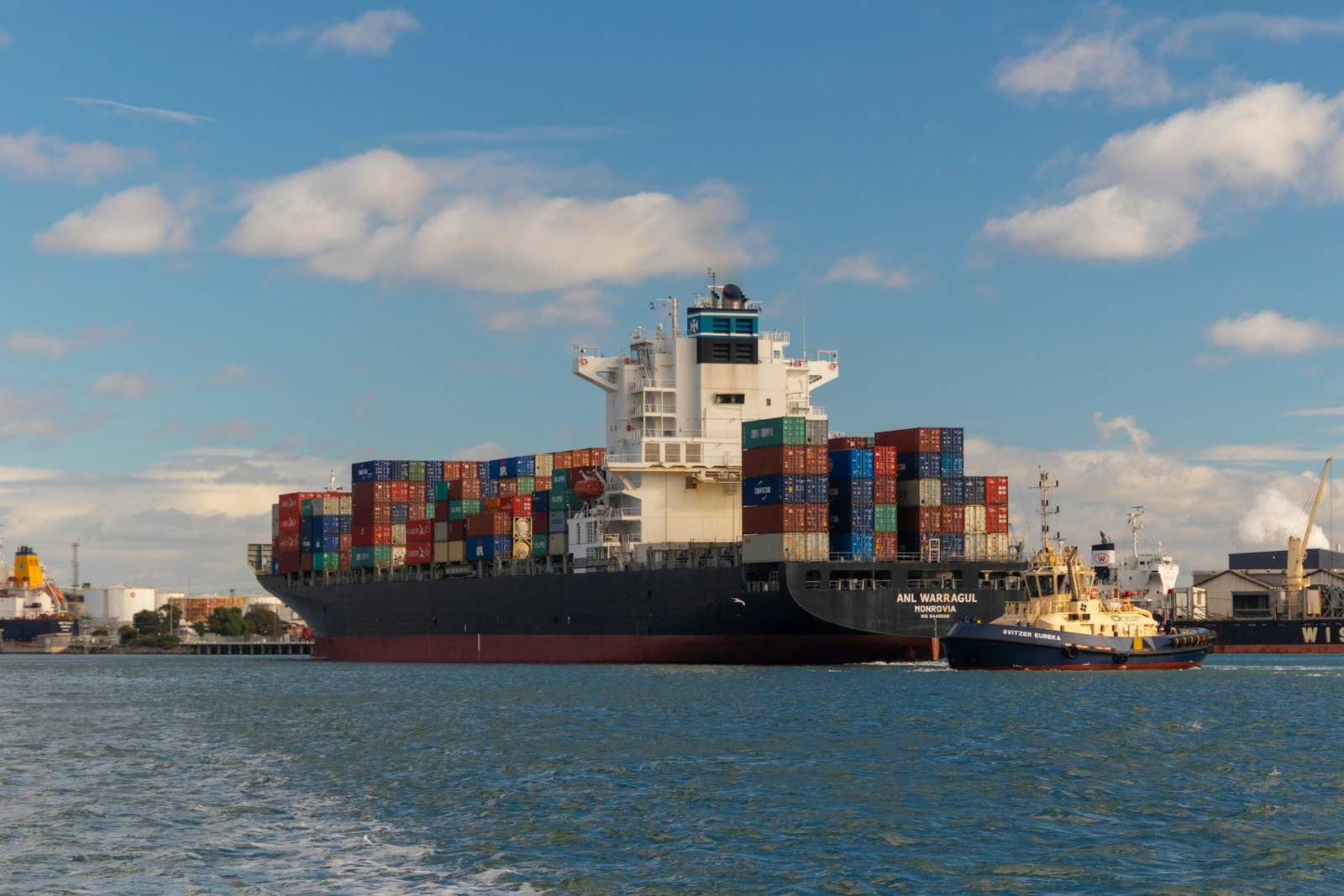
Iran's Revolutionary Guard says it struck three oil tankers transiting the Strait of Hormuz and three US-affiliated ships, hours after American forces disabled three Iranian tankers and destroyed a fourth vessel.
US Central Command has not confirmed any of it. No casualties have been reported. No damage has been reported. No IRGC commander is named in the statements.
Treat the claim accordingly. A claim of attack is not an attack, and in a conflict where both sides are briefing, an unverified assertion of six hits with no observable consequence is exactly the kind of thing that turns out on Monday to have been one near-miss or nothing at all.
The part that requires no verification
Alongside the claim, the IRGC published a warning. Ships were told to refrain from "any suspicious movement aimed at passing through unauthorized waterways", and that vessels doing so "will be targeted".
That sentence is on the record. It does not depend on whether a single missile was fired today.
And it is a materially different claim from anything Iran has made in this conflict so far. Attacking ships is an act. Blacklisting named hulls, as Iran did when it expanded a list to 56 vessels that grows by ordinary commercial contact, is a targeting policy. Declaring that passage through the strait requires Iranian authorisation is a claim of sovereign control over an international waterway — and a statement that unauthorised transit is itself grounds for attack.
From a list of ships to a list of permissions
The distinction matters commercially and not only legally.
A blacklist tells an owner whether their particular hull is at risk. It is unpleasant, it propagates through ship-to-ship contact, and it can at least be checked: is my vessel on the list or not.
An authorisation regime inverts that. Every vessel is at risk unless it has permission, and the criteria for permission are set by the party issuing the threat and are not published. There is no list to check. There is only a question — will this transit be considered authorised — that nobody outside Tehran can answer in advance.
For an underwriter, that is the harder of the two to price, because it removes the last remaining basis on which risk could be differentiated between ships.
The exchange rate was answered in the same currency
This paper wrote this afternoon that CENTCOM's commander had published a price — shoot at two of our ships and we take three of yours — and that the retaliation was aimed at revenue rather than at launchers.
We also wrote what to watch: whether Iran's answer came against warships or against merchant shipping, and that if it came against third-party vessels, the United States would have established a price for attacking its warships and transferred part of the cost onto shipowners and crews who are not party to any of it.
Iran's claim is three tankers and three US-affiliated ships. Three for three, in the same currency, plus the naval component. If the claim is true, that is precisely the transfer described. If it is false, the warning that accompanied it does the same work at no cost — which is the more efficient move and, on the evidence available tonight, the more likely one.
What it does to a market already at record rates
Very little, and that is the point.
Rates were already extraordinary because the closure emptied the strait and made the remaining willing tonnage enormously valuable — over $200,000 a day for a very large crude carrier, up more than 440 percent on the year. A market that has already priced a waterway as effectively closed has limited room to reprice it as closed again.
What changes is the composition of who is left. Each escalation removes another tranche of owners and another set of crews willing to sail, and the vessels that remain are increasingly those with the least to lose and the fewest alternatives. That is a slow deterioration in the quality of the fleet using the strait, and it will not show up in a freight rate.
The people it shows up for are the ones aboard, which is where this has landed at every stage: the ships can reroute and the people on them cannot.
What would confirm it
Two things, and neither is a statement from either government.
Automatic identification system tracks showing vessels stopped, diverted or gone dark in the strait tonight. And Lloyd's or a war-risk underwriter reissuing terms — because the market will price a real attack within hours whether or not anybody confirms it.
Until one of those appears, this is a claim and a warning, and only one of them is established.
The IRGC's claim to have targeted three oil tankers in the Strait of Hormuz and three US-affiliated ships in retaliation for the US strikes earlier on 5 September 2026; the quoted warning against "any suspicious movement aimed at passing through unauthorized waterways" and that vessels doing so "will be targeted"; the fact that US Central Command has not confirmed the Iranian strikes; the absence of reported casualties or damage from them; and the attribution of the statements to the IRGC Navy and Iran's military command without a named commander are as reported by the Jerusalem Post and ABC News on 5 September 2026. The US strikes on the M/T Downy, M/T Stark 1 and M/T Kylo, and the remarks of CENTCOM commander Admiral Brad Cooper, are as reported earlier the same day and covered by this publication. The analysis is our own.
Topics worldhormuzshippingiranenergy