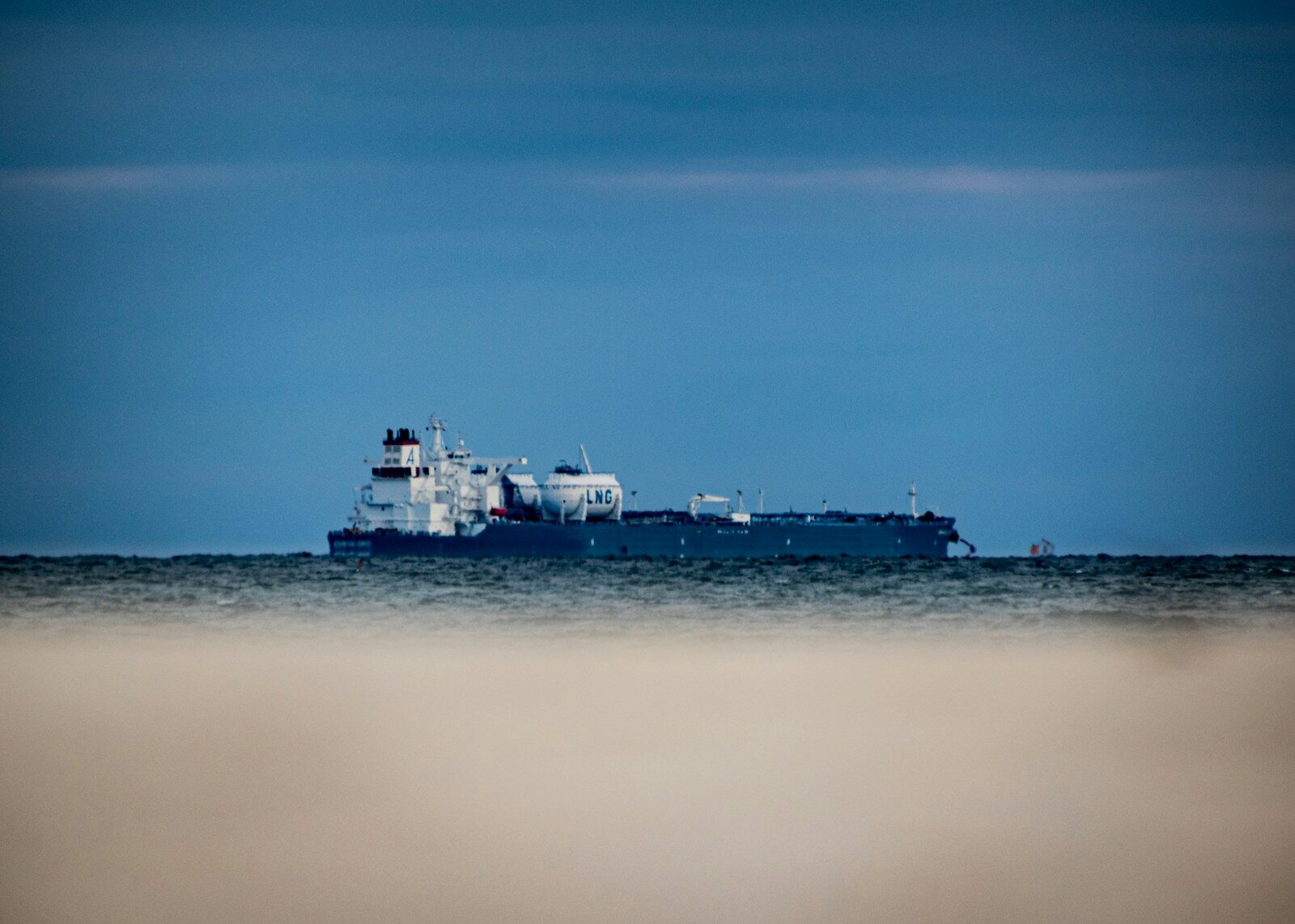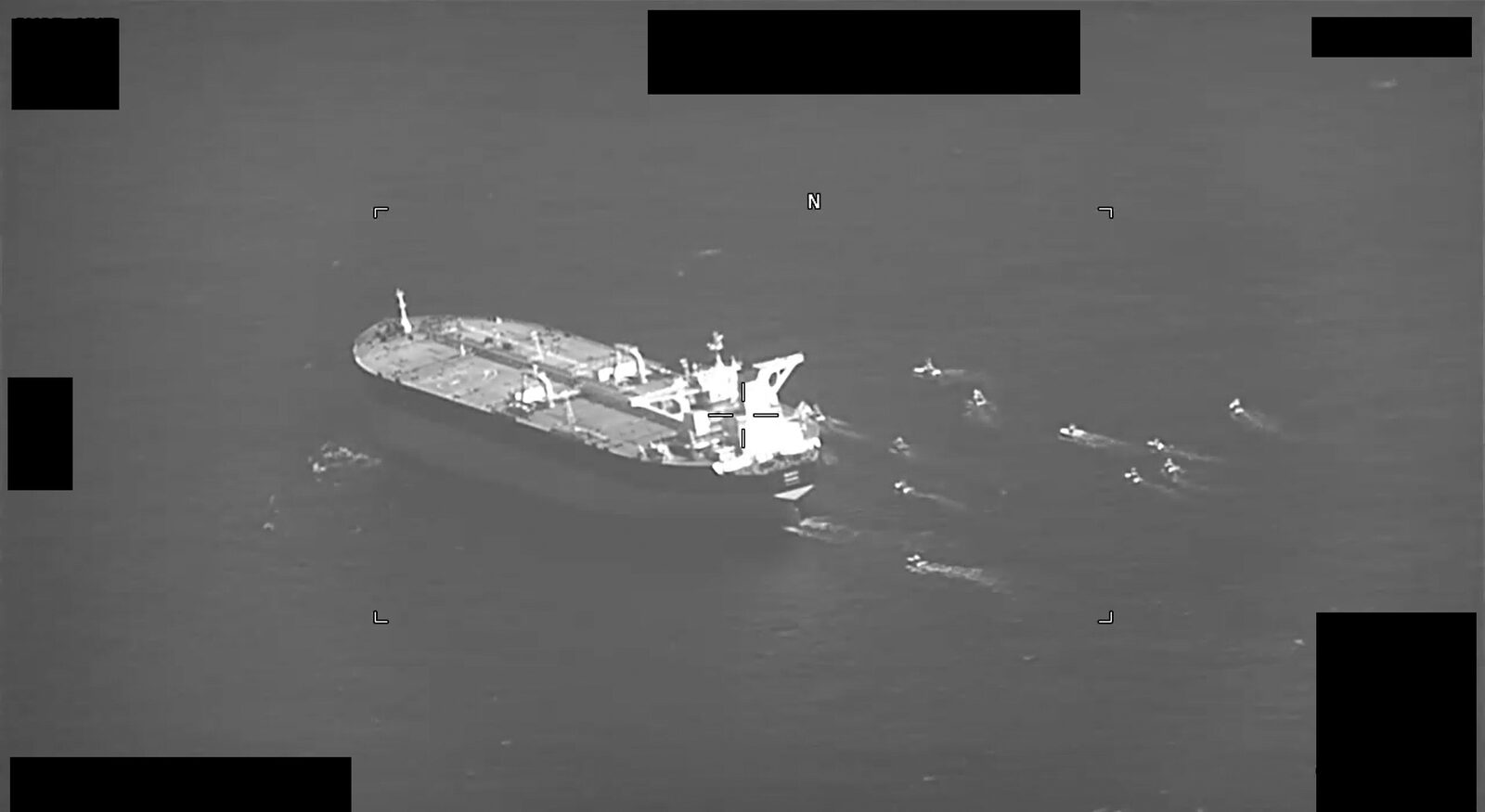
Iran's Persian Gulf Strait Authority added eleven ships to its blacklist this week. The list now names 56 vessels: very large crude carriers, LNG and LPG tankers, clean product ships.
Buried in the notice is the provision that changes what this instrument is. Any vessel that conducts a ship-to-ship transfer or transshipment with a listed vessel is itself added to the list.
That single clause converts a targeting list into something with entirely different properties, and it is worth being precise about what.
Three ways to close a waterway
Mines deny an area. They are indiscriminate, they are expensive to remove, and — as this desk wrote on Wednesday — clearing them does not reopen anything, because the missiles on the shore are untouched by sweeping. Mines say: nobody comes through here.
Missiles and drones deny an area more selectively, at the cost of a decision each time. Someone must choose a target, which means someone must be willing to be seen choosing it. The strike on the Bahri-owned tanker Sidr late on Monday, which killed two Filipino seafarers and which Saudi Arabia attributes to Iran, is that instrument being used.
A blacklist denies nothing geographically. It attaches to hulls. It says: these particular ships, wherever they are, are legitimate targets — and it leaves everyone else to work out whether they are next.
The clause that makes it spread
Ship-to-ship transfer is ordinary commerce. Cargo moves between vessels at anchorage constantly, for lightering, for consolidation, for logistics that have nothing to do with anybody's politics.
Making STS contact a qualifying condition means the list grows by trade rather than by decision. A master who takes cargo from a listed ship has enrolled his own vessel, and the operator who chartered him has enrolled a hull he may own for another twenty years. Nobody at Iran's end has to identify that ship, assess it, or choose it. The shipping market adds it automatically by doing what shipping markets do.
The effect is that every owner in the Gulf must now screen counterparties before a routine transfer — check the list, check whether the other vessel has touched the list, and decline business that would previously have been unremarkable. That is precisely the compliance behaviour Western sanctions regimes induce, and it is being induced here by the party those regimes are aimed at.
Iran has not blockaded the strait. It has built a sanctions programme, pointed it at the world's tanker fleet, and delegated enforcement to the fleet's own compliance departments.
Why a list is worse than a closure
A closed strait is terrible and it is legible. An owner can plan around zero. Cargo is rerouted, contracts are renegotiated, the market prices the absence.
A selectively open strait cannot be planned around at all. IMF PortWatch counted six transits on 30 August against a pre-crisis baseline it puts at about 85 a day. Six is not zero. Six means passage is possible, which means every owner must decide, voyage by voyage, whether this particular hull with this particular history is one of the ones that gets through — and 465 vessels are currently holding position away from berth while their operators work exactly that out.
Ambiguity is the product here. A blockade would invite a coalition response and a clear legal characterisation. A list produces the same collapse in traffic while leaving every incident deniable and every owner individually responsible for their own risk assessment.
It outlives the war
This is the property that will matter longest, and almost nobody is discussing it.
Mines get swept. Missile batteries get destroyed or stood down. A ceasefire ends both. A list is a document, and a hull that is on it stays on it unless somebody removes it.
An owner whose vessel was listed — perhaps for nothing more than an STS transfer with a ship that was itself listed for an STS transfer — holds an asset with a permanent encumbrance that no registry records and no insurer can price away. That vessel is harder to charter into the Gulf for the rest of its economic life, and it is harder to sell, because the buyer inherits the listing.
The strait will reopen before those ships do.
Who is actually paying
Since 28 February, by Philippine government figures, 31 vessels carrying 421 Filipino seafarers have been attacked in incidents involving the strait. Four hundred and six were unharmed. Ten were injured and recovered. Three were killed. One is missing.
Two of the dead were aboard the Sidr on Monday. The crew contained the fire. The remains have been taken to Oman and the fourteen surviving Filipino crew are being repatriated.
Those proportions are the shipping industry's labour market rendered as a casualty list. The world's merchant fleet is crewed disproportionately by Filipino seafarers, so a conflict conducted against tankers is a conflict whose human cost lands overwhelmingly on one country that is party to none of it. This desk has made the point before — the ships can reroute and the people aboard them cannot — and the figures have now caught up with it.
There is no Cape of Good Hope for this strait; the detour does not exist. There is also no detour for a crew.
The number to watch
Not transits, which everyone is watching, and not the blacklist total, which Iran controls and can publish at whatever rate serves it.
Watch how many vessels are added for STS contact rather than by direct designation. That ratio is the only available measure of whether this instrument is being used as a targeting list or as a contagion — and if the contact additions come to outnumber the designations, Iran will have achieved something no mine ever could: a closure of the strait that maintains itself, propagated by the commercial system it was aimed at, and still in force on the day the shooting stops.
The addition of 11 vessels bringing the blacklist to 56, the categories of ship covered and the provision extending the list to any vessel conducting ship-to-ship transfers or transshipment with a listed vessel are as reported by MarineLink and The DeepDraft on 3 September 2026, attributed to Iran's Persian Gulf Strait Authority. The figure of six transits on 30 August against a pre-crisis baseline of about 85 a day is attributed to IMF PortWatch, and the count of 465 vessels holding position away from berth is from shipping monitors, both as reported on 1-3 September 2026. The attack on the Bahri-owned Sidr late on Monday, the deaths of two Filipino seafarers, the containment of the fire by the crew, the transfer of the remains to Oman, the repatriation of 14 surviving Filipino crew and Saudi Arabia's attribution of the attack to Iran are as reported by Rappler, Philstar and the South China Morning Post on 3 September 2026, following Saudi statements. The cumulative figures of 31 vessels carrying 421 Filipino seafarers attacked since 28 February — 406 unharmed, 10 injured and recovered, three killed and one missing — are from Philippine government figures as reported on 3 September 2026. This paper reported a pre-war figure of about 130 transits a day on 2 September, sourced to Al Jazeera; the 85 figure here is IMF PortWatch's and the two are not measuring identically. The analysis is our own.
Topics worldhormuzshippingsanctionsenergy