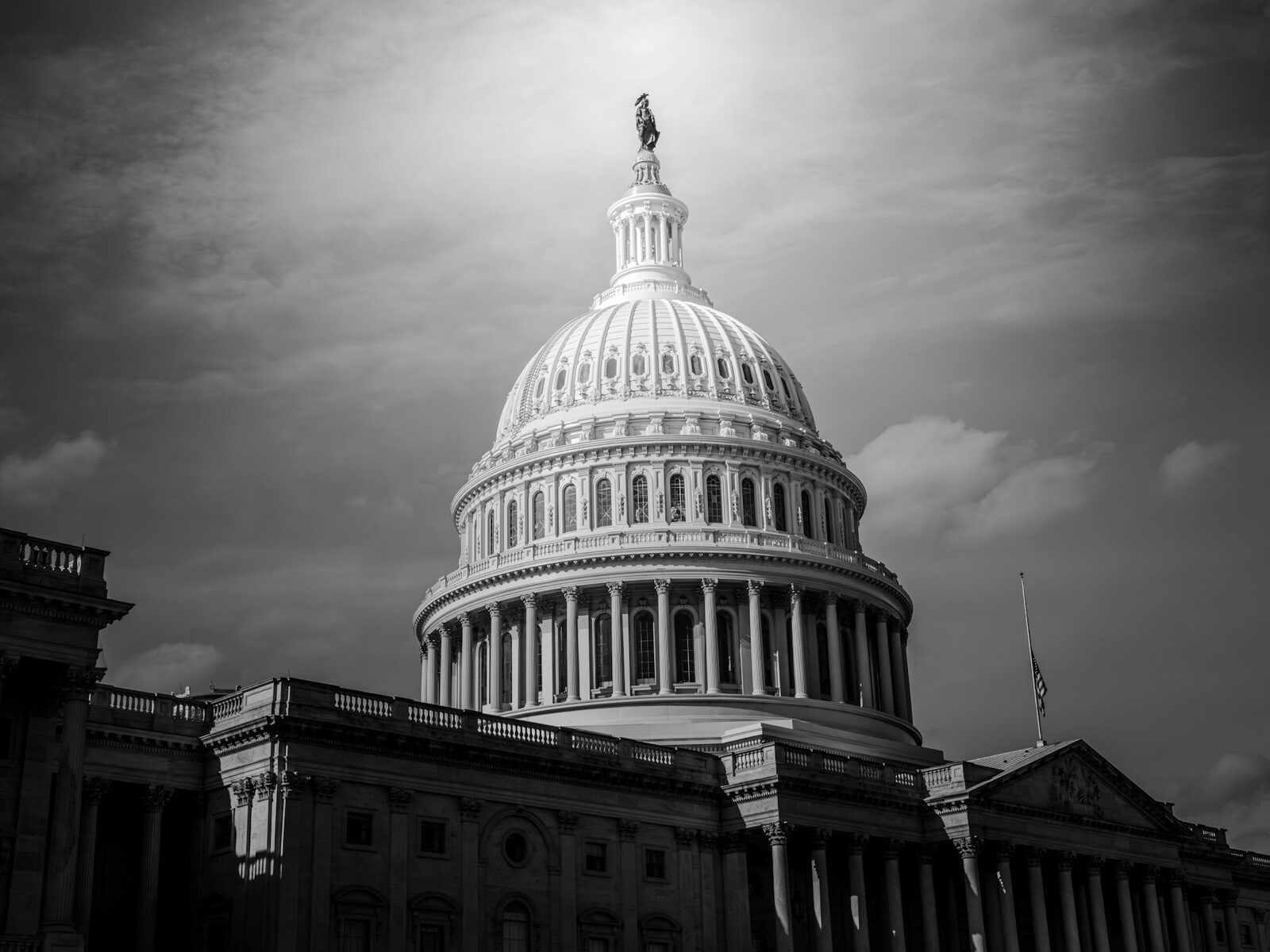
The House of Representatives voted late on Tuesday to direct the president to remove American forces from hostilities with Iran. The tally was 220 to 204.
Seven Republicans voted for it: Nancy Mace of South Carolina, Mariannette Miller-Meeks and Zach Nunn of Iowa, Tom Barrett of Michigan, Brian Fitzpatrick of Pennsylvania, Warren Davidson of Ohio and Thomas Massie of Kentucky. Four of them had supported earlier versions in June and July.
This is the third time since June that the House has passed a resolution of this kind. Nothing has changed on the ground after either of the first two, and the reason is arithmetic rather than politics.
What a war powers resolution actually is
It is not a letter of complaint. Under the War Powers Resolution of 1973, a member can force a privileged vote — leadership cannot bury it — and the text directs the removal of forces from hostilities that Congress has not authorised.
The catch is what happens after it passes. Congress originally wrote the mechanism as a concurrent resolution: both chambers agree, the president is bound, no signature required. In 1983, in INS v. Chadha, the Supreme Court held that Congress cannot direct the executive by resolution alone. Anything binding has to go to the president.
So the instrument survives, but it now travels the ordinary route: House, Senate, desk, veto. Which means it needs two-thirds of both chambers to take effect over the president's objection.
Why the vote still matters
Three answers, none of which is "it will stop the war."
The first is the record. Every member is now on the record three times, seven weeks before an election, on a war whose cost the Congressional Budget Office put on Tuesday at $2bn to $3bn a month, and about $38bn through early August.
The second is the Senate. The July resolution is still sitting there unscheduled. A third House passage raises the cost of continuing to not schedule it, particularly for senators who have said the war needs congressional authorisation.
The third is the drift in the Republican column. Four defectors became seven. That trend is small and real, and it is the only number in this story that has moved in the direction of the resolution's sponsors.
What the administration is arguing
The White House has disputed the validity of an earlier resolution rather than complied with it, which is the position every administration since 1973 has taken in some form: that the War Powers Resolution intrudes on the commander-in-chief power, and that operations of this kind are not "hostilities" within the meaning of the statute.
That argument has never been resolved by a court, because courts have consistently declined to referee it as a political question. The practical effect is that the constitutional fight is settled by whoever can muster votes, and the vote threshold is two-thirds.
This desk has written about a war given a published end date, and about the same president's suggestion that the United States might stay in Iran and keep the oil. Those two statements describe wars of very different lengths. Congress has now voted three times to choose the shorter one, without the votes to make the choice stick.
What to watch
Whether the Senate schedules the July resolution before members leave to campaign. If it does not, the question moves to the next Congress, which will be elected in November by voters who have just watched their representatives vote three times on a war that continued regardless.
And the Republican count. Seven is not seventy. But the number that would change this story is not the tally on the floor; it is the day enough members of the president's own party decide the political cost of the war exceeds the cost of crossing him.
The vote of 220-204 late on 15 September 2026; the resolution's introduction by Rep. Seth Moulton and its direction that the president remove United States armed forces from hostilities with Iran; the seven Republicans voting in favour and the note that four of them had supported earlier resolutions in June and July; the July measure still awaiting Senate action and the absence of scheduled consideration; and the Congressional Budget Office estimate of $2bn to $3bn a month and roughly $38bn through early August are as reported by CBS News, the Associated Press and Al Jazeera on 15 and 16 September 2026. The assessment that the president would veto the measure is as reported by the Associated Press. The account of the War Powers Resolution's procedure and of the effect of INS v. Chadha on concurrent resolutions is general. The analysis is our own.