On Saturday this paper argued that the interesting thing about the weekend was not the diplomacy but the mechanism: two governments that have been trying to kill each other agreed within days to stop doing one specific thing for a specific period, with no monitors and no enforcement, and it held.
We said the question was whether the 72 hours would be extended, and on what terms. An extension scoped the same way — aerial attacks, named cities, a fixed period — would mean the two sides had decided to build on a mechanism that worked. A return to strikes the moment the aircraft left would mean the pause had been hospitality.
The talks are over. There was no breakthrough in Moscow and none in Kyiv. Zelensky says he expects the war to continue into the winter. The undertaking runs to the end of Monday.
On the evidence available tonight, it was hospitality.
Putin said so at the time
This is the part worth being accurate about, because it was reported at the time and then dropped out of the coverage.
Putin did not accept Ukraine's proposal for a broader three-day ceasefire. He said so explicitly. What Moscow undertook was described as tied to protecting the negotiations and the people taking part in them.
That is not diplomatic hedging. It is a scope, stated in advance, and it did exactly what a scope does: it defined the pause as a function of the visit rather than of the war. When the visit ended, the condition the pause was attached to ended with it. Nothing was broken. The thing simply ran to its stated limit, which is what carefully worded undertakings do.
We should have weighted that framing more heavily on Saturday than we did. The argument in that piece — that narrow, short, self-verifying obligations are the only kind this war has produced, and that a first step scoped to what a bystander can confirm is worth more than a comprehensive one nobody can police — still stands, and the weekend is still evidence for it. But the piece treated the pause as a demonstration of capability that might be extended. Putin's own framing said it was a perimeter around a meeting, and a perimeter does not extend.
What the meetings actually produced
Three hours at the Kremlin. Ushakov called it constructive, frank and useful, and described no outcomes. Two rounds in Kyiv, then a third with European representatives. No breakthrough announced from any of them.
Witkoff said he was confident there would be a good resolution. Zelensky said he expects the war to continue into winter.
Those two statements are not necessarily in conflict — one is about an eventual settlement and the other about the next several months — but the gap between them is the whole state of the negotiation. The American envoy is describing a destination. The Ukrainian president is describing the road, and he has to fight along it.
The thing that was demonstrated anyway
Strip out the disappointment and one fact survives the weekend intact.
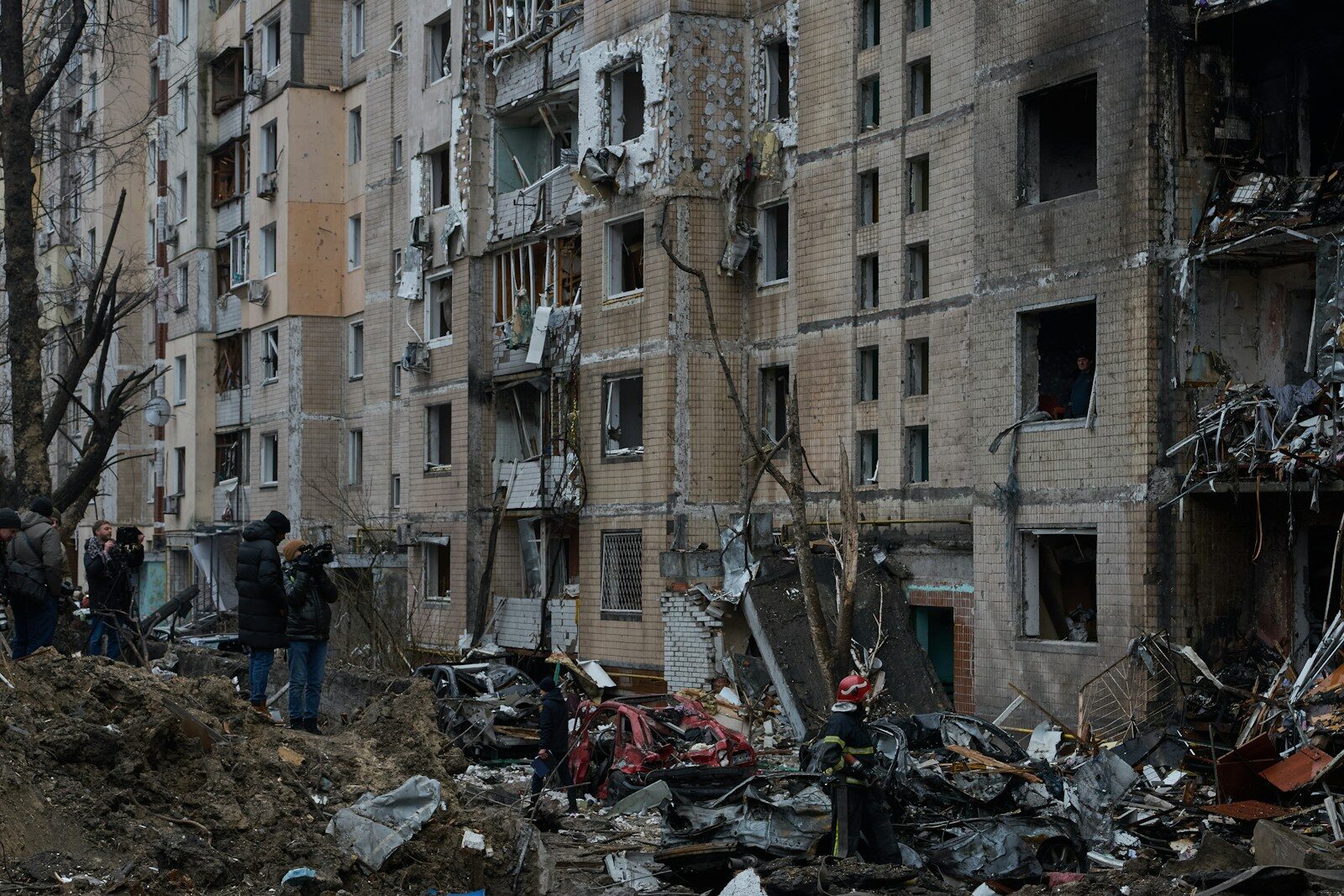
Two governments arranged, within days and through no formal instrument, to stop a specific category of attack on two specific cities for a specific period, and both honoured it. There was no monitoring mission. There was no penalty for defection. It worked because a capital is the most observable target in a war: everybody can see whether Kyiv was hit, so verification was free and cheating would have been immediate public knowledge.
That is the same shape this desk keeps finding. Clearing the mines out of Hormuz did not reopen the strait, because the mines were never what kept the ships away — the obstacle everyone names and the one that binds are rarely the same. Here the named obstacle to a ceasefire has always been verification. For three days, verification cost nothing, and a pause happened.
What was missing was never the machinery. It was a reason, and for three days the reason was that somebody important was flying in.
What to watch
Not whether strikes resume, which would tell you only that a stated undertaking ended when it said it would.
Watch whether anybody proposes a pause scoped the same way for a reason that is not a visit — a grain corridor, an energy-infrastructure window before winter, a fixed period over a named city with no negotiator inside it. That is the test of whether the weekend taught either government anything, and it costs nothing to propose.
And watch the winter. Zelensky's remark was not rhetoric; it was a forecast about the season in which attacks on power generation do the most damage to civilians and the least to armies. If a narrow, observable pause is ever going to be worth proposing on its own merits, energy infrastructure in the cold is where the argument is strongest — and this weekend established that both sides can do the mechanics in under a week when they want to.
The 72-hour halt on aerial attacks beginning at midnight on 6 September 2026; Zelensky's statement that Ukraine was ready to refrain from attacking Moscow through the end of Monday 7 September and expected reciprocal restraint; Putin's explicit statement that Moscow had not accepted Ukraine's proposal for a broader three-day ceasefire and the description of the Russian undertaking as tied to protecting the negotiations and those taking part; the duration of the Kremlin meeting at more than three hours and Yuri Ushakov's characterisation of it as constructive, frank and useful without specific outcomes; the two rounds of talks in Kyiv followed by a third with European representatives; Zelensky's remark that he expects the war to continue into the winter; and Steve Witkoff's statement that he was "confident that there'll be a good resolution here" are as reported by CNN, Al Jazeera, PBS, the Kyiv Independent, ABC News, Time and Reuters between 5 and 7 September 2026. No resumption of strikes on either capital had been reported at the time of writing, and none is asserted. The analysis is our own.
Topics worldukrainerussiaceasefirediplomacy