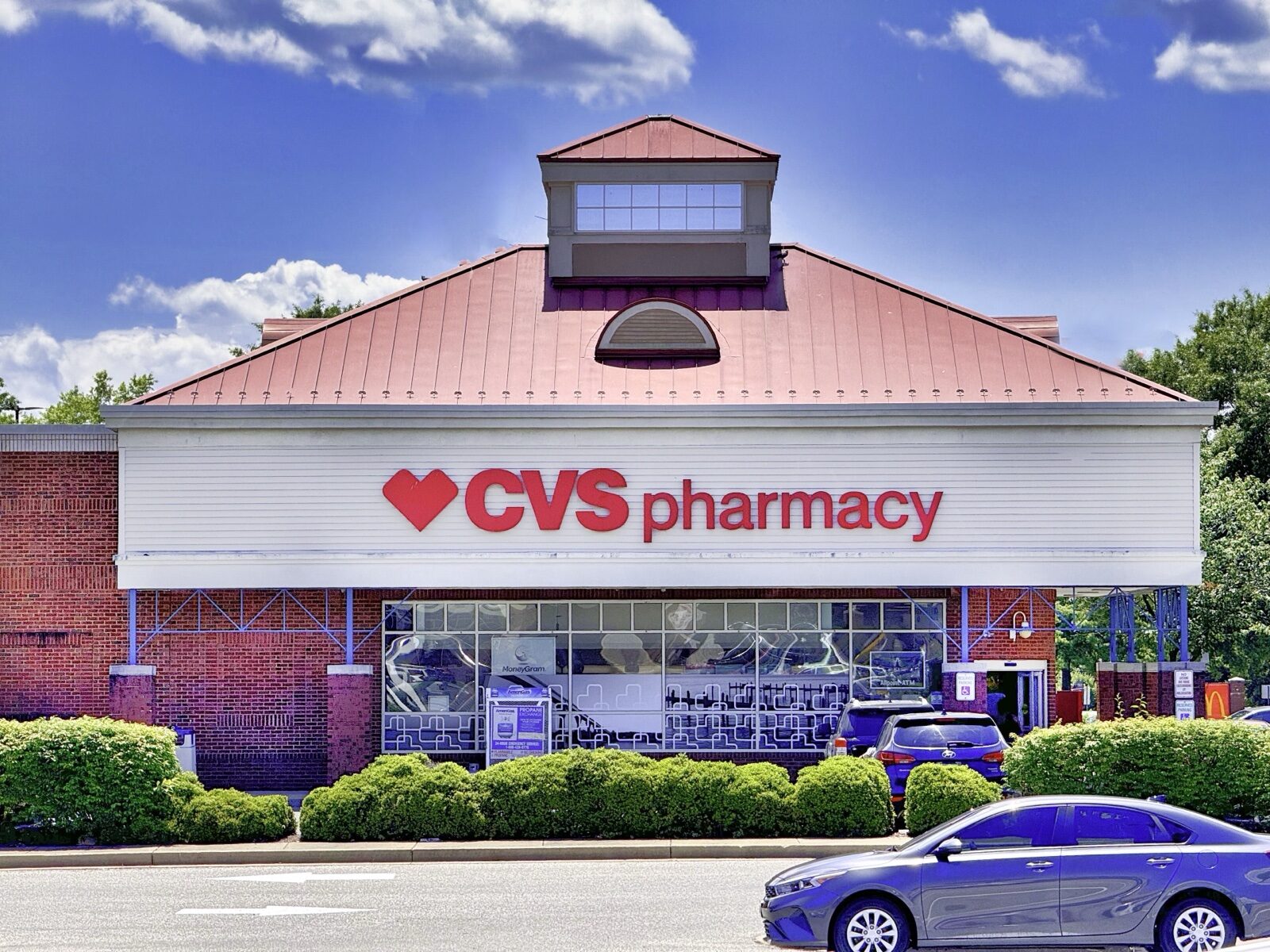
CVS Health plans to split into two public companies, separating its roughly 9,000 drugstores from the Aetna insurer and the Caremark pharmacy benefit manager, the company said on Wednesday. It expects to complete the split in the first half of 2028.
The retail company will be called CVS Pharmacy. It gets the stores, the mail pharmacy, the MinuteClinic walk-in clinics and a technology unit called Health100. The other company, called CVS Health for now, keeps Aetna, Caremark, CVS Specialty and the Oak Street Health and Signify Health care businesses. Shareholders will own shares in both. None of it is final. The board still has to give final approval, a Form 10 registration statement has to become effective at the Securities and Exchange Commission, and CVS wants confirmation that the split will be tax-free, according to its announcement.
What the release does not give is a set of accounts for CVS Pharmacy. The company's filings come close. Since 2022, CVS has reported a segment called Pharmacy & Consumer Wellness, which holds most of what the new company will own. We pulled five years of its numbers from CVS's annual reports and set them side by side. They show a business that has grown larger and busier while earning less, and one that gets about a third of its revenue from the company it is about to leave.
What exactly is CVS splitting up?
It is separating the businesses that pay for drugs from the business that dispenses them at the counter. David Joyner, the chairman and chief executive, will run the healthcare solutions company. Prem Shah, now group president, will run CVS Pharmacy. Mr. Joyner said in the release that the company plans "to create two focused companies to improve consumer engagement, affordability, and care coordination."
The announcement came the same day as third-quarter results. CVS raised its 2026 forecast for adjusted earnings to at least $8.20 a share, from a range of $7.90 to $8.10, and its forecast for cash flow from operations to at least $15.5 billion, according to the earnings release. Revenue for the quarter was $108.4 billion, up 5.4 per cent on a year earlier.
What do the filings show about the stores?
Revenue has grown fast and profit has not. In 2021 the segment had $101.6 billion of revenue and $7.26 billion of adjusted operating income, the measure CVS uses to judge its segments, according to the Form 10-K for 2023. In 2025 it had $139.4 billion of revenue and $6.04 billion of adjusted operating income, according to the Form 10-K for 2025.
Pharmacy & Consumer Wellness segment, 2021 to 2025 (this publication's arithmetic from CVS 10-K filings)
| Year | Revenue | Adjusted operating income | Margin | Prescriptions filled | Income per prescription | Stores at year end |
|---|---|---|---|---|---|---|
| 2021 | $101.6bn | $7.26bn | 7.1% | 1,589.7m | $4.57 | 9,939 |
| 2022 | $108.6bn | $6.53bn | 6.0% | 1,625.4m | $4.02 | 9,674 |
| 2023 | $116.8bn | $5.96bn | 5.1% | 1,649.1m | $3.62 | 9,395 |
| 2024 | $124.5bn | $5.77bn | 4.6% | 1,715.5m | $3.37 | 9,135 |
| 2025 | $139.4bn | $6.04bn | 4.3% | 1,808.8m | $3.34 | 8,979 |
Prescriptions are counted on CVS's 30-day-equivalent basis, so a 90-day fill counts as three. Income per prescription is our division of the segment's whole adjusted operating income by prescriptions filled. It is a rough gauge, because the figure also includes front-store sales and other services, but it moves in one direction.
Across the five years, revenue rose 37.1 per cent and adjusted operating income fell 16.8 per cent, by our arithmetic. Prescriptions rose 13.8 per cent. The margin on each dollar of sales fell from 7.1 cents to 4.3 cents. CVS's own explanation for 2025 is "continued pharmacy reimbursement pressure", set against more prescriptions and a richer drug mix, including branded GLP-1 weight-loss drugs.
Revenue per store, by our arithmetic, rose from about $10.2 million in 2021 to $15.5 million in 2025. Much of that is drug prices, not shoppers. Pharmacy revenue per prescription rose from about $49 to $64 over the period. Front-store sales, the shampoo and snacks side of the shop, were $21.3 billion in 2021 and $21.5 billion in 2025, and their share of the segment's revenue fell from 21 per cent to 15 per cent.
How many stores has CVS closed?
It closed 1,247 stores in the five years from 2021 to 2025 and opened or acquired 264, according to the store tables in the two filings. The count went from 9,962 at the start of 2021 to 8,979 at the end of 2025, down 9.9 per cent. The biggest years were 2022 to 2024, with between 299 and 318 closures each. In 2025, CVS closed 243 stores and added 87, and it bought prescription files from Rite Aid pharmacies, which it says brought extra volume. The store counts include pharmacies inside Target stores.
So the prescriptions have moved onto fewer counters. Each store filled about 160,000 30-day-equivalent prescriptions in 2021 and about 201,000 in 2025, by our arithmetic, a rise of about a quarter.
Why the in-house revenue matters
In 2025, $45.6 billion of the segment's $139.4 billion of revenue was "intersegment revenue", meaning sales to other parts of CVS, according to the segment note in the 2025 annual report. That is 32.8 per cent. The share was 33.0 per cent in 2024 and 33.4 per cent in 2023, by our arithmetic. The filings say these flows run between Aetna, the Health Services segment that holds Caremark and the stores. They also describe one of them: Health Services pays the stores an administrative fee for filling and patient-management work behind Caremark's specialty and mail pharmacies.
Inside one company, those dollars net out. After the split, they become contracts between two companies with different shareholders. The terms of those contracts will decide a good part of CVS Pharmacy's revenue and margins. CVS has not published them. That is the single most important number the Form 10 will have to show.
What the segment is, and is not, a proxy for
| Item | In the segment today | In CVS Pharmacy after the split |
|---|---|---|
| About 9,000 retail pharmacies | Yes | Yes |
| MinuteClinic, more than 800 locations | Described under Health Services in the 10-K | Yes |
| Mail pharmacy | Run by Health Services | Yes |
| Health100 technology services | Not separately reported | Yes |
| Omnicare long-term care pharmacies | Until deconsolidated in the third quarter of 2025 | No |
| Sales to Aetna and Caremark | Intersegment revenue | Customer contracts |
The segment figures are therefore a guide, not a forecast. Moving mail pharmacy in, and Omnicare out, changes the base. The table above is our reading of the two descriptions in the 10-Q and 10-K; the company will draw the final line in its registration statement.
How is 2026 going?
Better on profit, flatter on sales. For the nine months to 30 September, the segment's revenue was $101.3 billion, 0.4 per cent lower than a year earlier, and adjusted operating income was $4.31 billion, up 4.3 per cent, according to the quarterly report. Prescriptions rose 3.2 per cent. In the third quarter alone, pharmacy same-store sales fell 0.6 per cent, after rising 16.8 per cent in the same quarter of 2025.
The segment's weight inside CVS is also shifting. Its adjusted operating income was 29.7 per cent of the company total in the first nine months of 2026, against 34.9 per cent a year earlier, by our arithmetic, mainly because Aetna's earnings recovered. In the Health Care Benefits segment, adjusted operating income rose to $6.38 billion in the nine months from $3.62 billion.
Drugstore chains have been changing shape across the Atlantic too. Boots, the British chain, is being sold to the Weston family, with an insurance group set to own half. CVS is going the other way, separating the pharmacy from the payer that owns it.
What to watch next
The Form 10. It should give CVS Pharmacy's carved-out accounts, its debt, its dividend and the terms of the supply and service agreements with the healthcare solutions company. CVS said both companies are expected to have solid investment-grade credit ratings. Until those numbers appear, the five-year record in the table is the best public evidence of what the new company inherits: more volume, fewer stores, thinner margins, and a third of its revenue from a customer it is about to stop owning.
The separation plan, its timing and conditions, the leadership and the quote from David Joyner are from CVS Health's press release of 4 November 2026, filed as Exhibit 99.1 to a Form 8-K, and from its Form 10-Q for the quarter ended 30 September 2026, filed the same day. Third-quarter results and 2026 guidance are from the earnings release filed as Exhibit 99.1 to a separate Form 8-K on 4 November 2026. Segment revenue, adjusted operating income, prescriptions, front-store sales, intersegment revenue and store counts for 2023 to 2025 are from the Form 10-K for 2025, filed 10 February 2026; figures for 2021 and 2022 are from the Form 10-K for 2023, filed 7 February 2024, which first reported the Pharmacy & Consumer Wellness segment for those years. Nine-month 2026 figures are from the Form 10-Q. All filings were retrieved from SEC EDGAR on 5 November 2026. Growth rates, per-prescription and per-store figures, intersegment shares and the tables are this publication's arithmetic. The analysis is our own.
Topics businessCVS Healthpharmacyhealthcareretail