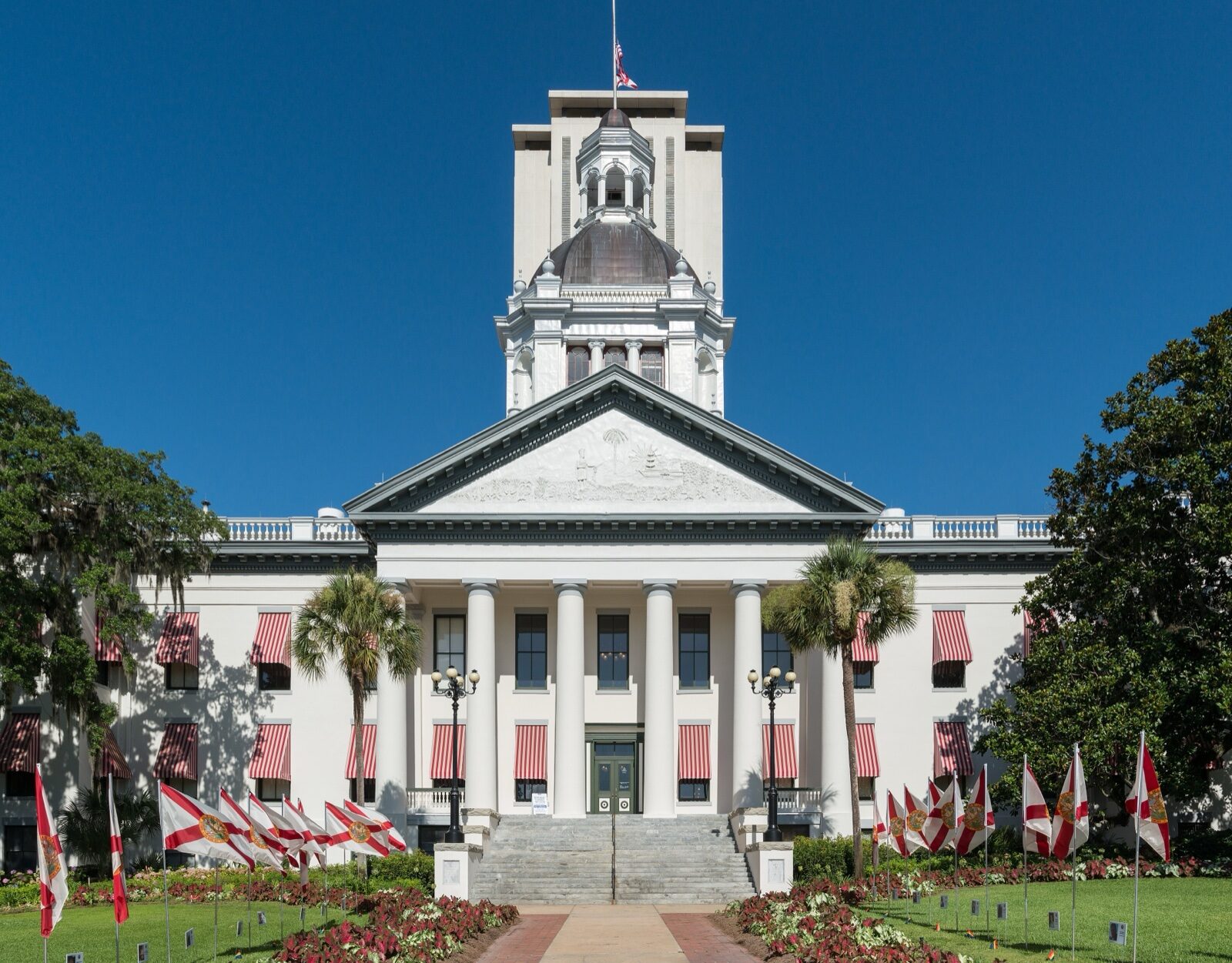
Florida voters approved a cut in local property taxes on homes on Tuesday, giving Amendment 3 about 62 per cent of the vote against the 60 per cent it needed. With 99 per cent of precincts reporting, the measure had 4,917,829 yes votes and 3,016,210 no votes, according to News4Jax.
By our arithmetic that is 61.98 per cent, or about 157,400 votes more than the 60 per cent line. The amendment raises the homestead exemption for non-school property taxes to $150,000 in 2027 and $250,000 in 2028, and cuts the yearly cap on assessment increases for non-homestead property from 10 to 5 per cent. The state's estimators put the cost to counties, cities and special districts at $11.8 billion a year once fully in effect, as we reported before the vote. The first-year loss is nearly $5 billion in 2027-28, HousingWire reported, citing the Legislature's economists.
Florida was the largest of the tax measures on Tuesday's ballots, but not the typical one. Elsewhere, voters mostly said no to cutting today's tax bills and yes to capping tomorrow's.
Which tax measures passed?
Five of the 13 statewide tax measures we tracked passed, four failed and four were not yet decided when we last checked, at about 9:20 a.m. Eastern time on Thursday. All results are unofficial. We grouped them by what a yes vote does.
Tax measures on the 3 November ballot (this publication's tally from the reports cited)
| State and measure | A yes vote | Result | Vote |
|---|---|---|---|
| Florida, Amendment 3 | Cuts local property tax on homes | Passed (60% needed) | 62% yes |
| Florida, Amendment 2 | Exempts farm equipment from property tax | Failed (60% needed) | 58% yes |
| Wyoming, Proposition 1 | Exempts half a home's assessed value | Failed | About 42% yes, 55% no at 82% counted |
| Oklahoma, State Question 847 | Lowers caps on taxable value growth | Failed | 54% no |
| North Carolina, income tax amendment | Lowers the income tax rate ceiling to 3.5% | Passed | 61.8% yes |
| North Carolina, property tax amendment | Requires limits on local levy growth | Passed | 60.4% yes |
| Tennessee, Amendment 2 | Bans a state property tax | Passed | 66.7% yes |
| Washington, Measure 645 | Repeals the tax on income over $1 million | Not passed | 42.1% yes at 67.5% counted |
| California, Proposition 3 | Keeps higher rates on top earners | Passed | Nearly 59% yes |
| Colorado, Amendment 87 | Replaces the 4.4% flat tax with brackets | Too close to call | About 50.7% to 49.3% |
| Colorado, Proposition 136 | Caps the income tax rate at 4.4% | Trailing | 47% yes |
| California, Proposition 40 | One-time billionaire wealth tax | Too early to call | 44.7% yes at 61.4% counted |
| California, Proposition 42 | Bans new personal property taxes | Too early to call | 54.0% yes at 61.1% counted |
Sorted that way, a pattern shows. Of the three measures that would cut current property tax bills, only Florida's passed. Of the four that would cap future tax growth or rates, three passed: both in North Carolina and Tennessee's. Oklahoma's was the exception. And on the two decided measures about taxing high earners, voters sided with keeping the tax, in Washington and in California.
How close was Florida?
Close enough that a companion measure fell on the same line. Amendment 2, which would have exempted farm equipment and other agricultural personal property from property tax, had 4,542,919 yes votes and 3,260,818 no votes in the same count. That is 58.2 per cent by our arithmetic, about 139,300 votes short of 60 per cent. A majority of Floridians voted for both property tax measures. Only one cleared the bar.
Governor Ron DeSantis posted, "Big win on Amendment 3 for Florida homeowners!" Jacksonville's mayor, Donna Deegan, who opposed it, said: "The voters have spoken and we respect their decision." A third measure, on the state's rainy-day fund, failed with 41 per cent.
Why did Wyoming and Oklahoma say no?
Local revenue was the argument on both ballots. Wyoming's Proposition 1 would have exempted half the assessed value of a primary residence. At 82 per cent counted, about 55 per cent opposed it and 42 per cent supported it, according to AP data cited by WyoFile. The projected loss was $92.6 million to $124.8 million a year, and the Wyoming Taxpayers Association said three counties would have lost more than 40 per cent of their revenue. "The voters have spoken and tonight was a big win for the hard-working families of Wyoming," said Kim Amen, chair of the Vote No on Prop 1 Coalition.
Oklahoma's State Question 847 would have lowered the yearly cap on growth in a home's taxable value from 3 to 1.75 per cent. It failed with 54 per cent voting no, KOKH Fox 25 reported. The Oklahoma Tax Commission estimated a $45.8 million cut in the first year, rising to $457.8 million by year ten.
What happened to the income tax measures?
Washington's tax on income above $1 million survives, for now. The repeal measure was shown as not passed on NBC News's results page, which uses AP data, with 42.1 per cent yes and 57.9 per cent no and about two-thirds of the expected vote counted. The state estimated the tax would raise $11.4 billion over five fiscal years, as we reported. It starts on 1 January 2028.
In North Carolina, the income tax ceiling amendment had 61.83 per cent with 92.76 per cent of precincts reporting, Carolina Journal reported. It does not cut today's rate. It bars future legislatures from raising it above 3.5 per cent.
Colorado's Amendment 87, which would replace the flat 4.4 per cent income tax with graduated rates, led 50.66 per cent to 49.34 per cent with more than 2.3 million ballots counted, about 31,000 votes apart, The Denver Gazette reported on Wednesday evening. Attorney General Phil Weiser, who is running for governor, said: "If this measure passes, I will implement it effectively."
What to watch next
Colorado's count and California's. In California, about 61 per cent of the expected vote was counted on Thursday morning, and the billionaire tax trailed. In Florida, the question moves to the counties. The higher exemption applies from 2027, so the next round of county and city budgets will show how they intend to cover the loss. North Carolina's amendments take effect when the state certifies results, scheduled for 24 November.
Florida vote counts and precinct reporting for Amendments 1, 2 and 3 and the quotes from Gov. Ron DeSantis and Jacksonville Mayor Donna Deegan are from News4Jax, updated 7:30 a.m. on 4 November 2026, with The News Service of Florida. The first-year local revenue estimate is as reported by HousingWire on 4 November 2026. Wyoming results and the revenue range are from WyoFile, updated 4 November 2026, citing AP data as of 2:04 a.m. that day. Oklahoma's result and Oklahoma Tax Commission estimates are from KOKH Fox 25, 3 November 2026. North Carolina figures are unofficial results reported by Carolina Journal as of 10:50 p.m. on 3 November 2026. Washington, Tennessee and California Propositions 40 and 42 figures are from NBC News's ballot measure results page, using AP data, last updated 9:19 a.m. ET on 5 November 2026, when we checked it. California Proposition 3 is as reported by CalMatters, updated 4 November 2026. Colorado figures and the quote from Attorney General Phil Weiser are from The Denver Gazette, updated 7:28 p.m. on 4 November 2026. Fiscal estimates for Florida's Amendment 3 and Washington's Initiative 645 are from the state documents cited in our 3 November reports. Threshold margins, the tally and the classification in our table are this publication's arithmetic. The analysis is our own.
Topics moneyproperty taxincome taxballot measuresmidterm electionselection 2026FloridaAmendment 3WyomingOklahomaWashingtonNorth CarolinaColoradoCalifornia