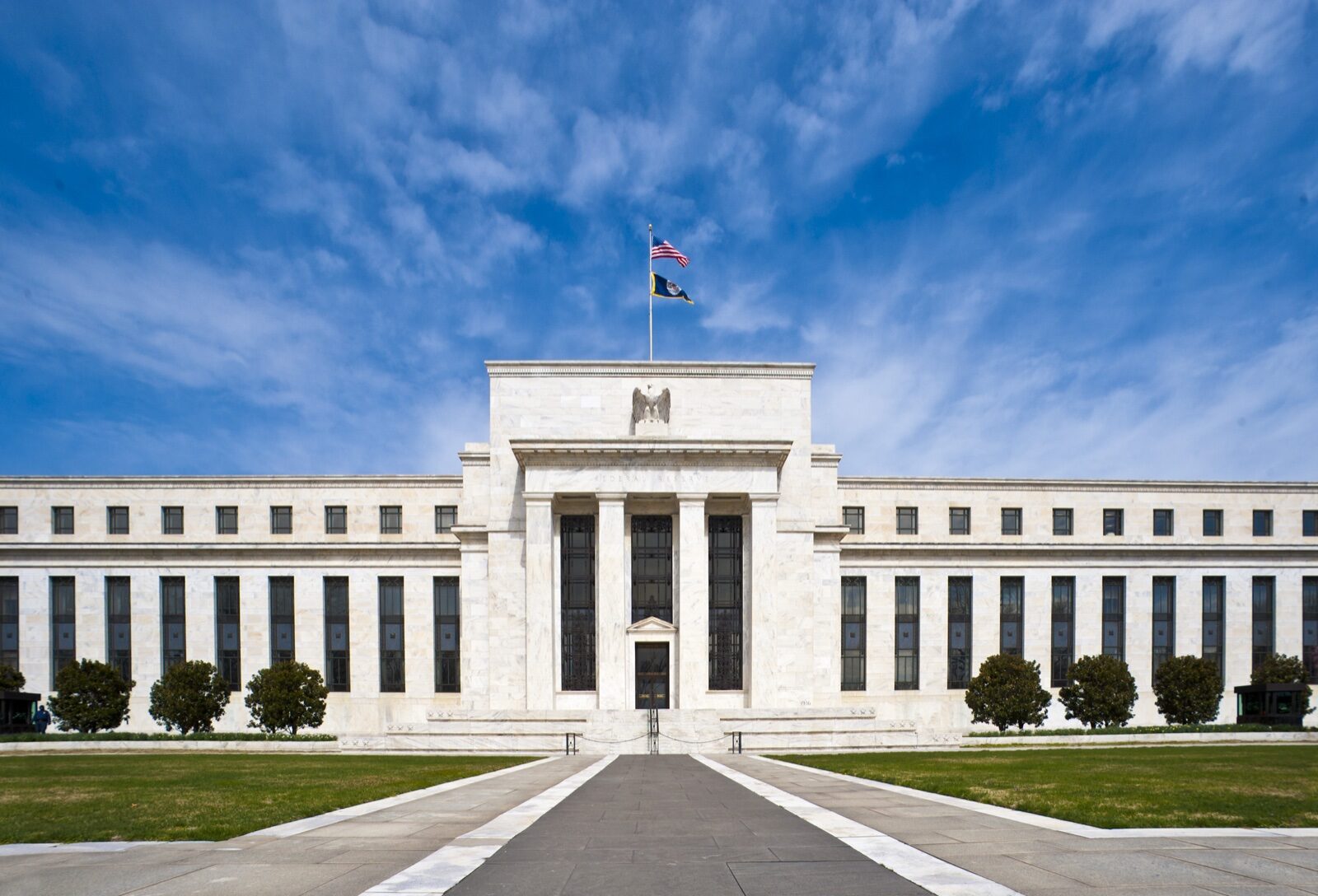
The Federal Reserve kept its benchmark interest rate at 3.75 to 4 per cent on Wednesday, but two of the 12 voters wanted to raise it by a quarter point, the Fed said in its policy statement. The vote was 10-2.
The dissenters were Lisa Cook, a governor, and Beth Hammack, president of the Federal Reserve Bank of Cleveland. Six weeks ago the committee raised rates unanimously. On Thursday morning, the government's own data gave the two of them more to point to.
What did the Fed decide?
It held. The Federal Open Market Committee, the 12 officials who set U.S. interest rates, left the target range for the federal funds rate, the rate banks charge each other overnight, where it put it in September. The Fed kept the rate it pays on bank reserves at 3.90 per cent and its standing repo rate at 4 per cent, according to its implementation note.
Cook and Hammack "preferred to raise the target range for the federal funds rate by 1/4 percentage point at this meeting," the statement said. It was the first time since October 1992 that a Fed governor and a regional bank president dissented on the same side, and Cook's first dissent since she joined the Board in 2022, Fortune reported.
What changed in the statement?
Very little, and that is the signal. This publication compared the 16 September statement, which announced the hike on a 12-0 vote, with Wednesday's. The paragraph on jobs, spending, productivity and investment is word for word the same except for one adjective.
| Passage | 16 September | 28 October |
|---|---|---|
| Rate decision | Raise by 1/4 point to 3.75 to 4 per cent | Maintain 3.75 to 4 per cent |
| Pace of activity | "expanding at a solid pace" | "expanding at a strong pace" |
| Inflation | "remains elevated" | "remains elevated" |
| Forward line | "Today's policy action will support a timelier return" to 2 per cent | "The accumulation of more information will help the Committee determine the policy stance appropriate" |
| Vote | 12-0 | 10-2, two for a hike |
Sources: Federal Reserve statements of 16 September and 28 October 2026. The comparison is this publication's.
An economy described as stronger, inflation described as unchanged, and no promise that the work is done. By our reading, the statement keeps a December increase open without committing to one. Kevin Warsh, the Fed's chair, has argued against telling markets what comes next; in August he said forward guidance "has overstayed its welcome," as this publication reported at the time.
At his news conference, Warsh said "the overwhelming consensus is that what we've done in this monetary medicine is starting to work some," according to Fortune. Before the decision, CME Group's FedWatch tool put the odds of a December hike at 78 per cent, the magazine reported.
What did Thursday's data show?
Faster growth and sticky prices. Real gross domestic product grew at an annual rate of 3.4 per cent in the third quarter, up from 2.2 per cent in the second, the Bureau of Economic Analysis said in its advance estimate. Real final sales to private domestic purchasers, a measure of underlying private demand that strips out trade, inventories and government, rose 4.9 per cent.
The Fed measures its 2 per cent goal with the personal consumption expenditures price index. In September that index rose 0.5 per cent on the month and 3.6 per cent from a year earlier, and the core measure, which leaves out food and energy, rose 0.3 per cent and 3.1 per cent, the BEA said in its personal income and outlays release. Consumer spending rose $113.1 billion, more than twice the $54.5 billion rise in personal income, and the saving rate was 3.8 per cent.
Consumer prices on the other main gauge rose 3.7 per cent in the year to September, up from 3.4 per cent in August. "Since the last meeting, none of the inflation data has gotten better. It's gotten worse," Laura Ullrich, director of economic research for North America at the Indeed Hiring Lab, told Fortune.
How did bonds react?
They priced a pause, not an end. On Wednesday the 2-year Treasury yield, which tracks expected Fed policy, fell to 4.67 per cent from 4.70 per cent, while the 10-year rose to 5.05 per cent from 4.99 per cent, according to the Treasury's daily par yield curve.
| Treasury yield | 16 Sep (hike) | 27 Oct | 28 Oct (hold) |
|---|---|---|---|
| 3-month | 4.14% | 4.22% | 4.18% |
| 2-year | 4.74% | 4.70% | 4.67% |
| 10-year | 5.01% | 4.99% | 5.05% |
| 30-year | 5.35% | 5.30% | 5.37% |
Source: U.S. Treasury daily par yield curve rates.
By this publication's arithmetic, the gap between the 10-year and 2-year yields widened to 0.38 percentage points from 0.29 in one session. The 3-month bill, at 4.18 per cent, sits above the top of the Fed's range. That is consistent with investors expecting at least one more increase and asking more to lend for a decade. It is our reading of the curve, not anyone's stated forecast.
What to watch
The Fed's next decision is on 8-9 December, a meeting that comes with new economic projections, according to its calendar. Before then come the October jobs and price reports. In mid-October, Warsh would not say whether the Fed would move again that month, as this publication reported from Bangkok, and on Wednesday he was no more specific about December. The test is whether core PCE inflation, now 3.1 per cent, stops rising. If it does not, two dissents in October could become a majority in December.
The decision, vote, dissents, statement wording and implementation rates are from the Federal Reserve's statement and implementation note of 28 October 2026; the September wording and 12-0 vote are from its statement of 16 September 2026; meeting dates are from the Fed's FOMC calendar. The 1992 precedent, Cook's dissent record, the 78 per cent pre-decision probability from CME FedWatch, the 3.7 per cent CPI figure and the quotes from Kevin Warsh and Laura Ullrich are as reported by Fortune on 28 October 2026. GDP, PCE price, income and saving figures are from the Bureau of Economic Analysis releases of 29 October 2026. Yields are the Treasury's daily par yield curve rates. The word-by-word comparison of the two statements and the yield changes are this publication's arithmetic. The analysis is our own.
Topics marketsFederal Reserveinterest ratesFOMCKevin WarshinflationGDPTreasury yields