Robert E. Hall of Stanford University and Michael Woodford of Columbia University won the 2026 economics Nobel "for microeconomic foundations of macroeconomic stabilisation," the Royal Swedish Academy of Sciences said on Monday. The prize is 12 million Swedish kronor, shared equally. The Academy's own scientific background credits Woodford, among others, with proposing forward guidance, the practice of telling markets where interest rates are headed.
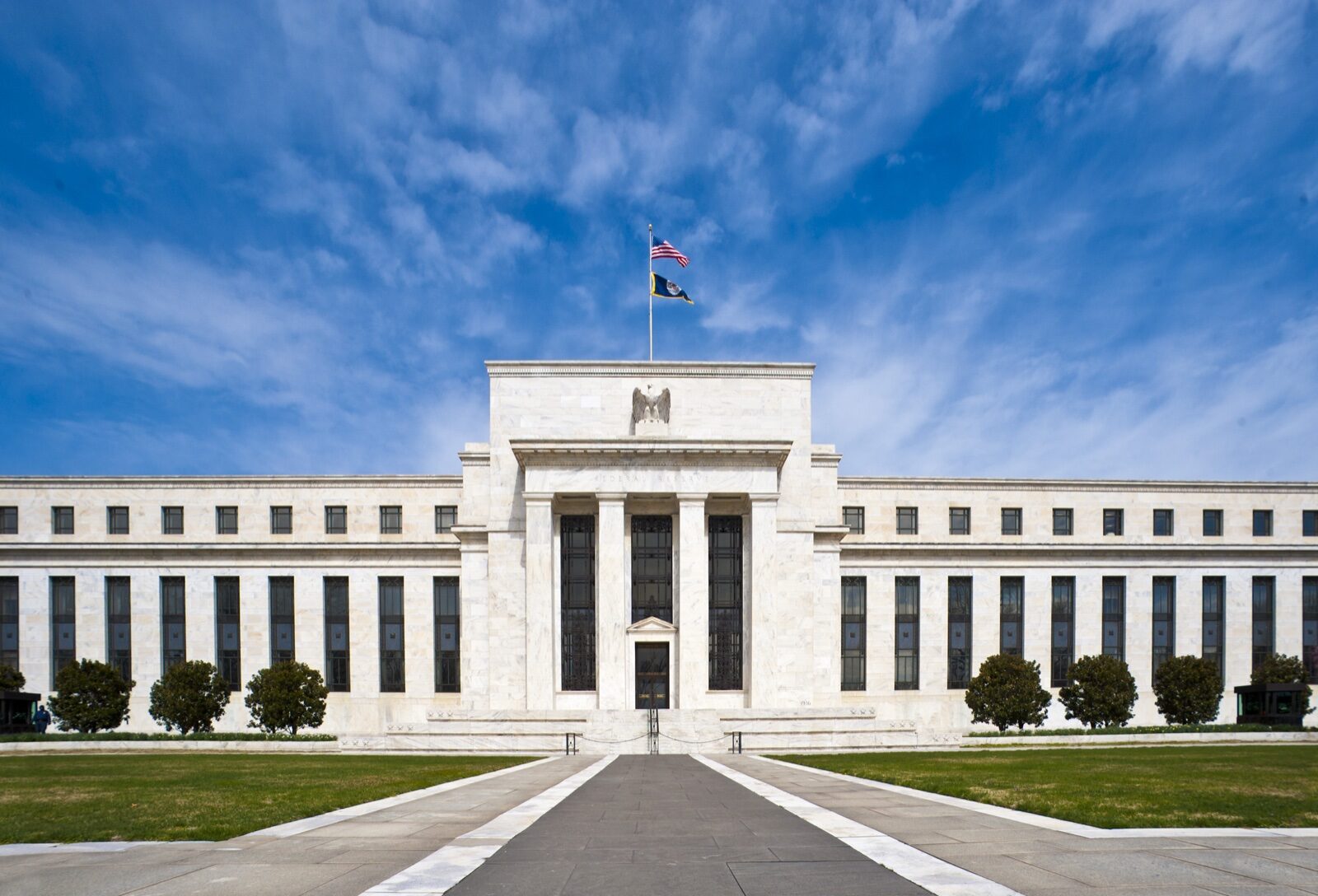
Forty-five days earlier, on 28 August, Federal Reserve Chair Kevin Warsh used his Jackson Hole speech to argue for "a quieter Fed." In the Fed's published text he said forward guidance "has overstayed its welcome." It is tempting to call that a collision between the laureates and the Fed. It is not quite one. The gap that does exist is narrower, and more useful.
What the Academy honoured
The laureates built macroeconomic models on a microeconomic foundation, instead of on statistical links between aggregates such as inflation, production and consumption, the Academy said. In its press release it said they "have helped us smooth out the economy's peaks and troughs," and that a central part of the models is that households and businesses look ahead: "When governments and central banks communicate their plans for economic policy, they can influence this view of the future."
Hall was born in 1943 in Palo Alto, California, and took his doctorate at MIT in 1967. Woodford was born in 1955 in Chicopee, Massachusetts, and took his MIT doctorate in 1983. Woodford called the award "a tremendous honor" when reached in New York, the Associated Press reported.
The Academy's popular account describes Hall's central idea. If households spend according to what they expect to earn, their spending is the best indicator of their outlook, and it changes only when new information arrives. Because new information cannot be predicted, the Academy says, neither can changes in consumption, if the theory is correct. Woodford's 2003 book set out a complete New Keynesian model on the same forward-looking foundations.
"With them, we are better equipped to deal with shocks in the economy, such as energy crises or sudden changes in how much households consume," said John Hassler, chair of the prize committee. The Academy says the models are now used by central banks and finance ministries around the world.
Where forward guidance sits
The Academy's scientific background is specific about the tool. Forward guidance, it says, "was proposed by Woodford and others as an additional means to stimulate the economy when current nominal interest rates cannot be lowered further," and was adopted in the zero-rate period, "usually dated 2008–2015" in the U.S. It adds that forward guidance "requires credibility of the central bank's announced path, which is not to be taken for granted."
The same paper lists the "forward guidance puzzle" among the framework's weaknesses. In the simple New Keynesian model, it says, announcements about policy far into the future have "unreasonably strong effects on demand and prices today." Several fixes have been proposed, and none has become the consensus.
Warsh's speech does not dispute the history. Forward guidance as a regular practice was adopted during the global financial crisis, he said, and "it was essential at the time." His complaint is about the habit that followed: "In normal times, the role of forward guidance should be limited and circumscribed."
That distinction matters. The Fed's target range is now 3.75 to 4 per cent, nowhere near the zero bound the Academy describes. By this publication's reading, the prize honours a theory that treats forward guidance as a tool for when rates cannot fall further. Warsh is arguing against its routine use. Both claims can be true.
Where they do pull apart
The real difference is about rules and openness. The Academy notes that Woodford "argues forcefully" for transparency, on the grounds that a central bank that makes its goals and methods public is better able to stabilise the economy. In the framework it honoured, policy works partly through what households and firms expect a central bank to do. A central bank can decline to publish a path for rates. It cannot stop people forming a view of one.
Warsh went further than dropping guidance. He also declined to commit to an explicit reaction function, the statement of how the Fed would respond to the data, saying that "providing forecasts to illustrate the Fed's reaction function works better in theory than in practice, better in the lab than in the field." What he did offer was a standard: the Fed must be confident "that underlying inflation is moving to our objective, clearly and at sufficient speed. Otherwise, we have work to do."
Markets read that as a signal. After the speech, CME FedWatch put the odds of a September rise near 56 per cent, this publication reported, and Marketplace asked whether that was forward guidance after all.
That is our reading, not the Fed's account: the Fed did not go quiet so much as change what it is quiet about. It declined to promise a path. It supplied a standard, and markets treated the standard as a guide.
What the Fed did next
On 16 September the Fed raised its target range by a quarter point to 3.75 to 4 per cent, its first increase since 2023. Warsh told the press conference that the committee had decided his standard "has not been satisfied," and that the vote was unanimous. A reporter at the same press conference said markets had priced a 90 per cent chance of the move. A rise priced that fully is hard to describe as a surprise withheld.
The median official expects the federal funds rate to end the year at 4.1 per cent, the Fed's projections show, which Chase read as one more quarter-point rise in 2026. Forecasts for the timing differ: MUFG Research expects the Fed to skip October and raise rates in December. That is a bank's forecast, not a Fed signal.
What to watch
Warsh also said at Jackson Hole that he and his colleagues "will endeavor to construct more reliable models and more robust rules to guide policy decisions." This publication has found no rule or reaction function published since.
That is the test the prize sets. The Hall and Woodford tradition makes the case that policy works best when households and firms can anticipate it. A Fed that wants to be quieter and also rule-bound will have to say, at some point, what the rule is. The next scheduled meeting is on 27 and 28 October, a fortnight after September's inflation figures. Whether the statement or the press conference adds anything to "clearly and at sufficient speed" will show how quiet the Fed intends to be.
The citation, prize amount, the laureates' birth years and places, doctorates and affiliations, and John Hassler's quotation are from the Royal Swedish Academy of Sciences press release of 12 October 2026. The account of Hall's consumption work is from the Academy's popular information. The description of forward guidance, the 2008 to 2015 dating, the forward guidance puzzle and the reference to Woodford (2005) on transparency are from the Academy's scientific background paper. Woodford's remark on the telephone is as reported by the Associated Press via NBC News. All quotations from Kevin Warsh's 28 August speech are from the Federal Reserve's published text. The 16 September decision, the unanimous vote, the phrase "has not been satisfied", the 4.1 per cent median and the reporter's 90 per cent figure are from the Fed's press conference transcript; Chase's reading of the projections is from its 16 September summary; MUFG's forecast is from its September FOMC recap. The 27 and 28 October meeting date is from the Federal Reserve's calendar. The post-speech FedWatch odds are as previously reported by this publication. The 45 days between 28 August and 12 October is this publication's arithmetic. The analysis is our own.
Topics marketsFederal ReserveKevin Warshinterest rateseconomics