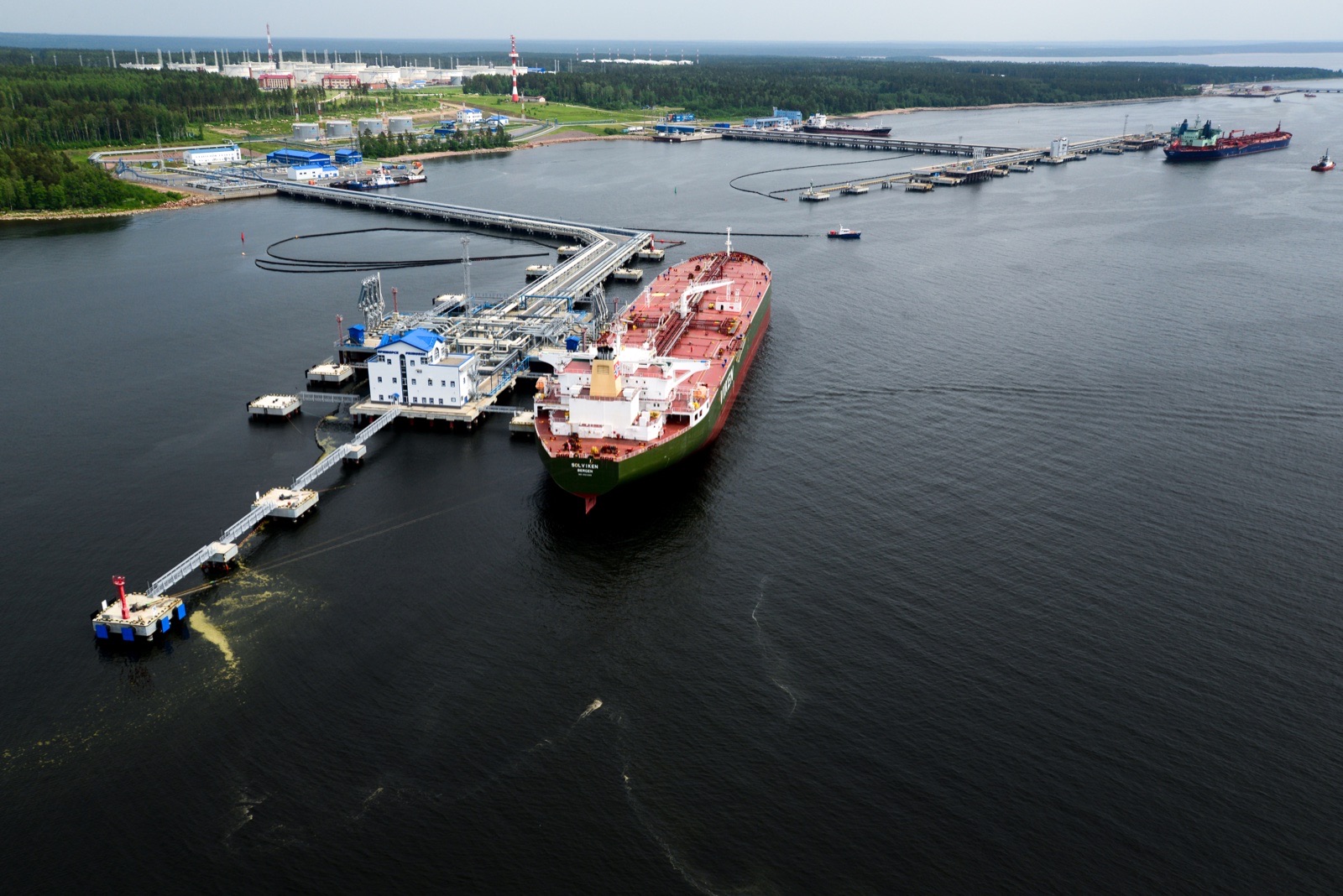
The first cargo of Russian diesel to move since the U.S. Treasury licensed the trade was about 40,000 metric tons, and it is going to Morocco. Russia resumed diesel export loadings at the Baltic port of Primorsk on Wednesday 14 October, Reuters reported, citing LSEG shipping data, with a tanker of ultra-low sulphur diesel loaded on 13 October, according to The Moscow Times. "The diesel has started reaching global markets," Dmitry Peskov, the Kremlin spokesman, said on Thursday.
None of it is bound for the United States yet. Alexander Novak, Russia's deputy prime minister, told TASS that a U.S. delivery means it is necessary "to conclude a contract and load the fuel, charter a vessel and dispatch it to the consumer," which "takes 2-3 weeks." He added that "it is probably necessary to conclude an agreement as soon as possible." No American buyer has been named. Meanwhile AAA's national average for diesel on Sunday was $6.3224 a gallon, about 9 cents higher than on the day the licence was signed.
What Washington allowed
General License 135, signed on 9 October by Bradley T. Smith, director of the Office of Foreign Assets Control, authorizes transactions "related to the sale, delivery, offloading, or importation, including importation into the United States, of diesel fuel of Russian Federation origin" through 12:01 a.m. eastern daylight time on 7 April 2027. It does not authorize any debit to accounts of Russia's central bank, National Wealth Fund or Ministry of Finance at U.S. institutions.
It followed a call between President Donald Trump and President Vladimir Putin. Trump said Russia would immediately supply more than 300,000 tons, then 500,000 tons in November and 1 million tons "immediately thereafter," with 3 million more "within a short period of time," the Associated Press reported. That is about 4.8 million tons. Putin said Russia "confirmed its readiness to supply oil and oil products to the American and global markets." The White House did not immediately say who would pay for the fuel or when it would arrive, the AP said.
Ship & Bunker reported that the Ending Importation of Russian Oil Act of 2022 remains in effect, and that it understands the licence to be a temporary executive waiver. EU and UK bans on Russian refined products and the price cap stay in force. A week later, on Friday 16 October, Trump signed an executive order waiving nearly all of the Lindsey O. Graham Sanctioning Russia and Iran Act, including the 100 per cent duties on goods from the largest buyers of Russian crude and gas that would have applied to new purchases from today, 18 October. The waivers have no end date.
The scale of the first cargo
Moscow moved first on its own rules. On 10 October the Russian government partly lifted the diesel export ban it imposed in July after Ukrainian drone strikes on its refineries, allowing 500,000 tons to be sold abroad, the Kyiv Independent reported, citing TASS. Novak had earlier told TASS that supplies would run at about 300,000 tons in October, 500,000 in November and 1 million in December, and could later reach 3 million tons a month.
By this publication's arithmetic, using about 7.45 barrels per metric ton, the Morocco cargo is about 300,000 barrels. The Energy Information Administration puts U.S. distillate consumption in 2025 at 3,908 thousand barrels a day, so one such cargo equals under two hours of American demand. The promised first 300,000 tons is a little over half a day. The full 4.8 million tons would be about nine days.
The question is where the fuel comes from. Before 2025 Russia exported about 2.6 million tons of diesel a month by sea, according to Kpler data cited by the Kyiv Post, which drew on the Financial Times. "Russia does not have an export problem. It has a refining problem," said Michelle Brouhard of Kpler. The U.S. has not imported Russian diesel since July 2022, when American purchases had averaged about 77,000 tons a month.
What the pump says
The licence has not lowered the price drivers pay. AAA put diesel at $6.23 on 9 October, according to the AP. On Sunday it was $6.3224, up from $6.2771 a week ago, though below $6.4476 a month ago and 20 cents under the record $6.5276 of 22 September. Our earlier piece on the Iran war's cost to households set out how much of that bill is diesel. That is our reading of AAA's figures: the licence has not yet changed the trend, and no Russian molecule has reached an American tank.
The objections have not changed either. Ukrainian President Volodymyr Zelensky called it "a weak decision" and said "Gifts to Putin will not bring peace or any benefit to the civilized world," the AP reported. Rep. Don Beyer called the announcement "infuriating."
What to watch
Three things will settle whether this is a market event. The first is a named U.S. buyer and vessel; Novak's two to three weeks, counted from 15 October, runs to between 29 October and 5 November, either side of the 3 November election. The second is whether Russia loads the 500,000 tons it has freed, and what it does with an export ban that Ship & Bunker said had been extended to the end of October. The third is the AAA diesel average. If it is still above $6.23 when the first cargo docks, the licence will have moved paperwork, not prices.
The licence terms come from the text of OFAC General License 135, dated 9 October 2026. Trump's announced volumes and his quotation, Putin's statement, Volodymyr Zelensky's and Don Beyer's reactions, the White House's non-answers and the $6.23 AAA price on 9 October come from the Associated Press report of 9 October 2026, as published by Fortune. The partial lifting of Russia's export ban comes from the Kyiv Independent, 10 October 2026, citing TASS. The Primorsk loadings, the Morocco cargo and Dmitry Peskov's remark come from The Moscow Times, 15 October 2026, citing Reuters and LSEG data. Novak's timing and ramp-up figures come from TASS, 15 October 2026. The Kpler quotation, pre-2025 Russian export volumes and U.S. import history come from the Kyiv Post, 10 October 2026, citing the Financial Times. The status of the 2022 import-ban law and EU and UK measures come from Ship & Bunker, 9 October 2026. The 16 October executive order is quoted from the White House text. Current, week-ago, month-ago and record diesel prices come from AAA, read on 18 October 2026. U.S. distillate consumption of 3,908 thousand barrels a day in 2025 comes from the Energy Information Administration. Conversions to barrels and days of demand, using about 7.45 barrels per metric ton, and the price differences are this publication's arithmetic. The analysis is our own.
Topics marketsdieselRussiasanctionsOFACenergyIran warinflation