Gaza's Health Ministry says the World Health Organization will stop supplying diesel to more than 20 hospitals and health centres from 19 September.
Munir al-Bursh, the ministry's director-general, said on Monday that the reason is a funding shortfall. "The halt in supplies does not only mean generators going dark," he said, "but the shutdown of operating rooms and intensive care units." He listed what else runs on that fuel: ventilators, oxygen stations, incubators for newborns, dialysis, ambulances, and the refrigeration that keeps medicines and vaccines usable.
The WHO had not commented by Monday. It has warned repeatedly in recent months that its funding is falling.
This publication has not been able to confirm the decision with the WHO, and the ministry's account should be read as the ministry's account until it does. What can be described with confidence is the system the diesel feeds.
A hospital system with one source of power
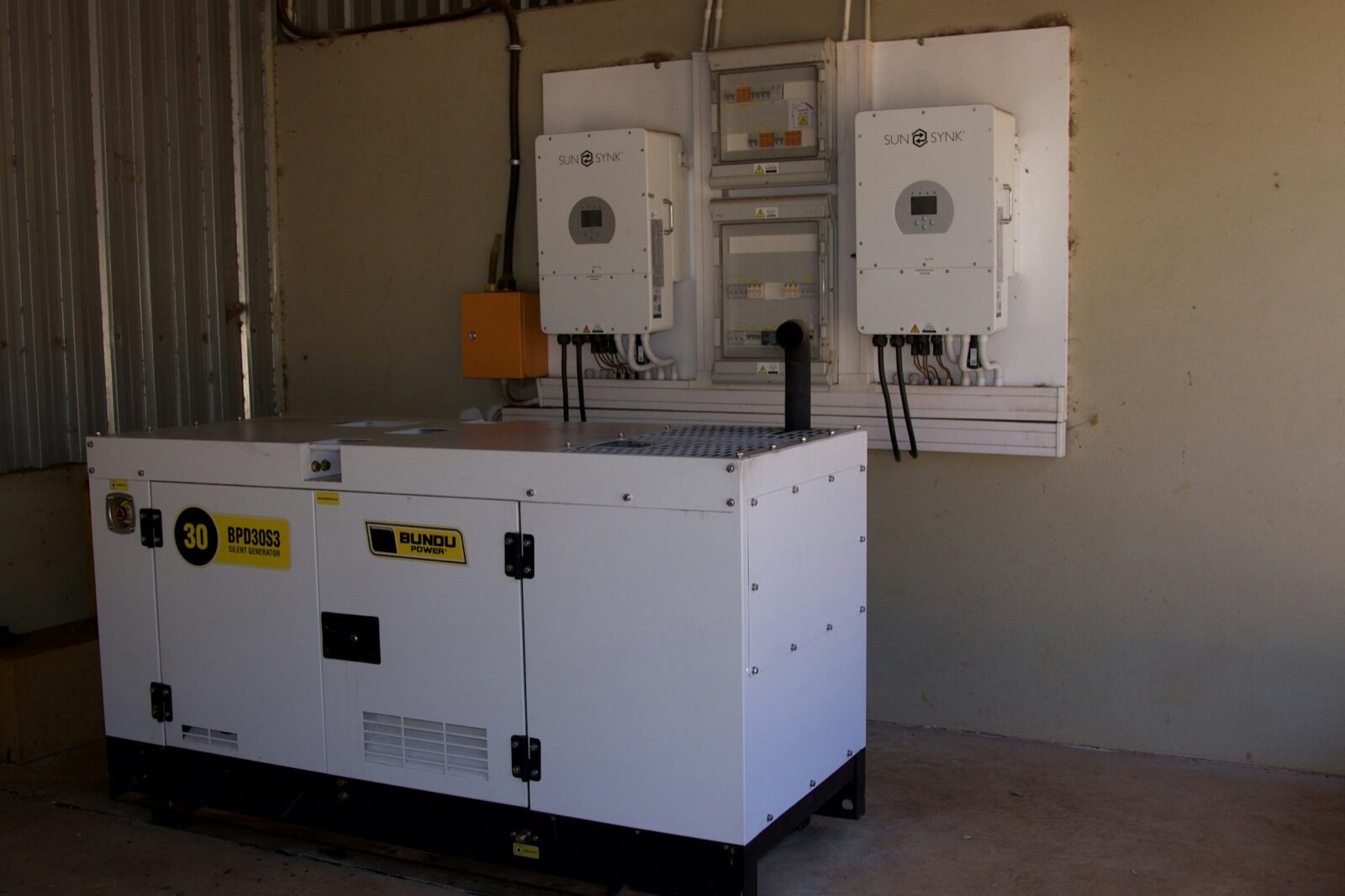
Gaza's hospitals have had no mains electricity since October 2023. Every light, pump and monitor in them runs on a generator, and every generator runs on diesel.
That arrangement has no second line. A hospital elsewhere that loses grid power switches to generators. A hospital in Gaza that loses its generators has nothing to switch to. Nasser Hospital had a solar system; it was destroyed in a raid in early 2024 and never replaced, Reuters reported.
The machines were already wearing out
Reuters visited Nasser Hospital last week. One of its four generators was out of service. The two largest of the remaining three were under strain.
Engine oil is normally changed about every 250 hours of running. Because of shortages of oil and spare parts, the hospital was changing it about every 1,000. Israel has restricted the entry of fuel and engine oil since October 2023, and the restrictions continued after last October's ceasefire. Médecins Sans Frontières said in August that limits on oil and spare parts were undermining generators, ambulances and water systems. COGAT, the Israeli body that manages the crossings, says a mechanism exists for oil and parts to enter "under monitoring and oversight."
"Patients are in severe danger," Dr Ahmed Al-Nabris, an internal medicine specialist at the hospital, told Reuters, "because any power cut puts their lives at serious risk."
A different kind of shortage
Almost every account of Gaza's health system for three years has been an account of access: what trucks are allowed through, and when.
This is a different failure. On the ministry's account, the fuel is not being stopped at a crossing. It is not being paid for. That matters because the remedy is different. An access problem is negotiated between governments. A funding problem can be solved by any donor willing to write a cheque before Saturday, and it can also go unsolved simply because nobody does.
It is the same pattern this desk described in the economics of relief airlifts: the most expensive failures in a humanitarian operation are often the cheapest things to have prevented, because nobody's budget line covered them.
What the list tells you
Mr al-Bursh's list of affected services is, read another way, a triage order.
Incubators and ventilators cannot pause. Dialysis can be delayed for days, not weeks. Cold chains fail silently, and a vaccine that warmed overnight looks exactly like one that did not. When fuel runs short, a hospital decides which of those to power first, and each choice has a patient attached to it.
What to watch
A statement from the WHO confirming, revising or denying the 19 September date. Then whether another agency or donor steps in to fund the fuel, and how many days it covers. A reprieve measured in days would move the deadline rather than remove it, and a generator changing its oil at a quarter of the proper rate will not wait for the next one.
The statement by Munir al-Bursh, director-general of Gaza's Health Ministry, on 14 September 2026 that the WHO would suspend diesel supplies to more than 20 hospitals and health centres from 19 September because of a funding shortfall; the services he listed; his quotation; and the absence of immediate WHO comment together with the WHO's earlier warnings of declining funding are as reported by Middle East Monitor on 14 September. Earlier notices to health centres of a possible halt after 19 September are as reported by Palestinian outlets on 13 September. The conditions at Nasser Hospital, including the out-of-service generator, the oil-change intervals and the destroyed solar system; the quotation from Dr Ahmed Al-Nabris; the restrictions on electricity, fuel and engine oil since October 2023 and their continuation after the October 2025 ceasefire; the MSF statement; and COGAT's statement are as reported by Reuters on 10 September via Arab News and TimesLIVE. This publication has not been able to confirm the decision with the WHO. The analysis is our own.