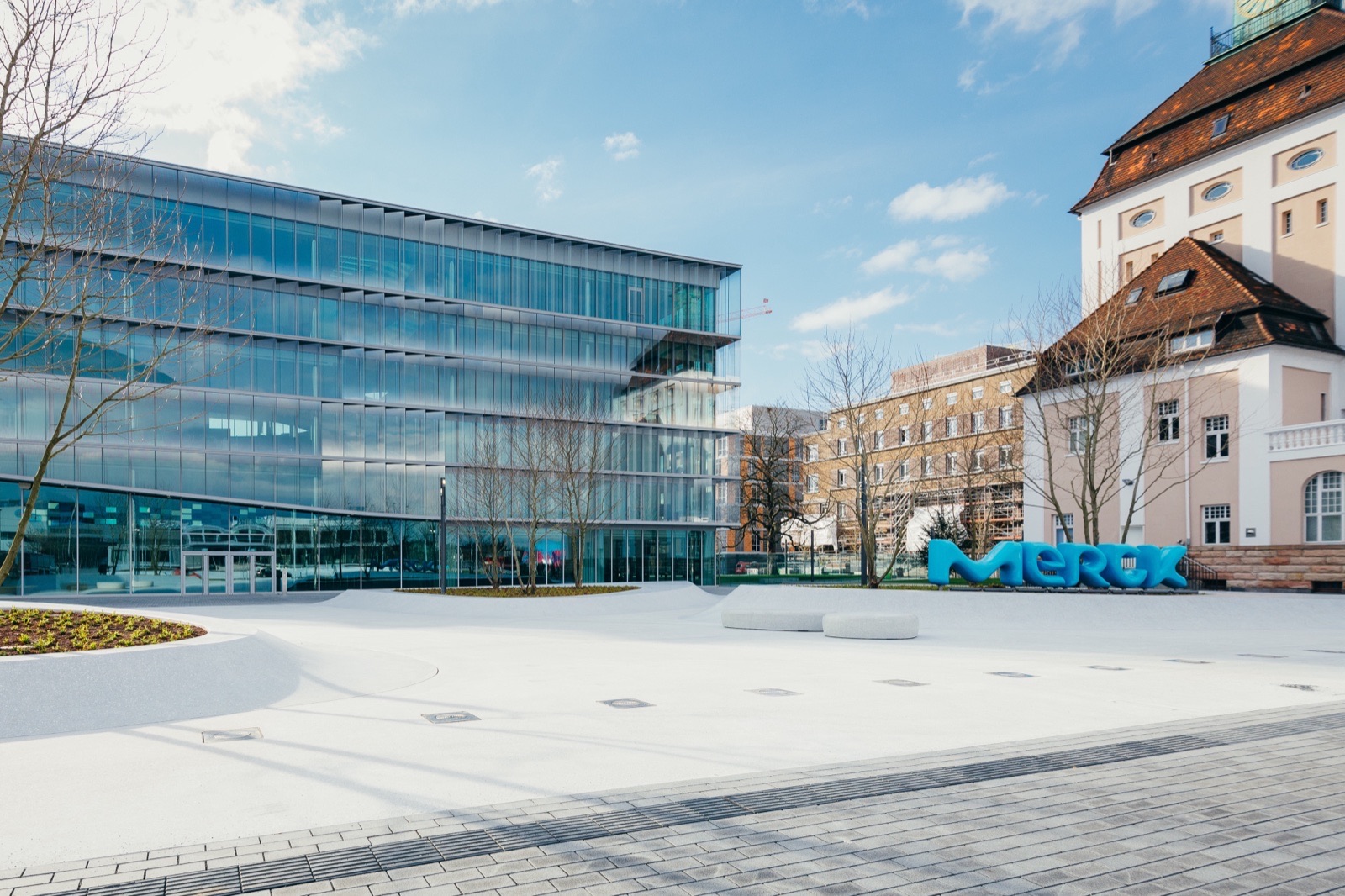
Merck KGaA, the German science and technology group that is unrelated to the U.S. drugmaker Merck & Co., has agreed to buy Silence Therapeutics for $20.00 in cash per American depositary share, according to the announcement Silence filed with the SEC on Monday. That values the London-based RNA-interference company at an enterprise value of $1.1 billion and an equity value of about $1.3 billion.
The headline premium is large: 130 per cent over the ADS close on Friday 16 October. The smaller number is more informative. Against the 30-day volume-weighted average price of $10.99, the premium is 82 per cent. By this publication's arithmetic, a 130 per cent premium on a $20.00 offer implies a Friday close near $8.70, which is below the 30-day average, so the stock had traded lower on Friday than it had over the prior month. Against that average the offer is an uplift of about $9 an ADS.
The terms
Each ADS represents three ordinary shares, so the offer is about $6.67 per ordinary share. The deal is structured as a UK scheme of arrangement under the Companies Act 2006, which requires a shareholder vote and sanction by the High Court of Justice of England and Wales. Silence's board approved it unanimously, and holders of about 14 per cent of voting power have signed a voting and support agreement to vote in favour, the company said.
Closing is expected in the first quarter of 2027. The announcement lists regulatory approvals among the conditions but does not say which ones. It describes the deal as the outcome of a competitive sale process, which tells the reader that more than one bidder was at least approached. It does not say who else was.
The release puts equity value at about $1.3 billion and enterprise value at $1.1 billion. On those rounded figures the gap is roughly $200 million, which would ordinarily be read as net cash. Silence's own balance sheet does not support that reading: the company reported cash and cash equivalents of $72.1 million at 30 June, in its second-quarter results. The release does not reconcile the two values, and rounding alone could account for much of the gap. The scheme document should.
One drug
The announcement credits the sale to a single programme. Silence has reported Phase 2 data for divesiran in polycythemia vera, a rare blood cancer in which the body makes too many red blood cells. The company calls the drug potentially best in class. Divesiran is an siRNA candidate, built on Silence's mRNAi GOLD platform, that targets TMPRSS6, a liver protein that restrains hepcidin, the body's main iron regulator. Silencing TMPRSS6 is meant to raise hepcidin and so limit the iron available to the bone marrow, reducing red-cell overproduction. It has FDA Fast Track and Orphan Drug designations for the disease.
The release says Merck KGaA has "the scale, resources and commercial capabilities" to accelerate the drug's Phase 3 development. Beckmann tied the deal to Merck KGaA's acquisition of SpringWorks Therapeutics last year and to a pipeline shifting toward specialised areas of unmet need.
Two executives are quoted. Iain Ross, interim principal executive officer and chairman of the Silence board, said the deal "delivers significant, immediate and certain value to our shareholders." Kai Beckmann, chairman of the executive board and group chief executive of Merck KGaA, said it "will strengthen our capabilities to serve patients with targeted specialty and rare diseases."
What the release does not say
The announcement does not state a break fee, any milestone or contingent payment, or how Merck KGaA will fund the purchase beyond calling it all-cash. It does not discuss any other Silence programme. Those details would normally appear in the scheme document and the related filings.
Phase 2 data are not approval. A drug at this stage can still fail in a larger, longer trial, and a buyer paying $1.1 billion is taking that risk. The structure, cash with no contingent value right as far as the announcement shows, puts the whole risk on the buyer and hands the seller its price on day one. Contingent payments are the usual way to share that risk: when Labcorp agreed to buy the core of BioReference Health, OPKO kept the right to up to $150 million more if one prostate test sells. That is what Ross meant by "certain", in our reading.
What to watch next
Watch for the scheme document, which should show how the sale process ran and whether there is a break fee. Watch the vote count against the 14 per cent already committed. And watch for the Phase 3 design: how many patients, how long, and against which comparator. That, not the premium, will decide whether $20 was cheap.
Sources
- Silence Therapeutics, second-quarter 2026 results, 10 August 2026: https://silence-therapeutics.com/investors/press-releases/press-releases-details/2026/Silence-Therapeutics-Reports-Second-Quarter-2026-Financial-and-Business-Results/default.aspx
- Silence Therapeutics, Form 8-K Exhibit 99.1, announcement of acquisition by Merck KGaA, 19 October 2026: https://www.sec.gov/Archives/edgar/data/0001479615/000119312526424695/d172259dex991.htm
- Prior Cranberry coverage: /health/labcorp-bioreference-seven-twenty-two/
Every deal term, the premiums, the valuation, the support agreement, the timetable, the description of divesiran and the quotations from Iain Ross and Kai Beckmann come from the announcement filed by Silence Therapeutics with the SEC on 19 October 2026. Silence's cash balance of $72.1 million at 30 June comes from its second-quarter results of 10 August 2026. The implied 16 October closing price and the gap between equity and enterprise value are this publication's arithmetic from rounded figures. The release does not address termination fees, milestones or contingent payments, and we have not seen the scheme documents. The analysis is our own.
Topics health