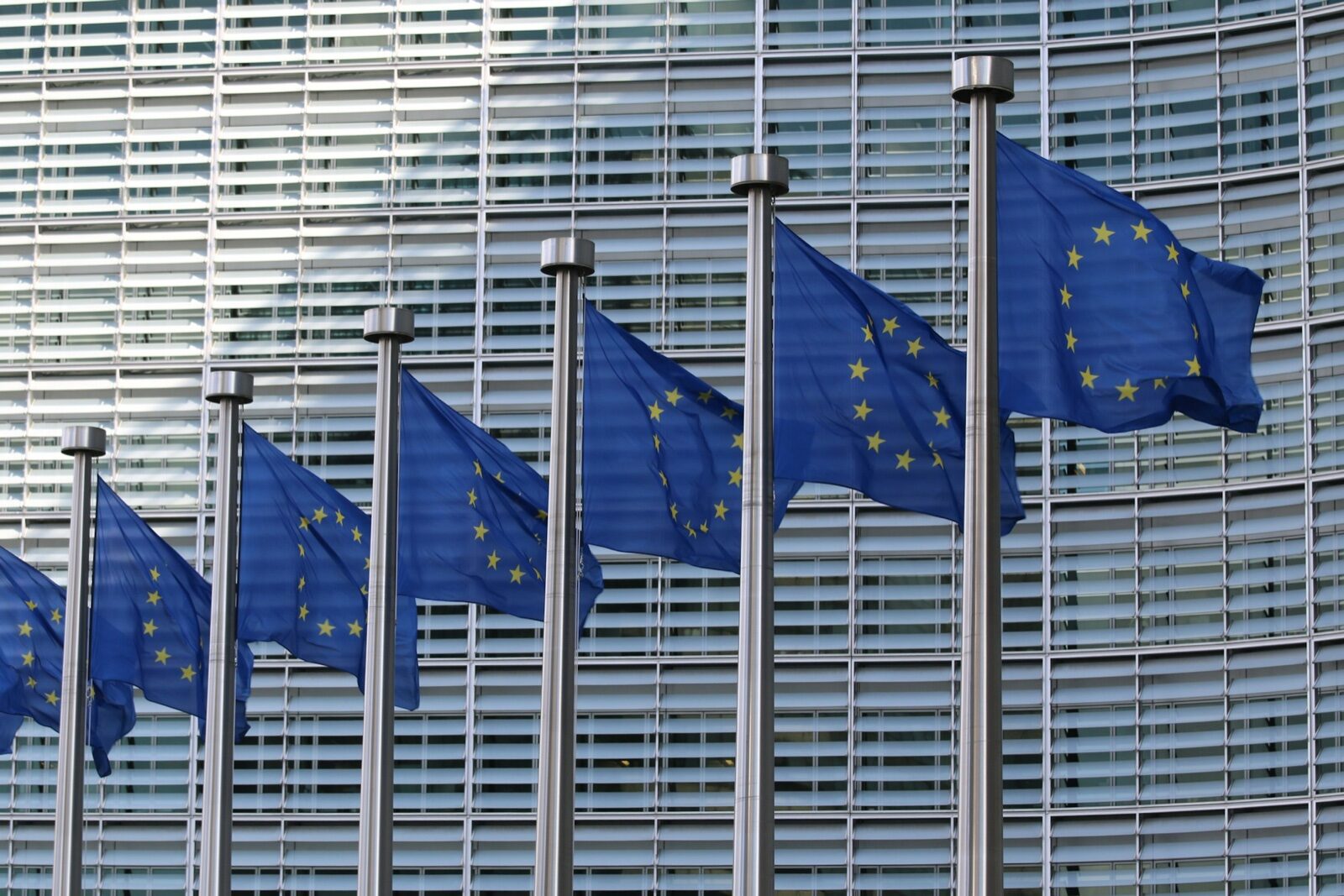
Ursula von der Leyen made an offer in Strasbourg on Wednesday that the European Union's treaties do not currently provide for.
"I invite Canada to be the first associate member of the EU," she told the European Parliament in her annual State of the Union address.
There is no such status. Membership of the Union is open to European states, which Canada is not, and no one disputes that. What the Commission president proposed is a relationship to be built: an Alliance for the Future covering trade, defence production, the Arctic, energy, critical minerals, artificial intelligence, quantum computing and cyber security. Leaders are to discuss what it means at a summit in Montreal next month.
Why Ottawa is listening
About 70 percent of Canada's exports go to the United States. That concentration was an advantage for thirty years and is now the central vulnerability of Canadian economic policy, because a tariff decision in Washington reaches nearly every exporting business in the country.
Prime Minister Mark Carney has been asking for a "unique alliance" with Europe. His office welcomed Wednesday's invitation in terms that named the motive plainly: Canada is deepening ties with the EU "to strengthen our sovereignty."
Canada and the EU already have a trade agreement, CETA, which removes most tariffs. The proposal is explicitly for something beyond it.
What "associate member" would have to mean
This is where the announcement is less than it sounds, and more interesting than a communiqué.
The Union has well-worn instruments for close relationships with non-members. It has association agreements, which create joint institutions and align law in defined areas. It has the European Economic Area, which gives Norway and Iceland the single market in exchange for adopting its rules. It has customs unions and sectoral deals.
Every one of those arrangements shares a feature: the non-member takes on obligations and gets access, but does not vote. The rule-taker problem is the oldest complaint in the EU's neighbourhood policy, and the reason successive British governments rejected the Norway model.
If "associate membership" means a deeper version of association, it is a rebrand of something that exists. If it means Canada sitting inside EU decision-making in defence procurement, critical minerals or AI standards, it requires treaty change, and treaty change requires unanimity among 27 member states and ratification in each.
Nothing said on Wednesday settles which of those is intended. That is what the Montreal summit is for.
The strategic logic
The Union has spent this year discovering how much of its security and technology policy assumed an American partner who behaved predictably. This desk has written about the same discovery being made in the other direction, as the cost of borrowing, energy and the AI trade were all repriced in a single day on the assumption that this year's shocks are permanent rather than passing. Canada is the obvious answer to that problem: a G7 economy, a NATO member, an Arctic state with the minerals Europe's industrial policy requires, and — not least — a country whose government is currently looking for exactly the same reassurance.
The awkwardness is geographic rather than political. The treaties were written on the assumption that the Union's close partners would be its neighbours.
What to watch
The Montreal summit in October, and specifically whether the text that emerges uses the word "association" — which has a legal meaning — or keeps "associate membership," which does not. The first would be a substantial agreement inside existing law. The second would be a promise that eventually has to be cashed in a treaty, by 27 parliaments, at a moment when several of them are not in the mood to ratify anything.
Ursula von der Leyen's State of the European Union address of 16 September 2026 in Strasbourg, including the quotation "I invite Canada to be the first associate member of the EU", the framing of an Alliance for the Future and the areas it would cover, the acknowledgement that Canada cannot be a full member because it is not a European state, and the planned October summit in Montreal are as reported by Euronews, CNBC, CBC and the Associated Press on 16 September 2026. Canada's export dependence on the United States of roughly 70 percent, Prime Minister Mark Carney's call for a "unique alliance" and his office's response are as reported by the same outlets. The description of the EU's existing legal instruments is general. The analysis is our own.