Two senior American officials told Reuters this week that COSCO, the Chinese state-owned shipping group, carries concealed signals-intelligence equipment aboard commercial vessels, and has done so under a long-standing arrangement with Beijing. The described capability is collection of military communications from ships and aircraft near the coastlines of target countries, across Europe, North America and Asia.
China's embassy in Washington rejected it. A spokesperson, Liu Chang, called the intelligence-collection narrative "totally baseless," and the embassy said the Chinese government does not ask companies to gather data or intelligence abroad in breach of local law.
The allegation is contested and, on the public record, unproven. What is not in dispute is the shape of the thing being alleged, and that shape is the story.
The problem is the overlap, not the accusation
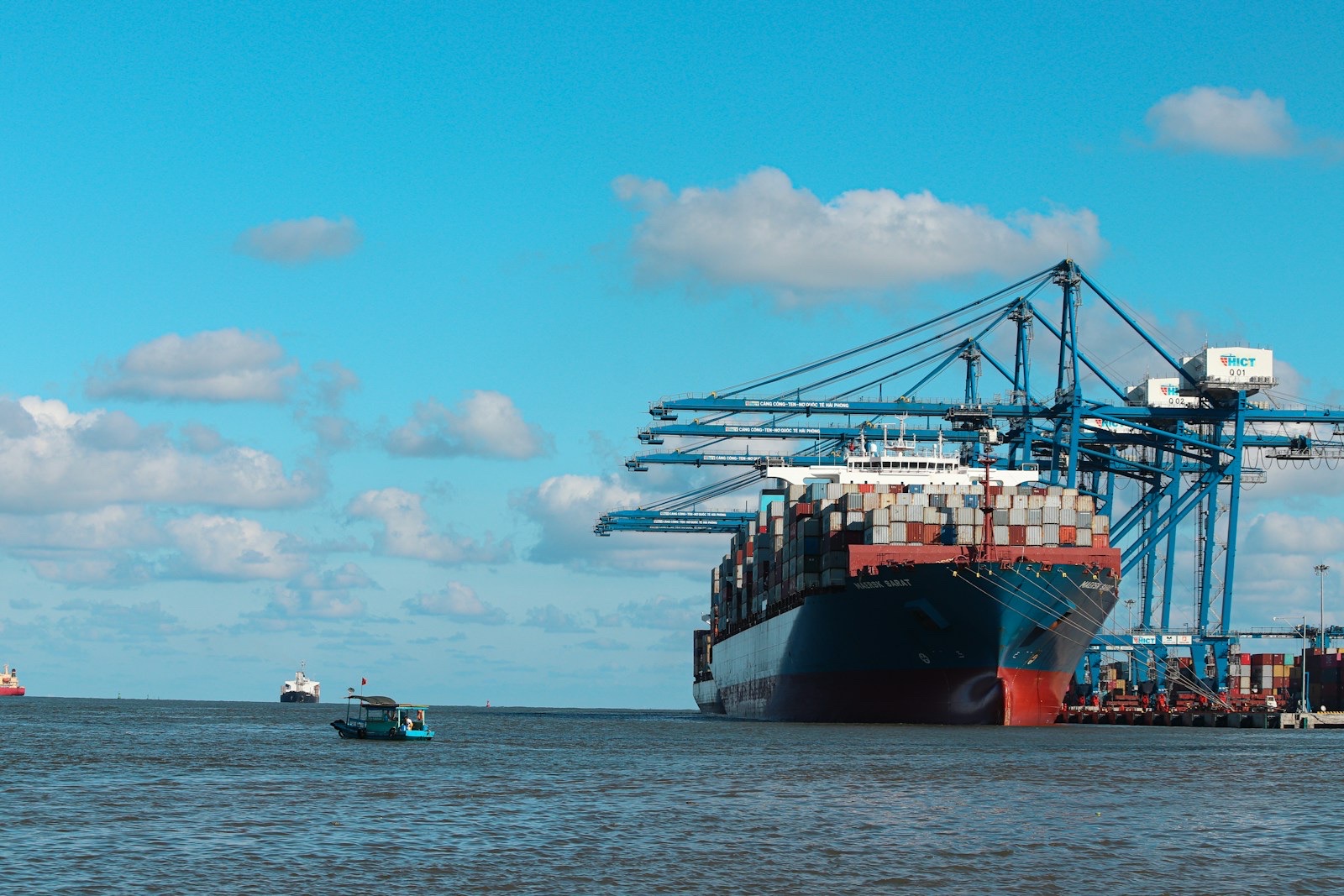
COSCO is not a front. It is one of the largest container operators in the world, moving other people's freight on published schedules into ports that publish their arrivals. If the allegation is true, the collection network and the commercial network are not two networks. They are one network, doing two jobs, and the second job is invisible from the quayside.
That is what makes it difficult in a way an espionage story usually is not. A listening post can be closed. A shipping line that carries a meaningful share of a port's volume cannot be excluded without the port absorbing the loss, and the ports most exposed are the ones with the least slack.
This is what dual-use means in practice
The phrase usually appears in export-control documents, describing goods with civil and military applications. It applies just as well to infrastructure. A vessel is dual-use if the same hull that carries containers can carry an antenna, and nothing about the commercial function reveals the other one.
The American government has already made a formal finding in this direction. The Defense Department added COSCO to its list of Chinese military companies in January 2025, under Section 1260H of the National Defense Authorization Act — a designation that carries reputational and contracting weight without banning a single port call.
That gap between designation and consequence is the honest position most governments are in. Naming the risk is cheap. Acting on it means telling terminals, shippers and insurers to give up capacity, and capacity is the thing the freight system has least of.
Ports cannot price this
A terminal operator can assess a vessel for a great many things. Signals equipment concealed in a container stack is not among them, and the operator has no standing to look. Nor is there an obvious mechanism to price the risk: this is not a hull the insurer can rate differently or a route that can be avoided, because the route is the trade lane.
We have written before about how thin the margins for adjustment are once a shipping problem reaches land — the ports fixed their own throughput and the roads behind them did not follow — and about how quickly a maritime risk becomes a human one for the people aboard when a lane turns political, as it did around Hormuz. Both cases had the same shape as this one: the exposure sits with parties who did not create it and cannot decline it.
What it changes for buyers
For companies with freight moving on affected lanes, the practical question is not whether the allegation is proven. It is whether counterparty identity is now something procurement has to see.
That is a familiar turn. Security has been migrating into the sourcing decision for several years, treated as a property of the supplier rather than of the system, and this extends it to carriage. Who owns the hull becomes a term of the contract, alongside transit time and rate.
The uncomfortable part is that most shippers will look at the lane, look at the alternatives, look at the difference in cost, and book the same vessel. That is not indifference. It is what happens when the network with the alleged problem is also the network with the capacity.
The allegations, the description of the equipment, the geographic scope and the Chinese embassy's response are as reported by Reuters on 1 September 2026, citing two senior administration officials and embassy spokesperson Liu Chang. The January 2025 Section 1260H listing is a matter of public record. The allegations are contested and unproven. The analysis is our own.
Topics worldshippingchinasupply chainssecurity