In February, the semiconductor industry expected to sell roughly $1 trillion of chips in 2026, its first trillion-dollar year. It got there in eight months.
Global chip sales reached $159.7 billion in August, the Semiconductor Industry Association said on Monday. That was 8 per cent more than in July and 144.3 per cent more than in August 2025. Sales for the year to date have passed $1 trillion, the first time any year has reached that figure. For all of 2025, the industry sold $791.7 billion, which was itself a record.
"Annual global semiconductor sales have already surpassed $1 trillion through August, reaching this major milestone for the first time ever," said Michael Robbins, the association's president and chief executive. "With sales projected to exceed $1.6 trillion in 2026, the semiconductor industry is entering an exciting new era of growth and innovation."
A forecast that kept falling behind
The figures come from World Semiconductor Trade Statistics, an industry body whose members report their sales each month. Its forecasts have been overtaken one after another.
In December, WSTS projected nearly $1 trillion for 2026. In February, announcing the 2025 total, the association still said 2026 was "projected to reach roughly $1 trillion". By June, the industry's spring forecast had been raised to $1.5 trillion, growth of 90 per cent, with more than $1.9 trillion pencilled in for 2027. In September, the association noted that sales for the first seven months had already beaten the best full year on record. On Monday the projection for 2026 moved past $1.6 trillion, which would be roughly double last year.
The growth has also accelerated as the year has gone on. Measured against the same month a year earlier, sales were up 46 per cent in January, 79 per cent in March, 104 per cent in May, 135 per cent in July and 144 per cent in August. August was the 18th month in a row in which sales rose from the month before.
Every region has grown. Sales into the Americas rose 181 per cent from a year earlier, Asia-Pacific 143 per cent, China 131 per cent, Europe 99 per cent and Japan 62 per cent. In June the association put the growth down to "increasing demand for AI infrastructure and accelerated computing platforms". In the US, spending on building data centres has now overtaken spending on chip plants.
What a memory maker's margins say
The association's figures do not separate how many chips were sold from what they cost. Micron's results, published last Wednesday, give a clear view of the second.
The Idaho memory maker reported revenue of $54.2 billion for its fiscal fourth quarter, which ended on 3 September, against $11.3 billion a year earlier, almost five times as much. Its gross margin, the share of revenue left after the cost of making the chips, was 86.8 per cent, up from 44.7 per cent. Net income for the quarter was $37.7 billion. For the full year, revenue rose to $133.2 billion from $37.4 billion.
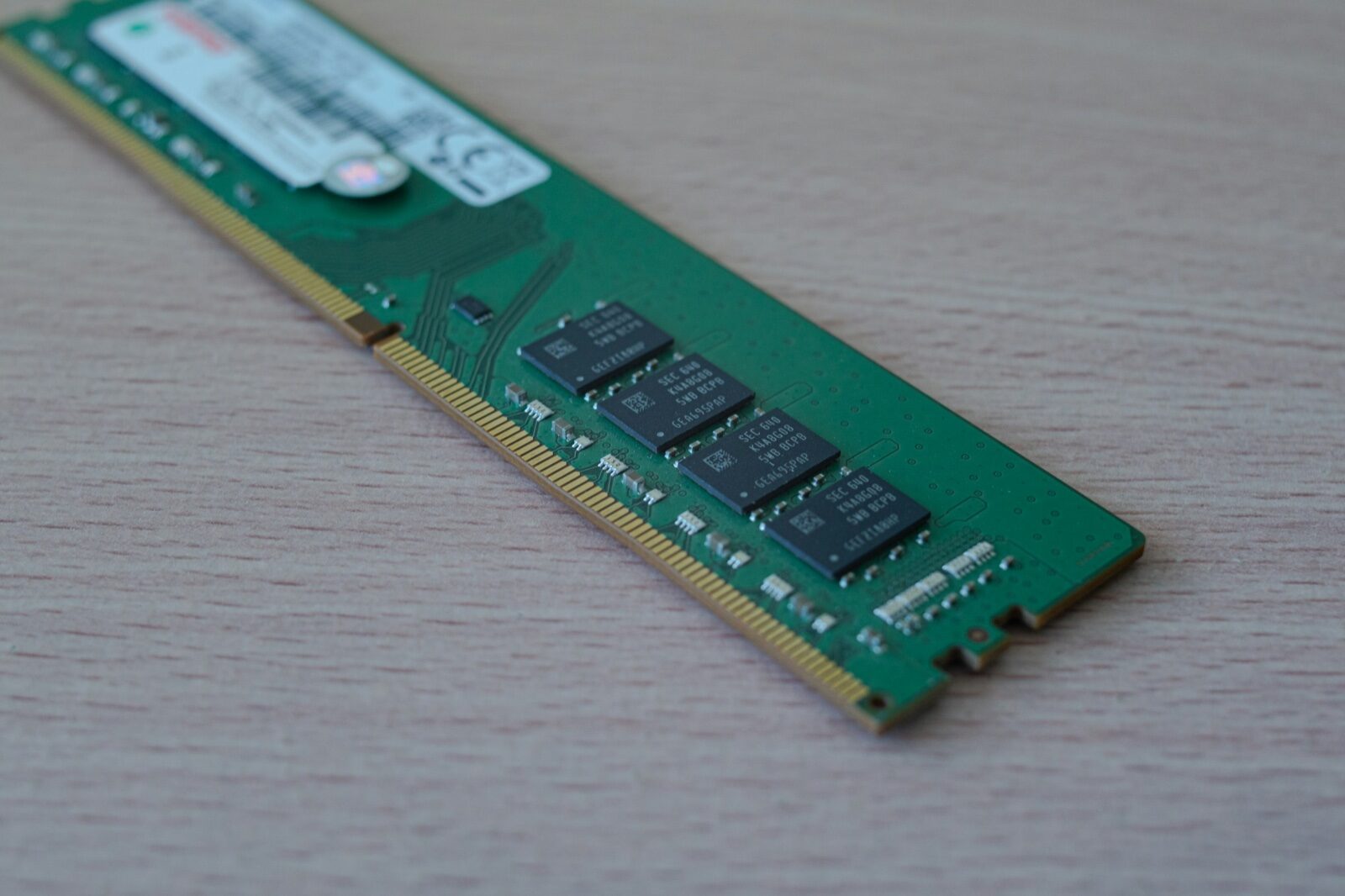
A company that sold five times as many chips at the same prices would not normally see its margin double. Micron's almost did, which suggests that most of the increase came from what each chip now sells for. The pattern holds outside the data centre. Micron's unit selling memory for phones and PCs had revenue of $13.1 billion in the quarter, against $3.8 billion a year earlier, and its gross margin rose to 90 per cent from 36 per cent.
Micron expects more. It has guided to revenue of about $61.5 billion in the current quarter, with a gross margin near 86 per cent. Sanjay Mehrotra, its chairman and chief executive, said Micron's "Strategic Customer Agreements provide added confidence in the durability of Micron's financial performance."
Where the bill lands
Those prices are now showing up for the businesses that buy computers. In the Institute for Supply Management's survey of service companies, published on Monday, purchasing managers reported memory products rising in price for the ninth month in a row, and listed memory components and solid-state drives among the goods in short supply. Half of the companies in that survey paid more for supplies in September.
The trillion dollars is a record for the chip industry. For anyone buying a server, a laptop or a phone this year, a good part of it is the higher price of the memory inside.
Monthly and annual sales figures, regional growth rates, forecasts and the quotations from Michael Robbins and John Neuffer are from the Semiconductor Industry Association's monthly sales releases of 6 February, 6 March, 3 April, 4 May, 5 June, 6 July, 6 August, 4 September and 5 October 2026 and its release of 4 December 2025, which report World Semiconductor Trade Statistics data. Monthly figures are three-month moving averages. Micron's revenue, margins, business-unit results, guidance and the quotation from Sanjay Mehrotra are from its fiscal fourth-quarter earnings release of 30 September 2026, filed with the Securities and Exchange Commission as Exhibit 99.1 to a Form 8-K. The memory price and shortage reports are from the Institute for Supply Management's September 2026 Services PMI Report. Growth multiples are this publication's calculations. Accurate to 5pm ET on 5 October 2026.
Topics technologysemiconductorsmicronartificial intelligencedata centersprices