Pennsylvania's Department of Health reports 693 confirmed measles cases this year, across 38 of the state's 67 counties.
One hundred and thirty-three people have been admitted to hospital. Two have died, both in Lancaster County. A third death, reported by the Jefferson County coroner on Sunday, is under review.
Nationally, the Centers for Disease Control and Prevention had recorded 3,294 confirmed cases in the United States as of 10 September.
The number that explains the rest
Fewer than one percent of Pennsylvania's cases were in vaccinated people. Four vaccinated people caught measles: three adults and one child. None was admitted to hospital.
That is what a working vaccine looks like in the middle of an outbreak. Two doses of the MMR vaccine are about 97 percent effective against measles, which means that in a large enough outbreak a small number of vaccinated people will be infected, and they will generally have a milder illness.
Measles is the extreme case. The health department's own description is blunt: it is one of the most contagious viruses known, it can hang in the air of a room for two hours after an infected person leaves, and it can lead to pneumonia, brain swelling and death.
Coverage is the variable
Because the virus is so transmissible, the threshold for stopping it spreading in a community is unusually high — around 95 percent of people immune. That is why measles is the first disease to return when childhood vaccination rates slip, and why it returns in clusters rather than evenly.
Thirty-eight counties is a wide footprint for an outbreak that is fundamentally about pockets. It suggests transmission has moved beyond the communities where it began.
This desk reported last week on Bangladesh's outbreak, where more than a thousand children have died after vaccination gaps opened during political upheaval. The mechanism is the same in both places, at very different scales: coverage falls for reasons that have nothing to do with the vaccine, and measles finds the gap.
What a response costs
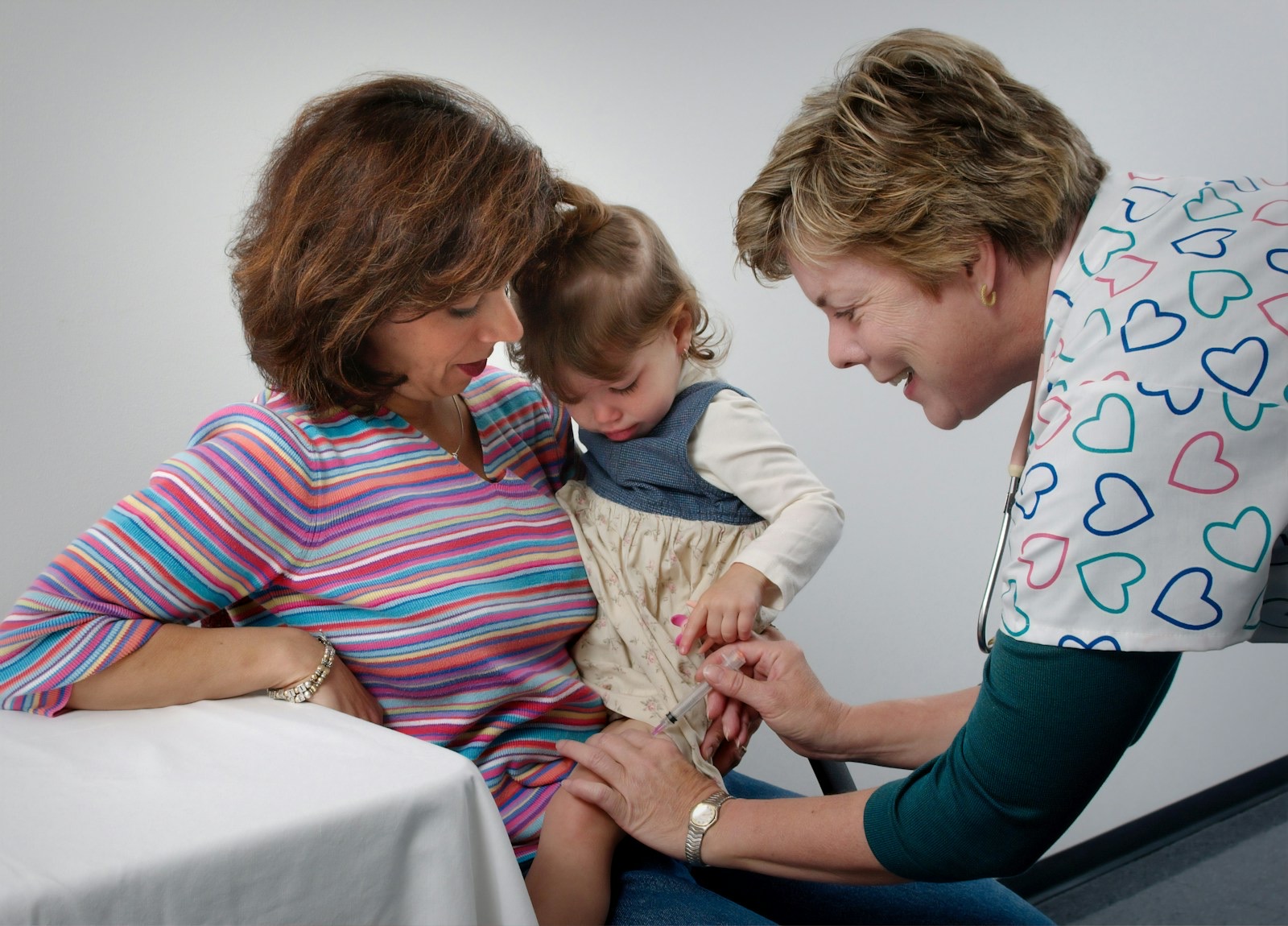
The state's answer has been to take the vaccine to people. Teams have given nearly 4,300 MMR doses at 130 pop-up clinics. More than 46,000 doses went out across Pennsylvania in August, against a typical month of about 25,000.
That is what rebuilding coverage looks like as an operation: staff, sites, cold storage, and enough public notice that people show up. It is slow, and it is the part of public health that has no permanent budget line, because it is only visible during an emergency.
What to watch
The review of the Jefferson County death, which would make three. Then the weekly case counts against the school year: the outbreak's footprint is now wide enough that the next number to watch is not the total but the count of counties reporting their first case. A slowing outbreak stops adding new counties before it stops adding cases.
The figures of 693 confirmed cases across 38 counties, 133 hospitalisations, two confirmed deaths and a third under review following a report by the Jefferson County coroner on 13 September 2026; the proportion of cases in vaccinated people; the four breakthrough infections; the nearly 4,300 MMR doses given at 130 pop-up clinics; the August total of more than 46,000 doses against a typical 25,000; and the department's statement on measles and its complications are as reported by Erie News Now and ABC27 on 14 and 15 September 2026, citing the Pennsylvania Department of Health. The US total of 3,294 confirmed cases as of 10 September is as reported by the same outlets citing the Centers for Disease Control and Prevention. The analysis is our own.
Topics healthmeaslesvaccinationpublic health