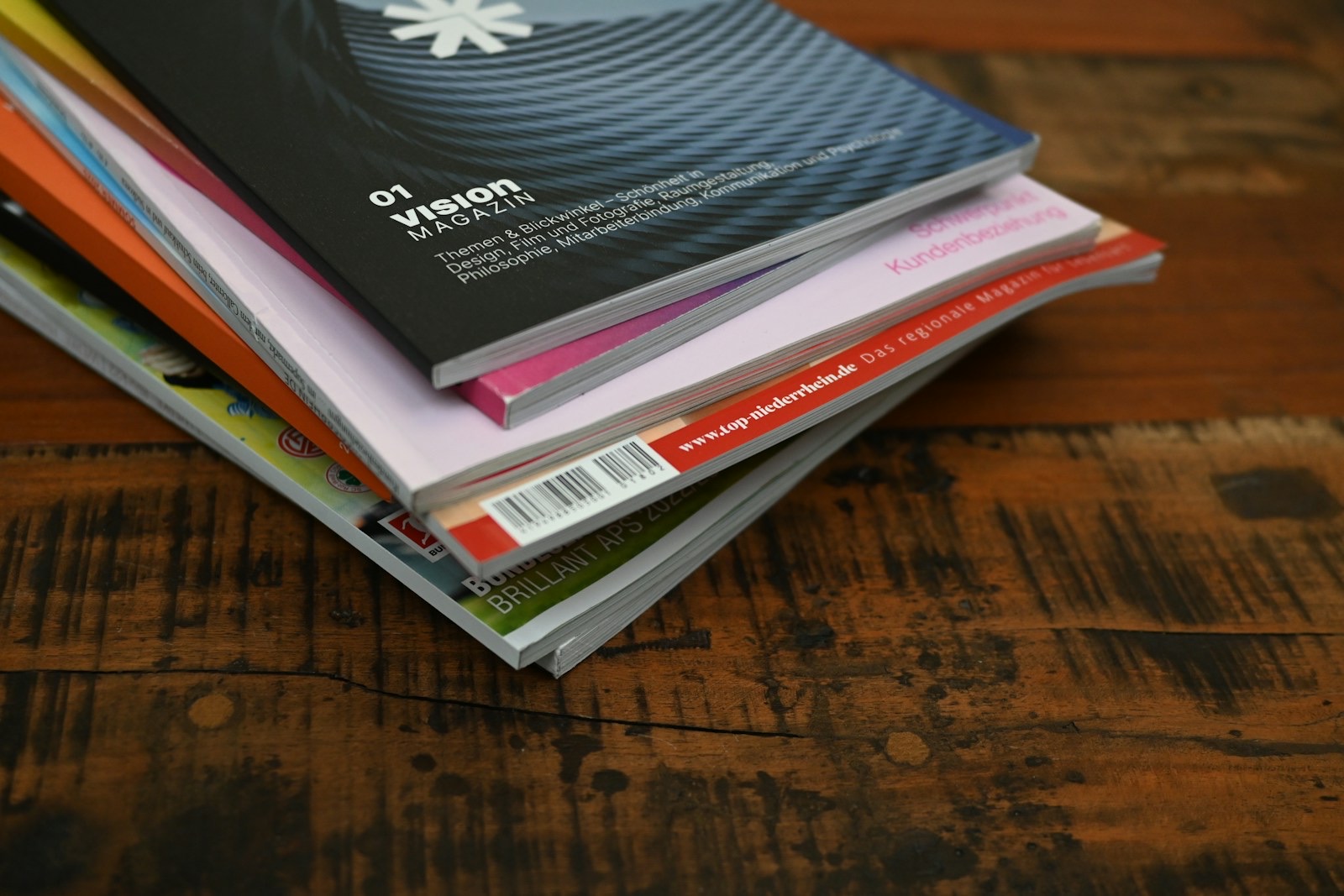
For twenty years the print decision was a subtraction problem. Fewer days, fewer pages, fewer sections, thinner paper, until the remaining edition existed mostly to service a legacy advertising commitment and a subscriber list nobody wanted to disturb. The direction was consistent and the reasoning was sound.
The publications reintroducing print now are not reversing that. They are doing something else: producing a small, expensive, infrequent object and selling it to people who already pay for the digital product. The distinction matters, because the economics only work if the print edition is not trying to be the publication.
Scarcity is the product, not a constraint
A quarterly print run of a few thousand copies at a price that would have been unthinkable for a newsstand is not a circulation business. It is closer to a membership benefit that happens to be printed, and publishers describe it in those terms — the thing a subscriber receives that demonstrates the subscription is real.
The costs behave accordingly. Print at mass scale is a manufacturing and distribution operation with punishing fixed costs; print at a few thousand copies is a procurement exercise with a known unit cost and no distribution network to maintain. Publishers are shipping directly, skipping the newsstand entirely, and treating unsold inventory as a problem they have simply declined to have.
What it is actually selling is a boundary. A printed object ends. It cannot be updated, does not refresh, carries no notifications and makes no further claim on the reader once finished, and publishers report that this — not the paper, not the design, not nostalgia — is what subscribers describe when asked why they want it. That is a coherent product to sell to people whose relationship with the digital edition is a feed that never completes.
It fits the direction independent publishing has been moving anyway. Operators who built direct relationships from the start have the audience data to know exactly how many copies to print and the payment relationship to charge properly for them, which is why several of the more convincing print relaunches have come from publications with no print history at all. The regional magazines that came back got there first, and for the same reason: a defined readership that can be counted is the prerequisite.
There is an obvious limit. This does not fund a newsroom. A few thousand copies at a high price is a meaningful margin contribution and a retention tool, not a revenue line that replaces anything, and publishers who have run the numbers are candid that its main value is in the subscriptions it prevents from lapsing. That places it alongside events and licensing in the category of revenue that does not depend on a pageview — useful precisely because it cannot be arbitraged by a platform.
The risk is that it becomes a genre. A great deal of the current wave looks similar: heavy stock, restrained typography, long essays, minimal advertising. When enough publications produce the same object, the scarcity that justified the price stops being scarce, and what is left is an expensive magazine competing with a newsletter economy already consolidating for the same limited attention.
Topics mediapublishingsubscriptions