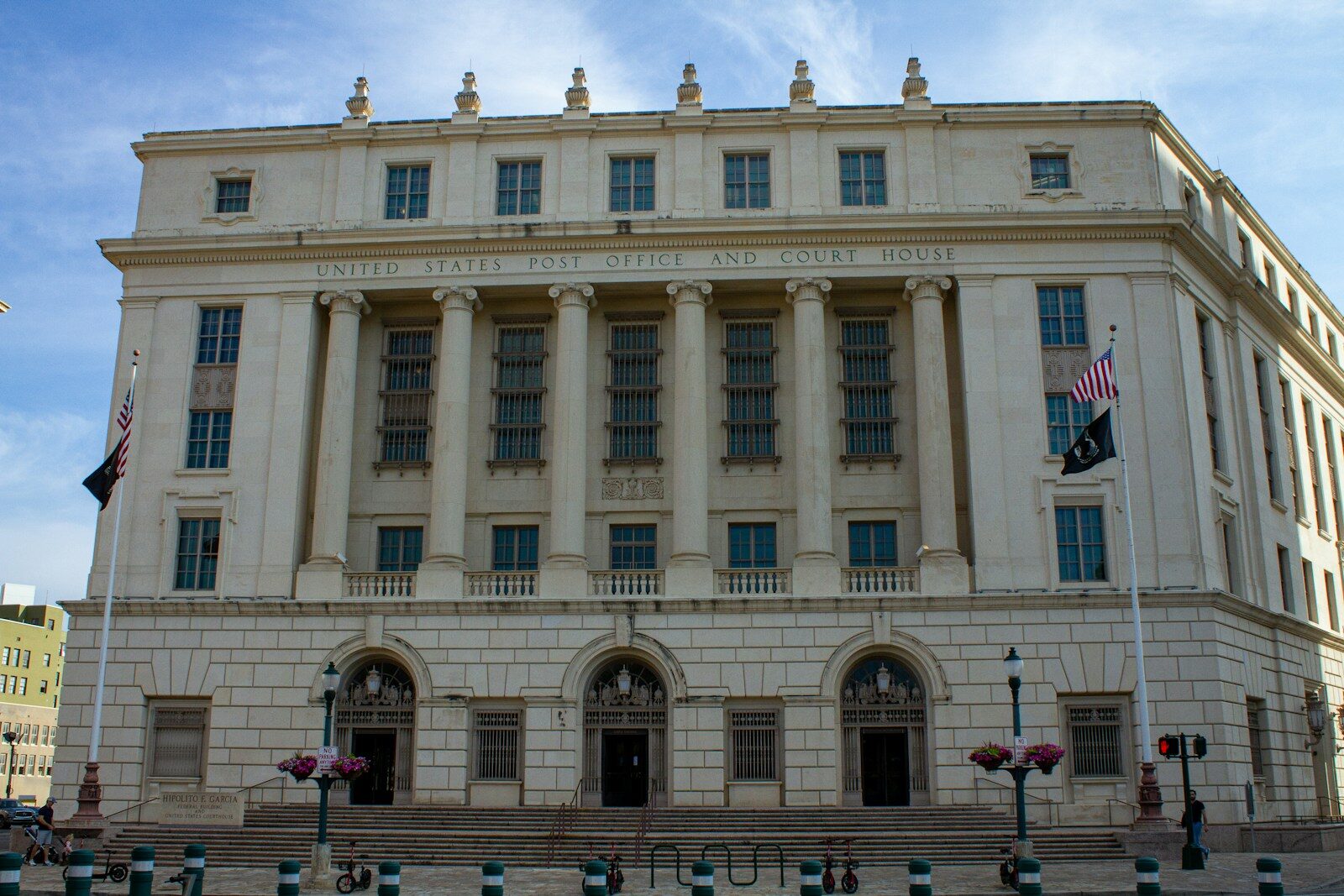
In April 2025 a federal court found that Google had unlawfully monopolised parts of the market for open-web display advertising. On Wednesday the same judge decided what to do about it, and the answer was: not the thing the Justice Department asked for.
Judge Leonie Brinkema rejected the proposed divestiture of AdX, Google's ad exchange. She accepted most of the behavioural remedies instead.
What Google now has to do
Four changes matter. Real-time bid amounts for open-web display inventory sold through AdX must be made available to rival ad servers. Unified Pricing Rules are to be deprecated. Publishers must be able to set different price floors for individual bidders inside Google Ad Manager. And Google must stop using "first look" and "last look" — the privileges that let its exchange see or beat other bids.
Read together, these are an attempt to make Google's exchange behave as though it were not owned by the same company as the ad server publishers use to run their auctions. That is a reasonable description of what a structural remedy would have achieved by separating them.
Why she did not break it up
The stated reasoning is the interesting part, and it is not the reasoning a defendant usually gets.
Breaking up Google Ad Manager, the judge indicated, would harm publishers — particularly small publishers currently using DFP, the ad server, at no cost. Separating the exchange from the server would also introduce complications, and behavioural fixes deliver a resolution faster than the years of appeals a divestiture order would invite.
The first of those reasons is worth sitting with. A court found that Google's control of both sides of the auction was unlawful, and then declined to unwind it partly because publishers depend on the free half. That dependence is not incidental to the conduct. Giving away the ad server is how the exchange acquired the position the court ruled against. The remedy phase ran into the monopoly as a fact about the world: it has been load-bearing for so long that removing it hurts the people it was found to have harmed.
Behavioural remedies have a maintenance cost
A divestiture is expensive, contested and slow, and then it is finished. The asset has a new owner and the market arranges itself around the new fact. Nobody has to supervise it in 2031.
A behavioural remedy is a set of rules about how a firm may act, imposed on a firm that retains every incentive it had before and all of the engineering capacity it had before. It requires somebody to check, continuously, whether the rules are being followed — and the checking has to happen inside a real-time auction system that runs billions of times a day and whose mechanics are understood in full by exactly one party.
That party is the defendant. The publishers who benefit have neither the data nor the engineering to audit an auction they cannot see. The DOJ has neither at the necessary scale or duration.
So the enforceability of this outcome rests on a compliance function watching an adversary with a permanent information advantage, in a system that is rewritten continuously for ordinary product reasons. Every rewrite is a good-faith change and also an opportunity, and telling the two apart from outside is the whole difficulty.
What publishers actually got
Something real, and less than it sounds.
Per-bidder price floors and the end of unified pricing return pricing discretion to publishers — the ability to charge different buyers different minimums, which is ordinary commercial practice everywhere else and was foreclosed here. Ending first and last look removes a structural advantage that had no justification other than ownership. Making bids visible to rival ad servers is the one with the most potential, because it lets a competing server build a fair auction rather than guess at one.
But the publishers on the other end of this are not in a strong position to use it. Their share of the open web has been eroding for years, and the erosion accelerated when the answer engine started selling advertising against the answer — an arrangement that removes the click the auction exists to monetise. A better price for open-web display inventory matters less each year that less open-web display inventory gets seen.
The independent publishers who might have gained most are the ones running on the free ad server the judge cited, and the economics that have made independent media viable mostly route around programmatic display entirely, toward subscriptions and direct sales. Meanwhile the buy side keeps replacing one measurement number with several, which is its own admission that nobody trusts the reported figures from any of these systems.
The next thirty days, and the years after
Both parties must submit a jointly proposed final judgment within thirty days. That document is where this outcome will actually be decided: the definitions, the compliance reporting, the audit rights, the duration, and whether anyone independent gets to look inside the auction.
The remedy as described is only as good as its monitoring provision. If the final judgment installs a technical monitor with real access and a long term, the behavioural route may work. If it relies on Google reporting its own compliance, the market has a rule and no referee, which is the same as before with more paperwork.
Watch that filing rather than this ruling. And watch one number afterwards: the publisher's share of the advertiser's dollar — what reaches the site owner out of what the advertiser spends. It has been falling for a decade. If these remedies do anything, they do it there.
The rejection of the AdX divestiture, the specific behavioural remedies accepted — real-time bid availability to rival ad servers, deprecation of Unified Pricing Rules, per-bidder price floors and the end of first and last look — the reasoning about harm to publishers and to small publishers using DFP at no cost, the preference for a faster resolution over years of appeals, the 30-day deadline for a jointly proposed final judgment and the April 2025 liability finding are as reported by AdExchanger, Courthouse News Service, Adweek and The Hill on 2 September 2026. The analysis is our own.
Topics mediaadvertisingantitrustgooglepublishers