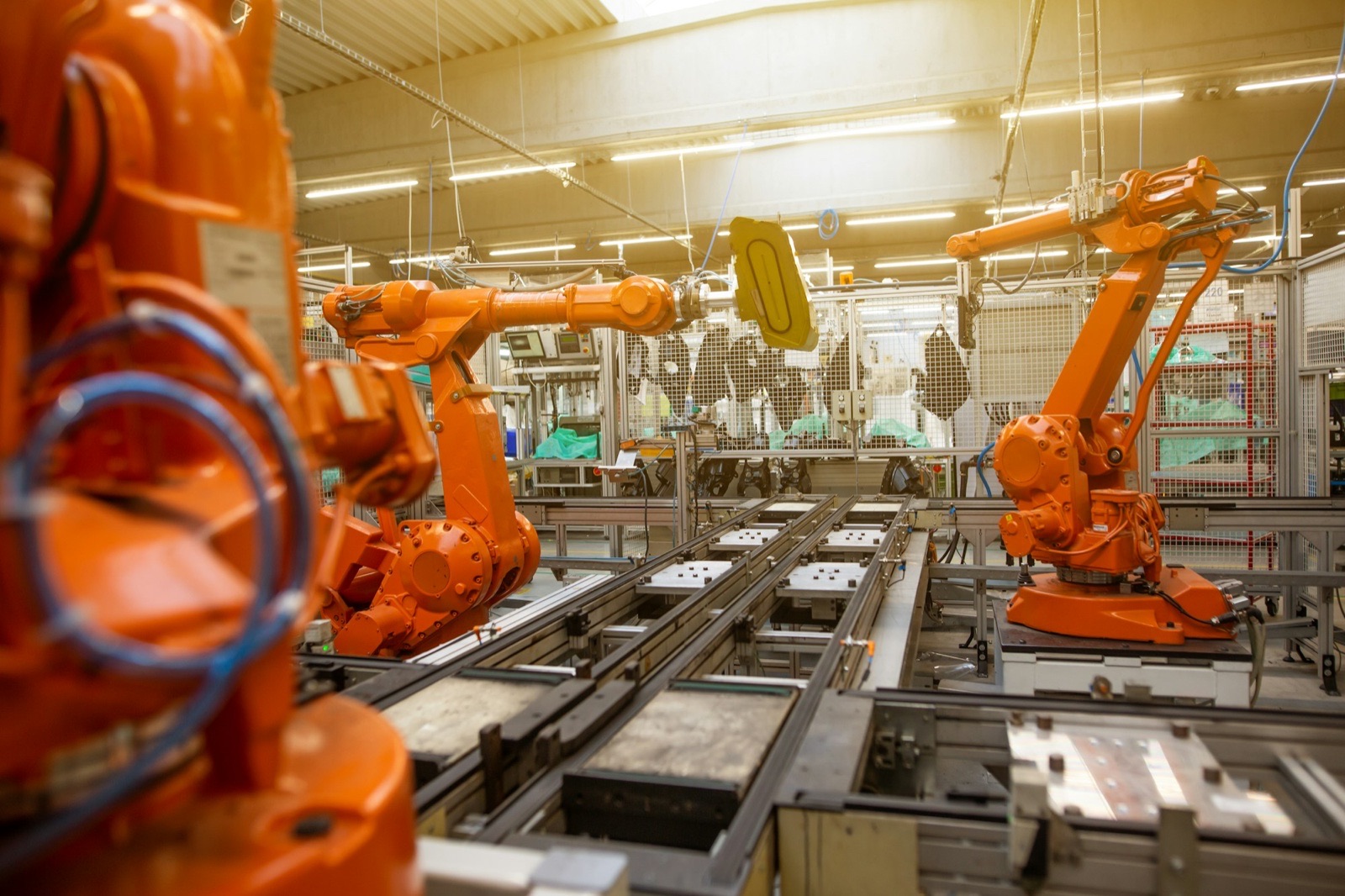
UBTECH opened a plant in Liuzhou on Saturday that it says can build more than 10,000 humanoid robots a year. That works out to one unit roughly every ten minutes.
Part of the assembly is done by the company's own Walker S robots, which is the detail everyone quoted and the least important one.
Why throughput is the story
Humanoid robots have been demonstrated on stages for more than a decade. Honda's Asimo climbed stairs in 2000. What none of those demonstrations established was whether a humanoid could be made repeatably, at a price, on a schedule.
A ten-minute takt time is a claim about the second thing. It says the design has been frozen, the parts are sourced, the tolerances are loose enough for volume assembly, and the process no longer needs a doctorate standing next to it.
That is the transition every manufactured technology makes exactly once. It happened to the automobile in 1913 and to the personal computer in the early 1980s, and in both cases the capability did not change much on the day it happened. The cost did.
What the robots actually do
The plant builds two lines: the Walker S, an industrial humanoid already working on assembly lines at Chinese carmakers including BYD and Zeekr, and the Cruzr, a service robot.
The tasks are narrow — moving parts, quality inspection, fetching components. This is not general-purpose labour, and the honest description of a Walker S on a car line is a slow, expensive, flexible fixture. It is a far more modest claim than the one carried by the valuations attached to artificial intelligence, and a far more testable one.
Flexible is the word carrying the weight. A conventional industrial robot is bolted down and reprogrammed by an engineer. A humanoid can, in principle, be reassigned to a different station in a factory built for humans, without rebuilding the station. Whether that flexibility is worth the price is the question the next two years answer.
The robots building robots part
Walker S units working the line is good theatre and a real signal, though not of the thing it sounds like.
It is a signal that the company trusts its own machines in a controlled environment on repetitive tasks — and a way of financing the hardest customer demonstration there is, since a robot working in your own plant costs you a transfer price instead of a sale.
It is not evidence of a self-improving loop. The robots are not designing the robots.
What a ten-minute takt time implies about the design
Cycle time constrains engineering more than most announcements admit. A unit finished every ten minutes cannot be hand-calibrated, cannot require individual tuning of its joints, and cannot depend on parts machined to aerospace tolerances.
That forces choices backwards through the design: modular actuators that arrive pre-assembled and pre-tested, sensors that self-calibrate on power-up, harnesses that connect one way only.
Every one of those choices also lowers the cost of repair, which is the number that decides whether a factory buys a second unit. A machine that needs a specialist is a pilot project. A machine whose arm can be swapped by the maintenance staff already on site is equipment.
What to watch
Whether the 10,000 figure is capacity or output. Announced capacity is a statement about the building; shipped units are a statement about demand, and Chinese manufacturing has a long history of the two diverging by an order of magnitude.
Then unit price. If a Walker S falls below the fully-loaded annual cost of the worker it stands next to, the argument stops being about robotics and becomes about payback periods — which is when finance departments, not engineers, decide how fast this goes.
The opening of UBTECH's Liuzhou production base on 12 September 2026, the stated annual capacity of more than 10,000 units, the roughly ten-minute cycle time, the use of Walker S units in assembly, and the Walker S and Cruzr product lines and their deployment at Chinese carmakers are as reported by CNBC, Reuters and Chinese state media on 12 to 15 September 2026. Production claims are the company's own and have not been independently verified. The analysis is our own.