China's commerce and science ministries have proposed adding 40 technologies in artificial intelligence, biomedicine and solar power to the catalogue of technologies that may not be exported, or may be exported only under licence. The joint notice, Announcement No. 48 of 2026, was published on Friday 16 October and takes public comment until 15 November. It is a draft, and the catalogue itself has not yet changed.
What does change now is paperwork. From the date of the notice until the revised catalogue takes effect, anyone transferring one of the listed technologies abroad must first register the export on the commerce ministry's online platform, the notice says. That covers selling the ownership of a technology, licensing it for use abroad and a change of the owner or controller to a foreign entity, and it reaches deals already under way but not yet completed.
What is on the list
The notice gives the split: 23 technologies in AI, which it describes as covering large models, intelligent agents, computing clusters and information processing; 5 in biomedicine; and 12 in photovoltaics. In a question-and-answer published alongside it, the ministry's spokesperson said 14 of the 40 would be prohibited from export and 26 restricted, which means exportable only with a licence. The published materials we read do not say which entries fall in which tier.
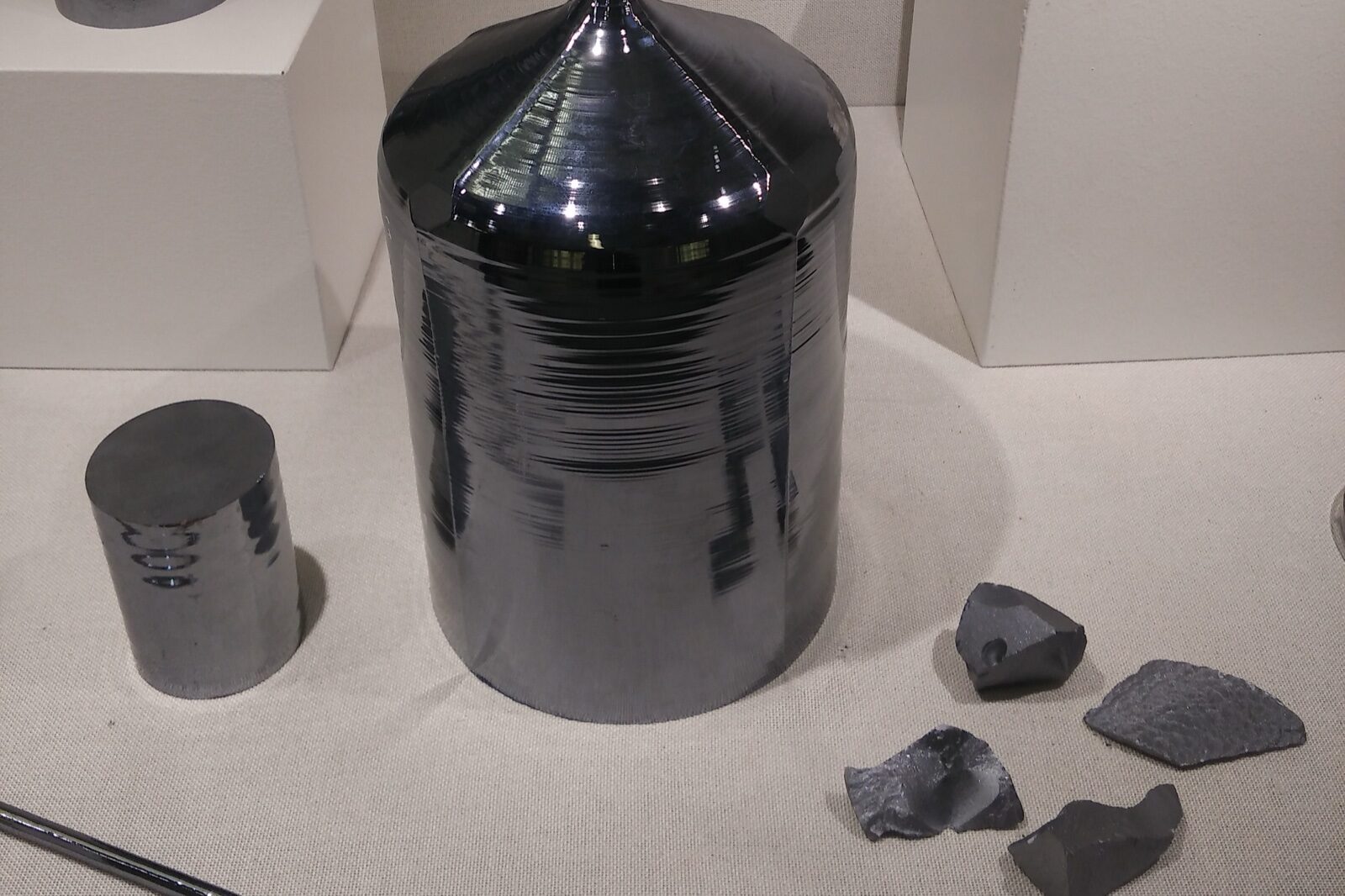
The Associated Press, in a report republished by Fortune, gives examples at each end. Core technology for large models trained on sensitive national data would be banned, as would AI agents built for highly sensitive settings such as national defence and critical information infrastructure. Models with 2 trillion parameters or more, or with certain world-leading capabilities, could be restricted. The AP notes that Moonshot's Kimi K3 and Alibaba's Qwen 3.8-Max are both above 2 trillion parameters, though the proposal names no model or company. It also says several chip-design technologies are covered, among them some for AI processing and memory chips, and that the solar entries include technology used to make polysilicon, the core raw material of the solar supply chain.
Where the line would fall
The draft is aimed at know-how, not at goods. Nothing in the notice stops a Chinese solar panel or chip from being sold abroad. What it governs is who may transfer or license the methods behind them, from polysilicon production to the training of frontier models.
The spokesperson drew the boundary narrowly for AI. The "vast majority" of AI technologies could still be exported freely, the spokesperson said. A company that offers a restricted large model to foreign customers through an API, an app or web interface, a SaaS product or a lightweight on-device deployment would not be exporting model technology under the rules. Technology already placed in the public domain through open-source release or academic publication would be left out of the controls altogether.
That carve-out matters more than the headline count. China's best-known models are distributed largely as open weights or as services. If the final text keeps the exemption, the controls would bite on the transfer of training methods, unreleased weights and specialised systems, not on the products most foreign users touch.
Two descriptions
The ministry describes the revision as "routine work" in managing technology trade and says it is "not aimed at any specific country, region or entity," wording Reuters also reported. In the same answer it gives the purpose as preventing the risk that technology slips out of control or spreads improperly, and ensuring AI "always remains under human control." The AP reports that the ministry called the measures necessary for security. Both framings sit in one document. Which one dominates will be visible in how licences are granted.
Two analysts quoted by the AP offered context. Lian Jye Su, chief analyst at Omdia, said the move could be read as a response to Western sovereignty requirements on AI and other key technologies. Gary Ng, a senior economist at Natixis, said access to technology is becoming more fragmented alongside trade and investment.
The timing sits against a longer record. U.S.-led restrictions have long blocked China from the most advanced AI chips and chipmaking machines, the AP notes. In June the U.S. Commerce Department asked Anthropic to bar foreign nationals from using two of its most powerful models, a request later lifted. The two governments have also made some progress on AI safety talks and on a mechanism to notify each other of AI incidents that could threaten national security.
We reported separately on European leaders asking Brussels for tougher tools against Chinese goods. That is pressure on what comes in. This draft is about what goes out.
What to watch
Three things will settle what this is. The first is the final text after 15 November, and in particular which 14 entries land in the banned tier. The second is how the interim registration works in practice, and whether it holds up contracts already signed. The third is whether the open-source and service carve-outs survive. If they do, the list is a fence around China's methods, not its products.
Sources
- Ministry of Commerce and Ministry of Science and Technology, Announcement No. 48 of 2026 on the revision of the Catalogue of Technologies Prohibited and Restricted from Export, 16 October 2026, via Xinhua: https://www.news.cn/20261016/c15d168f570a48838178ca74e12ca9e7/c.html
- Ministry of Commerce spokesperson, answers to reporters on the revision of the catalogue, 16 October 2026, via Xinhua: https://www.news.cn/20261016/2979db6d1d5641d3b5ec093b55edc7be/c.html
- Reuters, "China proposes adding 40 AI, biotech, solar technologies to export control list," 16 October 2026: https://www.yahoo.com/news/world/articles/china-proposes-adding-40-ai-084246835.html
- Associated Press, "China moves to curb tech exports, including AI, citing national security risks," 16 October 2026, via Fortune: https://fortune.com/2026/10/16/china-restrictions-ai-chips-solar-power-exports-security/
- Associated Press, via TBS News: https://tbsnews.net/tech/china-proposes-export-curbs-ai-chip-and-solar-technologies-1576076
The announcement number, the comment period, the 23, 5 and 12 split and the interim registration rules come from the commerce ministry's notice as republished by Xinhua on 16 October 2026. The 14 banned and 26 restricted technologies, the "routine" description, the "human control" aim, the statement that most AI technology could still be exported, and the API, SaaS and open-source carve-outs come from the commerce ministry spokesperson's question-and-answer, republished by Xinhua the same day. The Reuters report of 16 October supplied the "routine" statement in English. The 2 trillion parameter threshold, the Kimi and Qwen comparisons, the comments from Lian Jye Su and Gary Ng and the June background come from the Associated Press, 16 October 2026, as republished by Fortune and TBS News. Translations from the Chinese are this publication's. The analysis is our own.
Topics technologyChinaexport controlsAIsolarsemiconductorstrade