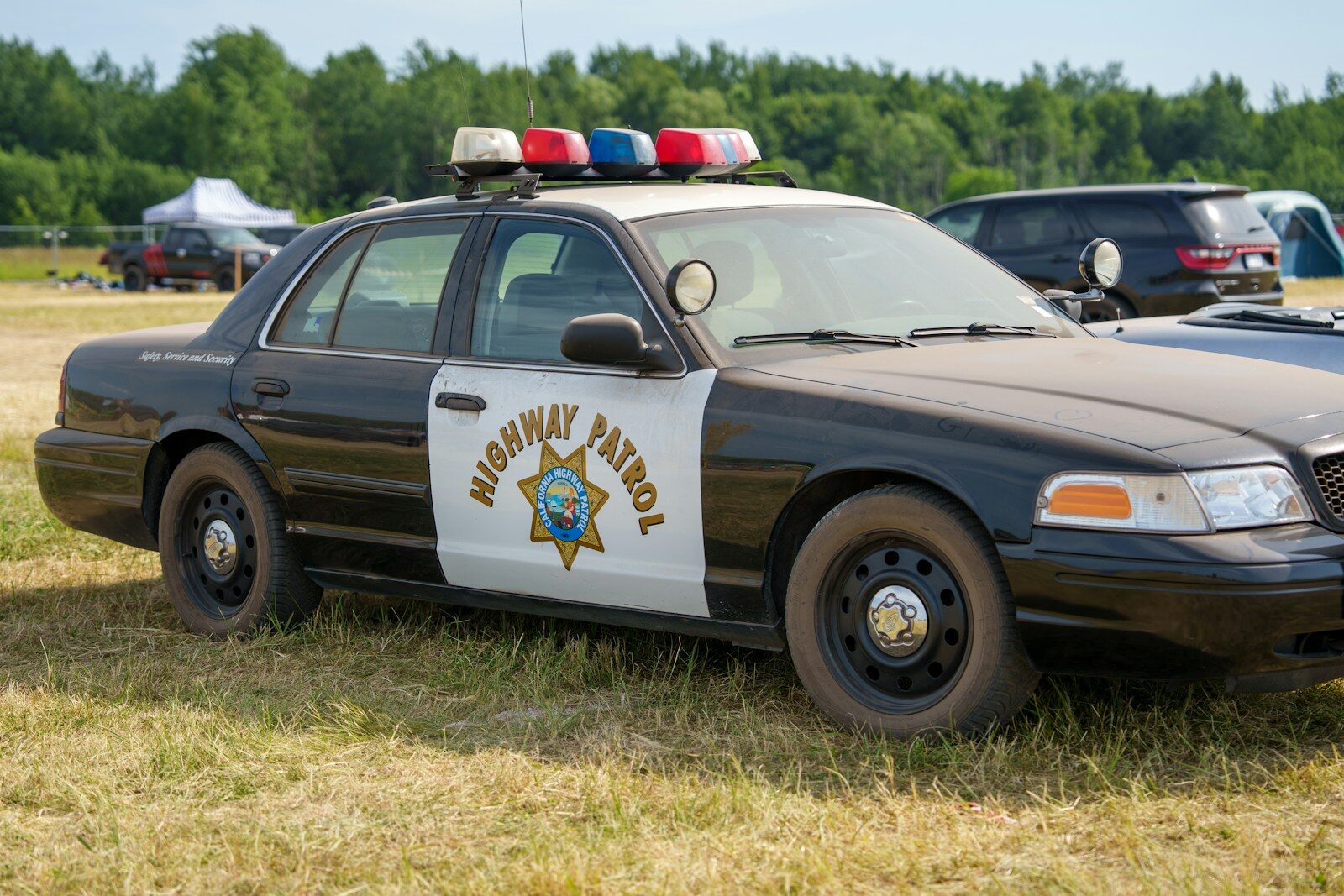
The footage follows a familiar rhythm. A patrol car's dashboard camera picks up a sedan drifting over the fog line. An officer approaches the driver's window. Words are exchanged, sometimes calm, sometimes clipped. Then, in the videos that travel, something shifts. A raised voice. A door pulled open. A struggle that begins over a license plate and ends in handcuffs, or worse.
Ten years ago, few people outside a courtroom ever saw these encounters. Now millions do. Entire YouTube channels exist for nothing else. Individual traffic stops routinely attract audiences larger than cable news broadcasts, and the clips migrate to TikTok and Instagram, where commenters declare with total confidence that the driver "knew his rights" or that the officer "had every legal justification." Both claims are usually wrong, or at least incomplete.
Viewers believe one thing about traffic stops. The law says another. And in the space between the two, says Francis Baumgart, a Chicago criminal defense attorney and founder of Baumgart & Associates, routine encounters become expensive, life-changing, or occasionally deadly. Baumgart has spent three decades on both sides of the courtroom, first as a prosecutor and later defending criminal cases in federal, state, and municipal courts, and he has chaired the Criminal Law Committee of the Chicago Bar Association.
"Most people form their understanding of police encounters from thirty-second clips," Baumgart said. "By the time they're sitting in a car with an officer at their window, they're running on adrenaline and half-remembered internet advice. That's a bad combination."
The Most Common Encounter in American Life
Americans are pulled over so often that the experience has become almost a rite of passage. Researchers with Stanford's Open Policing Project estimate police stop more than 20 million drivers each year, upward of 50,000 every day. Federal survey data tell the same story from a different angle: the Bureau of Justice Statistics counted roughly 49.2 million U.S. residents who had contact with police in 2022, and traffic stops made up the single largest category of police-initiated encounters, sweeping millions of otherwise law-abiding citizens into brief but legally consequential interactions.
Nearly all of those stops end with a warning or a citation and a merge back into traffic. The outliers are real, though. Mapping Police Violence, which tracks fatal police encounters nationally, found traffic stops produced roughly 9 percent of the more than 1,200 police killings recorded in 2025. A New York Times investigation counted more than 400 drivers and passengers killed over five years who were neither armed with a gun or knife nor being pursued for a violent crime.
The risk runs both directions, though research suggests it is smaller on the officer side than police training often assumes. A University of Michigan Law Review study of a decade of Florida stops found a felonious killing of an officer occurred roughly once in every 6.5 million routine stops. Rare, but never zero, and officers approach every window accordingly.
Stress compounds the danger. Behavioral researchers have long documented that acute stress narrows attention, shrinks working memory, and pushes people toward impulsive decisions. Officers experience it. Drivers experience it. That physiological overlap helps explain why an ordinary conversation about a taillight can deteriorate in seconds.
"An officer walking up to a car doesn't know who's inside," Baumgart said. "The driver doesn't know what kind of day that officer has had. Two strangers, both under stress, both making assumptions. That's why small decisions in the first sixty seconds matter so much."
What the Law Actually Requires
What looks like a simple roadside conversation is actually governed by decades of constitutional law, and the rules begin before the lights come on.
An officer needs reasonable suspicion, a specific, articulable basis to believe a traffic violation or crime has occurred, to stop a vehicle. "Reasonable suspicion is a low bar, and people are shocked by that," Baumgart said. "A busted taillight, a rolling stop, drifting in your lane. Any of those is enough. The stop itself is almost never the fight worth having."
Probable cause is the higher standard, the level of evidence needed to arrest someone or, in many circumstances, search a vehicle without consent. Somewhere between those two legal standards, the internet invented hundreds of myths.
Due process, Baumgart added, does not mean the roadside works like a courtroom. "Due process means the system as a whole has to treat you fairly. It doesn't mean the officer has to debate you on the shoulder of the highway. Your arguments belong in front of a judge, where they can actually win."
Baumgart says several issues repeatedly surprise first-time clients:
- Duration. The Supreme Court has held that a stop may last only as long as needed to address the violation, unless new suspicion develops. Officers cannot stretch a stop indefinitely hoping something turns up.
- Identification. In Illinois, as in most states, drivers must provide a license, registration, and proof of insurance on request. Passengers generally are not required to identify themselves absent independent suspicion.
- Searches and consent. "If an officer asks for permission to search, that usually means he needs it," Baumgart said. "You can decline politely. Declining is not evidence of guilt, and courts have said so repeatedly."
- Silence. Beyond identifying information, drivers are not required to answer investigative questions.
- Recording. Courts have broadly recognized a right to record police performing public duties, provided the recording doesn't physically interfere with the stop. In Illinois, where a federal appeals court struck down the state's old eavesdropping law as applied to recording on-duty officers, the amended statute permits recording police performing official duties in public.
- Freedom to leave. Asking "Am I being detained, or am I free to go?" clarifies the legal status of the encounter, calmly and without confrontation.
What the Internet Gets Wrong
The comment sections have produced a folk law of traffic stops, and much of it collapses under scrutiny. Five myths Baumgart hears constantly:
- "You must answer every question." You don't. Identification requirements are narrow; investigative questions are optional.
- "Refusing consent gives them probable cause." It doesn't. Exercising a constitutional right cannot itself justify a search.
- "Recording will get you arrested." Lawful, non-interfering recording is protected, whatever an annoyed officer's expression suggests.
- "Saying 'I know my rights' changes anything." The phrase carries no legal weight. Invoking a specific right, clearly and calmly, does.
- "Staying silent makes you look guilty." Silence cannot be used against you the way a stray admission can, and prosecutors know which one wins cases.
The Algorithm Problem
Cameras have altered behavior on both sides of the window. Officers know their conduct may be reviewed by supervisors, prosecutors, and eventually the internet. Drivers know their reactions may be replayed for millions of strangers.
But the algorithms reward conflict. A routine warning issued in seven minutes rarely reaches anyone's homepage. The confrontation does. Over time, that skews public perception of policing itself, making exceptional encounters appear commonplace and teaching viewers that performance, loud, defiant, quotable, is the same thing as protection.
"The camera doesn't protect you in the moment," Baumgart said. "Knowledge does. Calm does. The camera protects you later, if you gave it something worth showing."
The Ten Things Every Driver Should Know Before a Traffic Stop
Asked to distill three decades of criminal practice into practical roadside guidance, Baumgart offered ten rules. They share a theme: the street is where you protect yourself, and court is where you fight.
- Know the difference between "power" and "rights." Officers at the roadside hold the raw power to act, Baumgart says, whether or not a court later finds the action lawful. "You simply cannot win on the street," he said. "You are naïve if you say, 'I demand my rights.'" Even a stop you believe has no legal basis should be met with politeness and silence. Act as if the officer is simply doing his job, and quietly keep track of the time, especially if a search begins, the stop drags past ten minutes, or a drug-sniffing dog appears.
- Communicate respectfully, and say almost nothing. If courtesy doesn't come naturally by now, Baumgart offers a script worth memorizing: "My lawyer friend told me that if I were ever arrested and charged with anything more than a simple traffic ticket, even if I didn't do anything illegal, to be polite and say absolutely nothing." He also rejects the fiction that a stop is a casual chat. In practical terms, you are seized the moment the lights come on. Anyone who doubts it, he notes dryly, can try casually driving away while the officer writes the ticket.
- Understand consent searches. If an officer has decided to search, nothing said at the roadside will prevent it. The real fight happens later, in court, when a defense attorney moves to suppress whatever was found. The driver's only job in the moment is to state clearly that he does not consent, whether or not the officer formally asks. The same rule covers your phone. "Do not give him your password," Baumgart said.
- Skip the argument. Baumgart's rule for communication applies double here: be polite, and say nothing. Debating the stop accomplishes nothing a judge can't do better later, and it can generate entirely new problems.
- Keep your hands visible. On the steering wheel, in plain view. Before reaching for anything, tell the officer exactly what you are reaching for and where it is. "I'm going to get my insurance card from the glove compartment" costs nothing and defuses the single most dangerous moment of any stop.
- Keep your documents where you can reach them. Proof of insurance in the glove compartment or center console. License in your wallet. Fumbling and digging extend the encounter and raise tension for everyone.
- Don't parse which questions are "investigative." It doesn't matter, Baumgart says. Answering can only incriminate you, and staying silent costs you nothing you'd have won at the window. Even if an officer threatens custody for not answering, the hours spent being booked and released are a far better trade than a conviction earned by talking to hurry the stop along.
- Understand what a recording is actually for. A recording made quietly, by a passenger or a running phone, usually will not be played in court. Its value comes earlier: it can give the prosecutor a reason to dismiss the case or reduce the charge before trial ever starts.
- Ask to leave the moment the ticket is issued. An officer stopping you for a traffic violation gets only a reasonable amount of time to write the citation. If the stop stretches beyond that, typically while everyone waits for a drug dog, evidence seized after the delay should not be usable against you. Asking to leave marks the clock.
- Accept that the roadside argument is unwinnable. Push back and the officer's answer is simple: more officers. Escalate further and the original ticket becomes resisting arrest or obstruction of justice. The case you actually want to make gets made in a courtroom, by a lawyer, in front of a judge. That last clause is doing more work than it looks: the lawyer is being rationed, and courts in several states are now dismissing cases outright rather than appoint counsel they cannot staff. Advice that ends at the courthouse door assumes somebody is waiting on the other side of it.
Millions of people will watch another traffic stop online this week. Most will decide who was right before the first minute is over. Far fewer will understand the constitutional rules unfolding beneath the conversation. For Baumgart, that is precisely why legal education matters long before anyone sees flashing lights in the rearview mirror.
"Nobody plans to be stopped," he said. "But the person who understands the process before it starts protects two people at that window, not one."