Exxon Mobil earned $15.4 billion and Chevron $9.9 billion in the third quarter, together about $25.3 billion, the two companies said on Friday 30 October. Chevron's profit was almost three times the $3.5 billion it made a year earlier.
The war-time oil price explains the size of the numbers. It does not explain where the money came from. Nearly half was earned not by pumping crude but by turning it into fuel, and both companies produced less oil and gas than a year ago.
How much did they earn?
Far more than a year ago. Exxon's net income was $15.4 billion, or $3.72 a share, up from $14.5 billion in the second quarter, according to its results release. Excluding identified items and timing effects, it earned $17.5 billion, or $4.23 a share. For the first nine months, Exxon's adjusted earnings were $41.0 billion, against $22.5 billion a year earlier.
Chevron earned $9.92 billion, or $5.06 a share, against $3.54 billion, or $1.82, a year earlier, its results release shows. Its adjusted earnings were $10.4 billion. The Brent benchmark averaged $97 a barrel in the quarter, Chevron said, compared with $69 a year earlier and $104 in the second quarter.
Exxon's reported profit was held down by about $2.5 billion of timing effects, mostly mark-to-market moves on derivatives that had not yet settled. The company expects those to reverse in later periods. It also booked a $675 million gain on asset sales.
Where did the money come from?
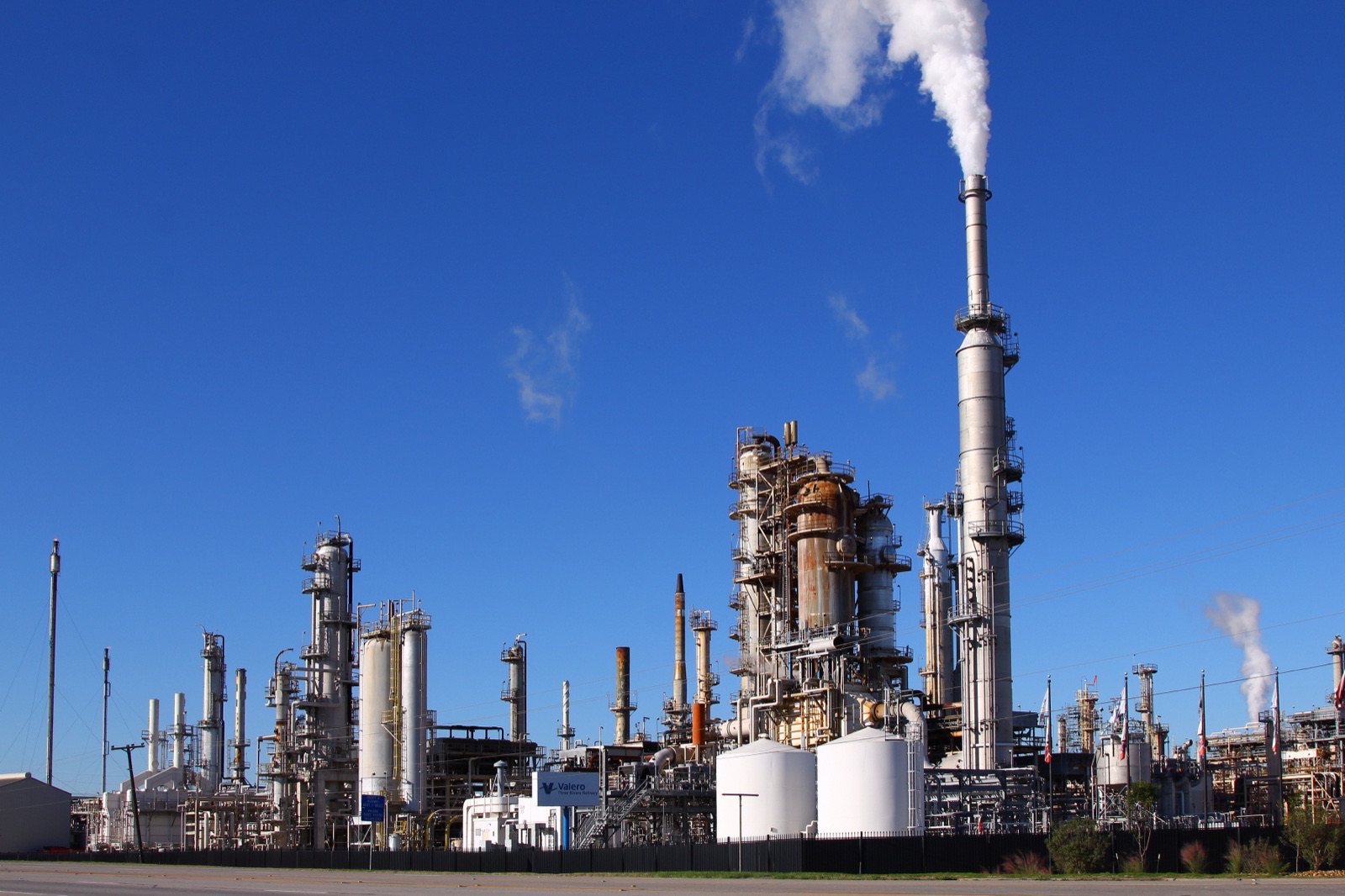
From refineries, almost as much as from wells. Exxon's energy products business, which refines and sells fuel, earned $7.2 billion on a reported basis and $9.1 billion adjusted, more than double its adjusted $4.1 billion in the second quarter. Chevron's downstream business earned $4.9 billion, up from $1.1 billion a year earlier. Its U.S. downstream unit alone went to $3.6 billion from $638 million.
| Third quarter 2026, reported earnings | Exxon Mobil | Chevron | Combined |
|---|---|---|---|
| Oil and gas production (upstream) | $7.1 billion | $5.7 billion | $12.8 billion |
| Refining and fuel (energy products / downstream) | $7.2 billion | $4.9 billion | $12.1 billion |
| Chemicals and specialty products | $2.0 billion | n/a | $2.0 billion |
| Corporate and other | -$0.9 billion | -$0.7 billion | -$1.6 billion |
| Net income | $15.4 billion | $9.9 billion | $25.3 billion |
Sources: Exxon Mobil and Chevron third-quarter releases, 30 October 2026. Chevron's downstream segment includes its chemicals business. Totals are this publication's arithmetic and may not add because of rounding.
On those figures, refining supplied about 48 per cent of the pair's combined profit. On Exxon's adjusted figures the refining business earned more than its upstream arm, $9.1 billion against $7.3 billion. The wide gap between crude and fuel prices is what consumers have felt: gasoline alone was up 34.2 per cent in the year to September in the consumer price index, as this publication reported at the time.
Refiners without oil fields have told a similar story. Valero went into its report this month with analysts expecting it to earn far more than a year earlier, as we noted then.
Did they produce more?
No. Chevron's net production was 3,980 thousand barrels of oil equivalent a day, down from 4,086 thousand a year earlier and 4,070 thousand in the second quarter. Exxon produced 4,496 thousand a day in the quarter, slightly below 4,514 thousand in the second; its nine-month average of 4,534 thousand compares with 4,651 thousand a year earlier.
Exxon credited growth in Guyana, the Permian Basin and its Golden Pass LNG plant for higher upstream earnings this year. Neither release breaks out output by basin for the quarter. The companies did not explain the year-on-year declines in their headline releases. That gap is worth asking about on the companies' calls with analysts.
Where is the cash going?
About half to shareholders, and much of the rest to lenders. Exxon generated $25.7 billion of operating cash flow and $19.1 billion of free cash flow, and paid out $9.4 billion: $5.1 billion in buybacks and $4.3 billion in dividends. It has cut net debt by nearly $11 billion this year, to $22.1 billion, and announced $20 billion of share repurchases for 2027, "assuming reasonable market conditions."
Chevron produced $12.0 billion of free cash flow and paid $3.5 billion in dividends and $2.5 billion in buybacks, about half the total by our arithmetic. Its total debt fell to $33.5 billion on 30 September from $40.8 billion at the end of 2025.
| Third quarter 2026 | Exxon Mobil | Chevron |
|---|---|---|
| Free cash flow | $19.1 billion | $12.0 billion |
| Dividends plus buybacks | $9.4 billion | $6.0 billion |
| Share of free cash paid out | 49 per cent | 50 per cent |
| Capital spending | $7.0 billion | $4.0 billion |
Sources: company releases, 30 October 2026. Payout shares are this publication's arithmetic.
"Markets will change, but we're positioned to continue supplying the energy and products the world needs," said Darren Woods, Exxon's chairman and chief executive. Mike Wirth, Chevron's chairman and chief executive, said the company had delivered "strong operational performance and disciplined execution, while continuing to invest to grow energy supply."
Paying down debt at $97 Brent is the cautious choice. It means the balance sheet, not the buyback, absorbs the windfall, and it leaves room to keep paying if prices fall. That is our reading of the numbers, not either company's stated plan.
What to watch
Brent averaged $104 in the second quarter and $97 in the third. If it keeps easing, the upstream line falls first. The refining line depends on the spread between crude and fuel, which has been the bigger surprise this year and the part of the war's cost that households pay at the pump, as Moody's estimated this month. Exxon's $20 billion buyback pledge for 2027 is the clearest bet either company has made that the cash will keep coming.
Exxon Mobil's earnings, segment results, identified items, timing effects, production, cash flow, distributions, net debt, 2027 buyback plan and the quotation from Darren Woods are from its third-quarter 2026 results release of 30 October 2026, filed with the SEC. Chevron's earnings, segment results, production, Brent average, cash flow, dividends, buybacks, debt and the quotation from Mike Wirth are from its third-quarter 2026 results release of 30 October 2026, filed with the SEC. The gasoline price change is from the Bureau of Labor Statistics consumer price index for September 2026, as reported by this publication on 14 October. The combined profit, the split between refining and production, the payout shares and the debt changes are this publication's arithmetic. The analysis is our own.
Topics marketsoilrefiningearningsBrentshare buybacksIran warenergy