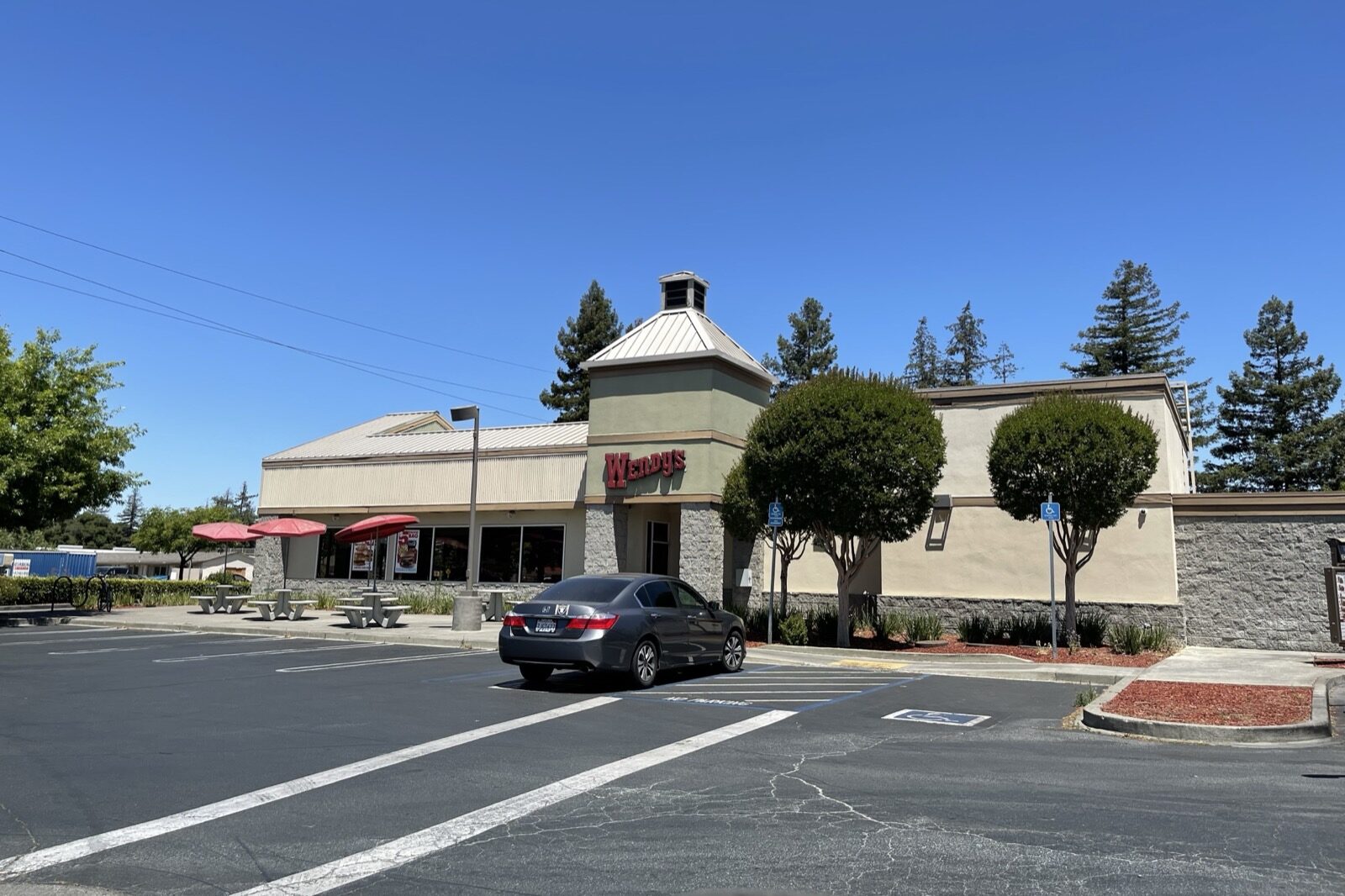
Trian Fund Management and Flynn Group have offered $7.35 a share in cash to take The Wendy's Company private, about 20 per cent above Tuesday's closing price, according to a letter to the board filed with the SEC on Wednesday.
The letter assumes 194.0 million fully diluted shares, which by this publication's arithmetic values Wendy's equity at about $1.43 billion. The proposal is non-binding. The more interesting number is the one the bidders are not paying for: the debt they intend to keep.
Who is bidding, and on what terms?
Trian, the investment firm run by Nelson Peltz, already owns about 16.3 per cent of Wendy's, the letter says. Its partners are Flynn Group, which says it runs more than 340 Wendy's restaurants and is one of the brand's largest U.S. franchisees, plus BlueFive Capital and Sixth Street Partners. Trian would roll over its shares, and the group says it would deliver equity commitment letters at signing.
The bidders say the deal "would not require any new debt or be subject to a financing condition," and that they expect Wendy's "existing securitization financing would remain in place following closing." The deal would be a Delaware merger needing a majority of outstanding shares, according to Trian's amended Schedule 13D. The letter expects a special committee of independent directors to consider it and says the group is "highly confident" it can agree terms "over the coming weeks." J.P. Morgan and BofA Securities are advising the bidders.
Wendy's shares rose about 15 per cent on Wednesday morning, Investing.com reported. The 20 per cent premium implies a Tuesday close of about $6.13.
How much is the whole company worth at this price?
Roughly $3.8 billion, of which the shareholders get the smaller part. Wendy's second-quarter release showed $2.72 billion of long-term debt and $29.8 million due within a year at 28 June, against $341 million of cash.
| Item | Amount |
|---|---|
| Offer price per share | $7.35 |
| Fully diluted shares (letter) | 194.0 million |
| Equity value | about $1.43 billion |
| Long-term debt incl. current portion, 28 June | about $2.75 billion |
| Cash, 28 June | about $341 million |
| Implied enterprise value (before leases) | about $3.83 billion |
| First-half 2026 adjusted EBITDA | $235.4 million |
Sources: bidders' letter, 28 October 2026; Wendy's second-quarter release, 7 August 2026. Equity and enterprise values are this publication's arithmetic and exclude $648 million of long-term finance lease liabilities.
By that arithmetic, the equity is about 37 per cent of the enterprise value, and the bid for the shares equals about half the debt. Doubling first-half adjusted EBITDA as a rough annual figure, which is our simplification and not company guidance, puts the price at about eight times earnings before interest, tax, depreciation and amortization. In a business with this much fixed borrowing, small changes in operating profit move the value of the equity a great deal. That is the bet Trian is offering to take off public shareholders' hands, and the reason the premium is quoted on a share price that has already fallen so far.
Why now?
Because the business is shrinking. In the second quarter, U.S. same-restaurant sales fell 7.0 per cent and U.S. systemwide sales 8.2 per cent; Wendy's closed 81 more U.S. restaurants than it opened, and 245 net in the first half. U.S. company-operated restaurant margin fell to 13.8 per cent from 16.2 per cent. The company withdrew its 2026 outlook and cut its dividend to an annual rate of 28 cents. "Today we are clearly not performing at our potential," Bob Wright, the returning chief executive, said in the release. That backdrop matches the fall in fast-food traffic this publication noted earlier this month.
The bidders' letter cites "significant pressures on the US consumer," commodity inflation and competition in burgers, and says the company must manage its balance sheet "against approaching debt maturities." The letter does not say which maturities it means.
Details to note
Two figures in the filings show how far the stock has fallen. The 12.0 million employee stock options in the letter's share count carry a weighted average exercise price of $15.57, more than twice the offer, so under the treasury stock method the letter uses they add nothing to the share count. And the 279.8 million shares Wendy's holds in treasury cost it $3.28 billion over the years, according to its June balance sheet, more than twice what the bidders propose to pay for every share now outstanding. Buybacks stopped this year: Wendy's repurchased $1.9 million of stock in the first half, against $186.5 million a year earlier.
Flynn's role also matters. A large franchisee joining the owner group would sit on both sides of the royalty relationship, paying the franchisor and owning part of it. Franchised restaurants change hands often, as this publication found in the franchise resale market; here a franchisee would help buy the franchisor itself. That is our reading; the letter says only that franchisees would gain "stability and consistent capital support."
What happens next
The special committee decides whether to negotiate, seek other bids or reject the offer. Watch for a committee statement, any rival interest, and Wendy's third-quarter results, which will show whether the second-quarter sales decline has slowed. A deal needs a majority of all outstanding shares, so the roughly 84 per cent that Trian's group does not own will set the price.
The proposal's price, premium, share count, financing, structure, advisers, Trian's 16.3 per cent holding and the quotes are from the bidders' letter of 28 October 2026 and Trian's amended Schedule 13D filed the same day with the SEC. Flynn's restaurant counts are from the letter. Second-quarter sales, restaurant counts, margins, debt, cash, treasury stock, the dividend cut, the withdrawn outlook and Bob Wright's quote are from Wendy's second-quarter release of 7 August 2026, filed with the SEC. The share-price reaction is from Investing.com's report of 28 October 2026. The implied prior close, equity value, enterprise value, debt multiple and the comparison with treasury stock are this publication's arithmetic. The analysis is our own.