Weil, Gotshal & Manges, a New York law firm founded in 1931, plans to close. Its management committee has recommended that the partnership "pursue an orderly wind-down," the firm said in a statement on Wednesday, as reported by Law.com.
The firm's leaders told partners on Wednesday, and Weil said it would keep serving clients during the wind-down, Reuters reported. Reuters said it was unclear what the plan means for the firm's roughly 1,200 lawyers, its staff and its creditors. Earlier in the week a Weil spokesperson had told the Wall Street Journal that "no decision has been made to dissolve the firm," Above the Law reported.
How big is Weil?
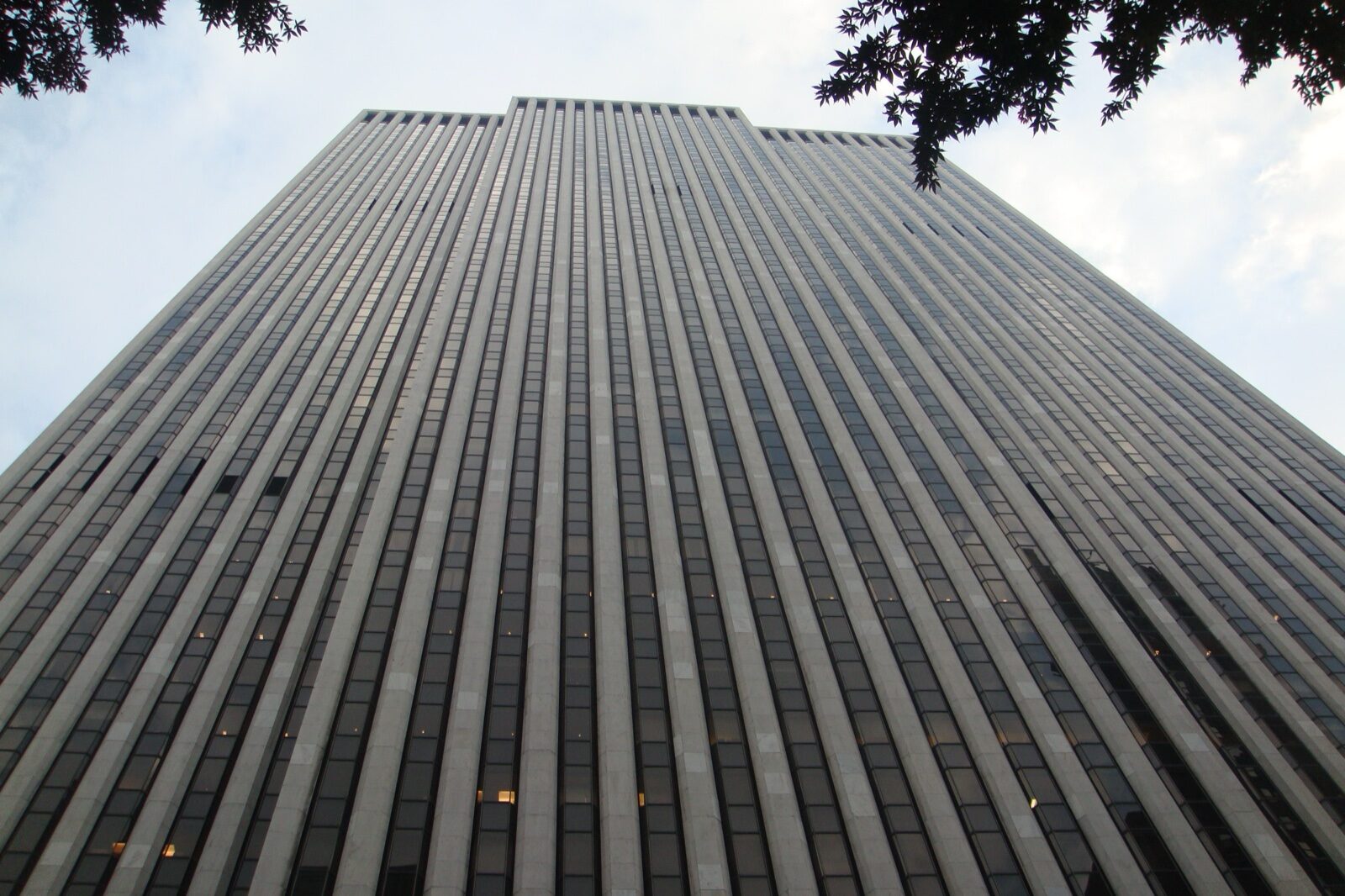
Large by any measure in the profession. Weil brought in $2.1 billion of revenue last year, according to Above the Law, and has its headquarters at 767 Fifth Avenue in Manhattan, the General Motors Building. Its lawyers represented Lehman Brothers, General Motors and Enron in their Chapter 11 cases, and Above the Law credits it with building the modern big-law bankruptcy practice.
That history is the uncomfortable part. A firm known for steering failing companies through restructuring is now planning its own. Brian Resnick, a bankruptcy lawyer at Davis Polk, is advising on the wind-down, Above the Law reported. No bankruptcy filing has been announced.
What went wrong?
Partners left, and a rescue merger did not happen. Michael Aiello, Weil's corporate chair, left for Cravath, Swaine & Moore in September, according to Above the Law. Ramona Nee, who had been named as the firm's next leader, said she would not take the job.
The same month, Weil said it was "not engaged in merger discussions with any firm." About a month later it was reported to be negotiating a combination with Willkie Farr & Gallagher. Those talks ended without a deal, Above the Law reported.
Reuters placed the collapse in an industry-wide contest for partners, in which firms use large pay packages to hire lawyers who bring private equity, mergers and litigation work. When those partners leave, their clients often follow, and even very large firms become financially fragile.
Why can a $2 billion firm fail so fast?
Because a law partnership owns little except its people. It has no outside shareholders, few hard assets and a cost base, mostly pay and rent, that is fixed in the short run while revenue walks out the door with each departing partner. The same arithmetic runs through other advice businesses: at Lazard, pay absorbed 69.9 per cent of adjusted revenue in the third quarter. That is our reading of the model, not the firm's account of its own decline. Even companies with assets can run short quickly: True Food Kitchen entered bankruptcy with two weeks of cash. A partnership has less to fall back on.
The closest precedent is Dewey & LeBoeuf, which filed for bankruptcy on 28 May 2012, then the largest law firm collapse in U.S. history. By then about 200 of its 300 partners had left, according to its Wikipedia entry, which cites contemporary reporting.
| Measure | Dewey & LeBoeuf | Weil, Gotshal & Manges |
|---|---|---|
| Last reported annual revenue | $935 million (2011) | about $2.1 billion (2025) |
| Lawyers | about 1,100 during its 2012 exodus | about 1,200 |
| Revenue per lawyer (our arithmetic) | about $0.85 million | about $1.75 million |
| Outcome | Chapter 11, May 2012 | Wind-down recommended, October 2026 |
Sources: Above the Law and Reuters, 28 October 2026; Wikipedia. Revenue per lawyer is this publication's arithmetic and uses rounded headcounts.
By this publication's arithmetic, Weil's revenue is about 2.2 times Dewey's last reported figure, and it earned about twice as much per lawyer. Dewey's former leaders later faced criminal charges, Above the Law noted; nothing comparable has been alleged at Weil. On the reporting so far, Weil is failing because its rainmakers chose to leave, which is harder for any balance sheet to guard against.
What to watch
The partners' response to the recommendation comes first. Then the destinations of Weil's practice groups, which will show which rivals gain its restructuring and private equity work, and how the firm handles clients in the middle of live cases, including bankruptcies it is running for others. The wider test is whether other firms with heavy partner exits this year now find merger partners more cautious, or more willing.
The wind-down recommendation and the firm's statement are as reported by Law.com and Reuters on 28 October 2026; the 1,200-lawyer figure, the commitment to keep serving clients and the context on partner pay are from Reuters (Sara Merken, Jonathan Stempel and Kanjyik Ghosh), 28 October 2026. The $2.1 billion revenue figure, the 1931 founding, the September statement on merger talks, the Willkie talks, the departures of Michael Aiello and Ramona Nee, the spokesperson's earlier comment to the Wall Street Journal and the role of Brian Resnick are as reported by Above the Law, 28 October 2026. The New York address is from the firm's website. Dewey & LeBoeuf's 2011 revenue, partner departures and filing date are from its Wikipedia entry, which cites contemporary reporting. The revenue comparisons are this publication's arithmetic. The analysis is our own.