The largest number in Mercer International's bankruptcy papers is $1,642.8 million, its funded debt on the day it filed. The number it is aiming for is about $700 million, and the date it has set itself to get there is 31 December.
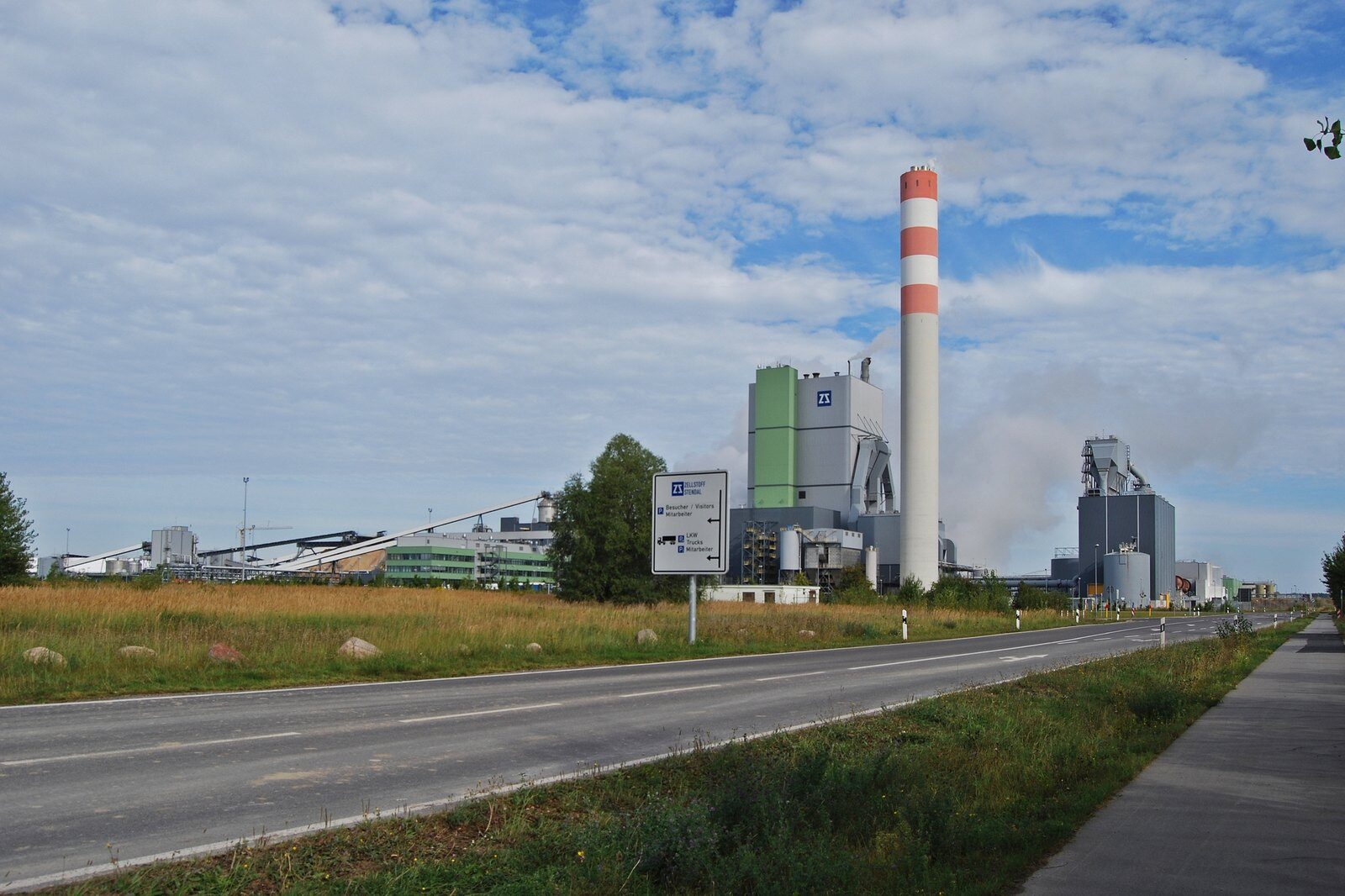
Mercer International, which makes pulp, lumber and cross-laminated timber at mills in Germany, Canada and the United States, filed a prepackaged Chapter 11 case in the U.S. Bankruptcy Court for the Southern District of Texas on 9 November 2026. The plan swaps about $1.1 billion of bonds for shares and would cut funded debt to about $700 million by year-end.
"This filing is a planned step toward completing our previously announced Recapitalization," Juan Carlos Bueno, the president and chief executive, said in a press release. Only the parent and one non-operating subsidiary filed. The mills, which can make 2.1 million tonnes of pulp a year, are outside the case and are to keep paying suppliers in the ordinary course.
Bonds out, secured notes in
Almost all of the unsecured bonds disappear. Mercer has two issues outstanding, $400 million of 12.875 per cent notes due 2028 and $875 million of 5.125 per cent notes due 2029. Under the plan in its disclosure statement, about $1.1 billion of that $1.275 billion is exchanged for equity, which the company describes as an 88 per cent cut in senior note debt. Two bank lines with near maturities are dealt with too.
| Item | At filing, 9 Nov 2026 | Under the plan |
|---|---|---|
| 12.875% senior notes due 2028 | $400.0m | Exchanged for equity |
| 5.125% senior notes due 2029 | $875.0m | Exchanged for equity |
| German revolving credit, due Sep 2027 | $287.0m drawn | Repaid in full |
| Canadian asset-based loan, due Jan 2027 | $80.8m drawn | Cut by at least $41.0m |
| New money senior secured notes | none | $420.0m, incl. $20.0m discount |
| Takeback senior secured notes | none | $150.0m |
| Put option notes (backstop fee) | none | $56.0m |
| New asset-based loan | none | Up to $300.0m of commitments |
| Total funded debt | $1,642.8m | About $700m |
By our arithmetic, the three new classes of secured notes add up to $626 million, which accounts for most of the $700 million left at emergence. The trade is unsecured bonds for secured ones. Bondholders end up owning most of the company and lending it money ahead of everyone else.
The new cash comes from a $400 million rights offering, fully backstopped by members of the bondholder group, which is paid for with the $420 million of new secured notes. The group earns a $56 million premium for guaranteeing it, paid in notes.
Who ends up owning Mercer?
The bondholders. The disclosure statement gives holders of the senior notes 91.5 per cent of the new common stock and 56.5 per cent of a new convertible preferred stock, and existing shareholders 8.5 per cent of the common and 3.5 per cent of the preferred. The 2 November announcement of the deal adds that buyers in the rights offering receive 40 per cent of the new common and preferred, pro rata. The slices are not meant to add up. The noteholders' 91.5 per cent is diluted by the rights-offering shares, the management incentive plan and conversion of the preferred, while the old shareholders' 8.5 per cent is diluted only by the incentive plan and the preferred, according to that release. Members of the bondholder group are also backstopping the offering, so some of the same investors appear on more than one line.
Support is already lined up on the bond side. Holders of 88.58 per cent of the notes had signed the support agreement, according to the disclosure statement. On equity, the 2 November release cited support from holders of "a majority of the outstanding shares of its common stock." The disclosure statement puts the consenting shareholders at about 43.1 per cent. It does not explain the difference.
Nasdaq is expected to suspend trading in the shares, the company said, and they may move to over-the-counter quotation.
How much interest does it save?
The answer has moved. On 2 November the company said the deal would eliminate "approximately $96 million" of annual cash interest. Its 9 November release said "more than $100 million." The disclosure statement gives about $122 million a year of cash interest before the restructuring and an expected reduction of about $100 million. Those are the company's figures, not ours, and the gap between the first and the latest is about 4 per cent of the bill.
Either way, the old structure could not be paid from the mills. Mercer's third-quarter results, released on 5 November, showed revenue of $440.7 million, a net loss of $59.2 million and negative operating EBITDA of $2.9 million. At about $122 million a year, interest alone runs to roughly $30 million a quarter, by our arithmetic. The company ended September with $71.0 million of cash and about $143.5 million of total liquidity, and its shareholders' equity had turned to a deficit of $158.2 million. Its realised price for northern softwood kraft pulp fell 8 per cent from a year earlier, to $671 a tonne, and its net price in China fell to $645 from $690. Chinese buyers' input costs for timber and paper pulp were still falling in October even as most of the country's industrial prices rose.
The timetable, counted
Mercer skipped the 1 October interest payment on its 2028 notes. On 30 October bondholders agreed to stretch the grace period from 30 days to 90. The petition followed on 9 November, 39 days after the missed coupon.
- 2 November: votes counted from holders of record on this date
- 3 December: plan supplement due
- 10 December, 4 p.m. Central: voting deadline for bondholders and shareholders
- By 24 December: confirmation hearing, 45 days after filing under the support agreement's milestones
- 31 December: target effective date, 52 days after filing, with a possible 30-day extension for regulatory approvals
The 90-day grace period on the missed coupon runs to 30 December, the day before the target. A prepackaged case can move this fast because the votes are largely won before the filing. A company that arrives in court with two weeks of cash and no deal has to do that bargaining under the judge's eye. Mercer did its bargaining first and is aiming for seven and a half weeks. The first test is the court's conditional approval of the disclosure statement, which the milestones require within three days of filing.
The petition date, debt figures, plan classes, recoveries, voting dates, milestones and support levels are from Mercer International's disclosure statement dated 9 November 2026, filed with the SEC as Exhibit 99.1 to a Form 8-K. Juan Carlos Bueno's 9 November statement, the capacity figures, the advisers and the Nasdaq note are from the company's press release of that date (Exhibit 99.2). The restructuring support agreement terms, the $96 million figure, the missed 1 October interest payment and the grace-period extension are from its press release of 2 November 2026. Third-quarter results are from its earnings release of 5 November 2026. Day counts, the before-and-after table and the sum of the new secured notes are this publication's arithmetic. The analysis is our own.
Topics businessbankruptcyChapter 11restructuringGermanyCanada