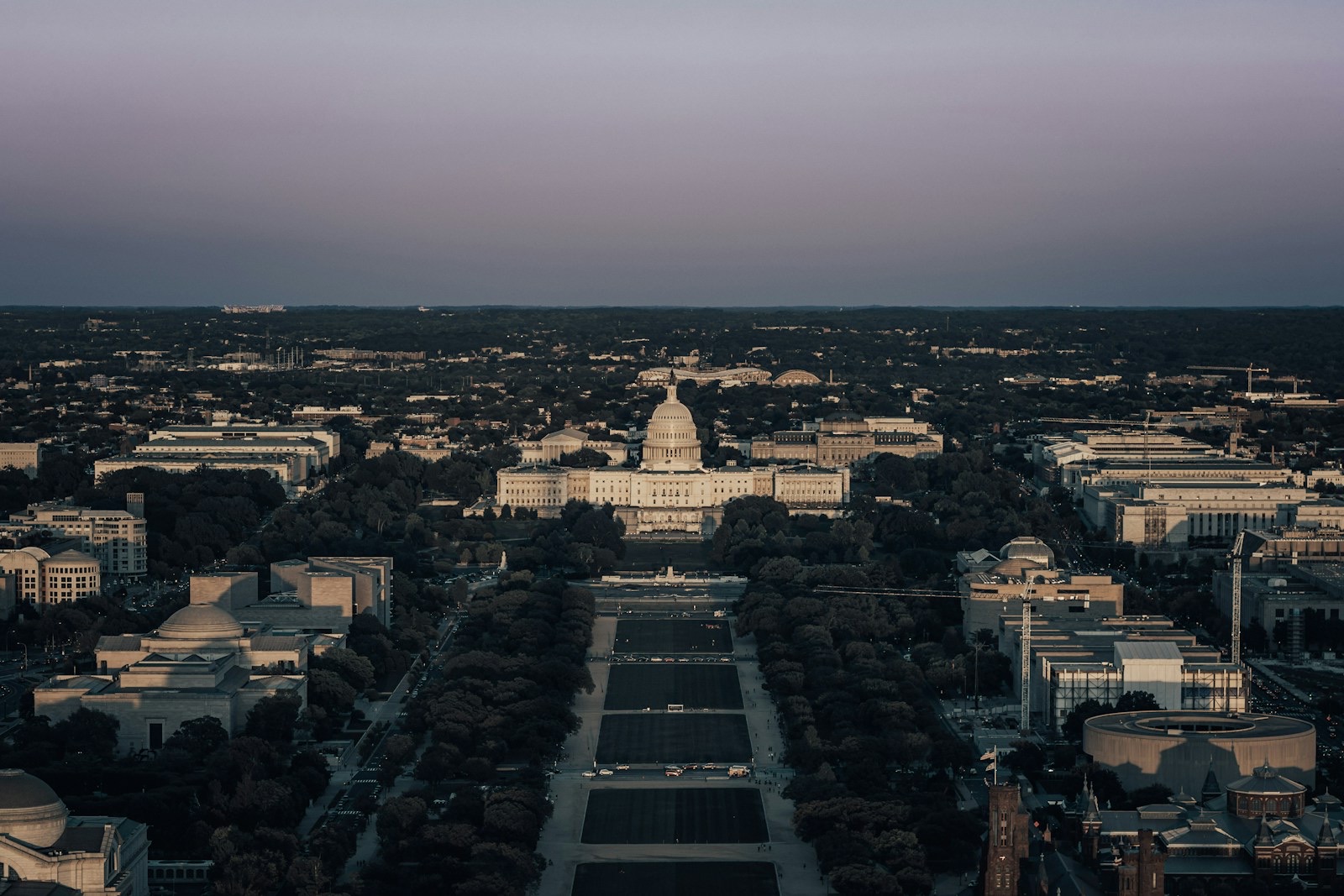
Sixteen years ago the national debt was $14 trillion and it was the organising issue of an election cycle. A movement formed around it. Candidates were selected on it. It stood on stage at every debate.
It is now $40 trillion, about 125 percent of GDP — higher than the peak reached financing the Second World War, which was nearer 106 percent. Net interest this fiscal year runs a little over $1 trillion, roughly matching what the country spends on national defence. Gallup finds that 2 percent of Americans name the debt and the deficit as the most important problem facing the country.
The number tripled and the politics evaporated. Whatever drives salience, it is plainly not magnitude.
The cost is real and it arrives unaddressed
The explanation usually offered is distraction — that campaigns are about gas prices, data centres and artificial intelligence, and the debt cannot compete. That is true and it is a description rather than a cause.
The cause is that nobody receives a bill. A trillion dollars of net interest is not levied on anyone; it is a line in a budget that competes, silently, with the other lines. When it wins, the losing line does not announce itself. It appears as a programme that quietly does not grow, a post that stays open, an inspection interval that gets longer. There is no invoice, no due date, and no identifiable party who can say what it cost them this year.
That is the difference from 2010, and it is not a story about attention spans. The debt was salient then because it was attached to events people had watched happen and to an experience they were having. It had a face and a felt cost. What has replaced that is a slow displacement with no face at all.
This publication has spent weeks reporting the displacement without calling it that. Agencies cannot hire fast enough to spend what Congress appropriated. A pay freeze exempts the roles government cannot afford to lose and leaves everyone else to a bidding contest it has chosen to lose. Water systems defer maintenance until the emergencies become frequent enough to be legible. Each of those is a local story about a budget under pressure. Collectively they are what a trillion dollars of interest looks like when it competes for room, and none of them is filed under debt.
The contributed piece this site ran yesterday makes the point from the other end: the fiscal outlook rests partly on assumptions about a workforce that policy is separately narrowing. Both halves have the same structure — a cost that is certain in aggregate and unassignable in particular.
There is no tidy conclusion here and it would be dishonest to manufacture one. Salience is not something an editorial produces. What can be said precisely is that the political system responds to bills, and this is not one; that the Peterson Foundation expects interest payments to more than double over the next decade, which is the point at which displacement stops being subtle; and that the programmes doing the absorbing are being cut in the ordinary way, one appropriation at a time, by people who are not describing it as debt service and may not think of it that way.
The debt will become political when it takes something identifiable from an identifiable group. On present arithmetic that will happen. It has simply not happened yet, which is a statement about accounting rather than about voters.
The Gallup finding, the 125 percent debt-to-GDP figure and its wartime comparison, the CBO projection of a $2.1 trillion deficit at 6 percent of GDP, the Peter G. Peterson Foundation's per-capita figure of roughly $117,000 and its projection that interest payments more than double over the next decade, the interest figure of a little over $1 trillion, and the comparison with the Tea Party period at $14 trillion are as set out by the Council on Foreign Relations on 31 August 2026. The analysis is our own.
Topics moneydebtpoliticspublic financeinterest rates