Two shortages, two outcomes.
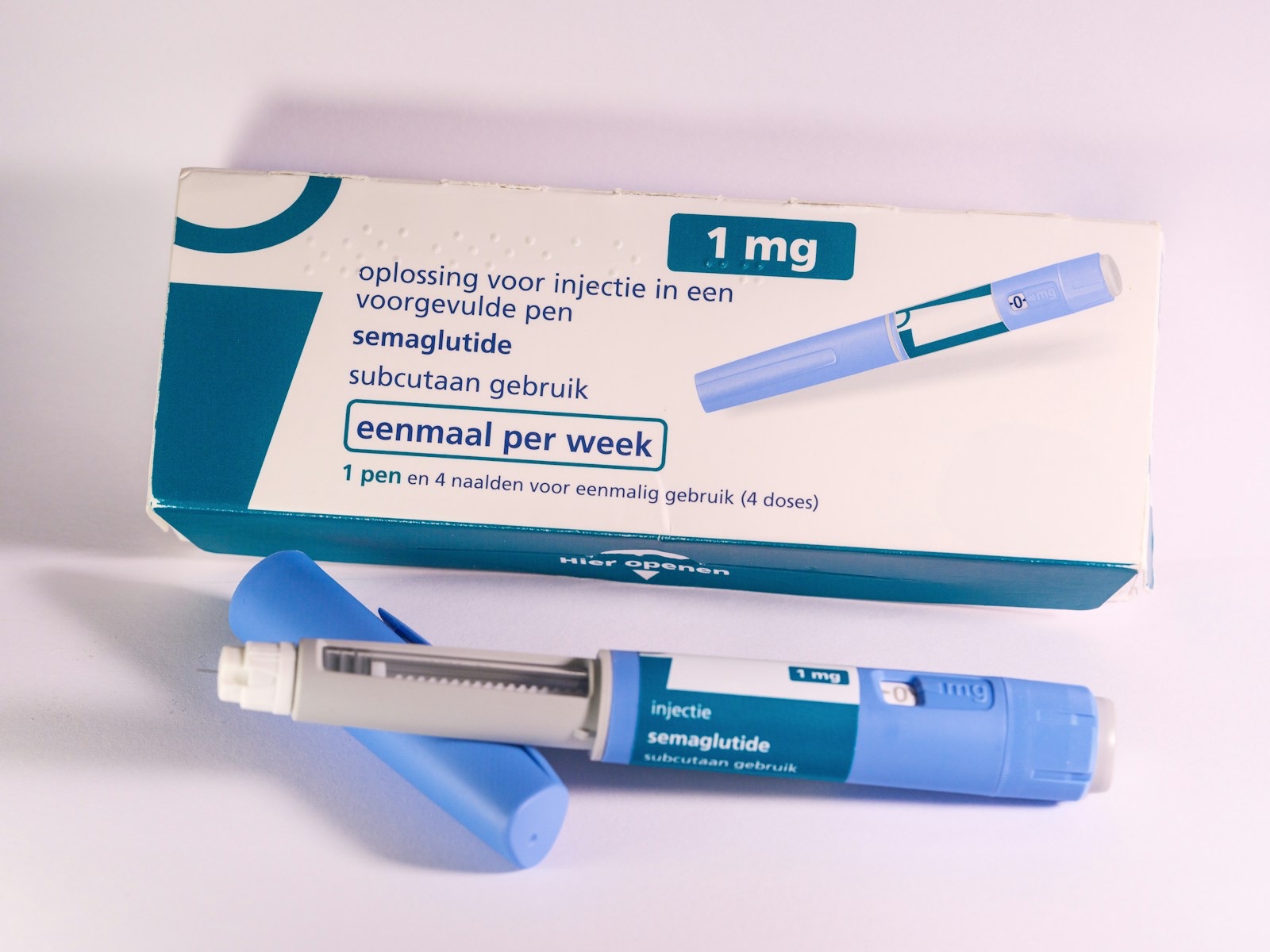
Tirzepatide came off the FDA's drug shortage list in December 2024. Semaglutide followed in February 2025. Both are now sitting on retail shelves, and the agency has moved to stop compounders making copies on the grounds that there is no clinical need for them absent a shortage. That is what a resolved shortage looks like, and it took about a year from peak scarcity.
Ifosfamide is a decades-old chemotherapy used in curative and salvage regimens for sarcoma and testicular cancer. It is roughly three months into a critical shortage, the FDA expects supply problems into the autumn, and the European Medicines Agency expects them into 2027. Liraglutide and dulaglutide are also still short, along with a number of other essential injectables.
Same country. Same regulator. Broadly the same contract manufacturing base. Opposite results.
The variable is what an extra unit earns
A shortage is, mechanically, a capital allocation problem. Somebody must decide to build or expand aseptic manufacturing capacity, which costs a great deal, takes years, and must be validated and inspected before a single vial ships.
For a branded GLP-1, that decision is easy. Every additional unit produced carries a branded margin against demand that exceeded anything the manufacturers had modelled. Novo and Lilly could justify billions in fill-finish capacity on a spreadsheet a first-year analyst could build, and they did.
For ifosfamide, the same decision is made by a firm looking at an off-patent sterile injectable sold at close to cost, for cancers that are not common, requiring the most demanding manufacturing process in the industry. The additional unit earns approximately nothing. So nobody builds the second line, and this desk wrote yesterday about what follows: with one plant, a regulator's only options are a contaminated drug or no drug.
Which is not a scandal, and is the point
No one behaved badly here. A company that declines to build a plant losing money on every unit is behaving exactly as a company should, and the executives who approved the GLP-1 capacity were right to.
The failure is that the system has no mechanism to pay for capacity in drugs whose social value and commercial value have come apart. A curative chemotherapy for young patients is worth an enormous amount to the people who need it and almost nothing to the firm that makes it, and there is no institution whose job is to close that gap.
This is the same asymmetry as the permission to make a drug expiring the moment it works. Reliability is unrewarded, redundancy is unfunded, and both are rational at the level of the firm and catastrophic at the level of the system.
The regulator's toolkit is asymmetric too
Notice what the FDA was able to do about the GLP-1 shortage, and what it could not do about this one.
During the GLP-1 shortage, the agency permitted compounding pharmacies to make copies — a genuine release valve, and one it has now moved to close because the shortage ended. That worked because the molecules can be compounded, because there were many compounders, and because demand was large enough to attract them.
There is no equivalent for ifosfamide. Compounding cannot substitute for an inspected sterile oncology injectable at national scale. The agency's available actions are to inspect, to warn, to expedite review of a new supplier that does not exist, and to publish a shortage notice. None of those makes a drug.
So the regulator was able to route around the shortage that industry was already fixing, and has no route around the one industry will not.
One awkward connection
This paper wrote yesterday that the FDA had approved tirzepatide to reduce cardiovascular risk on a trial whose comparator was dulaglutide, and that an insurer can now reasonably ask why not the older, cheaper drug.
Dulaglutide is currently in shortage.
A step-therapy protocol that routes patients through a drug that is not reliably available is not a cost-control policy, it is a delay. Whoever writes those criteria over the next two renewal cycles will need to check supply status as well as price, and supply status changes faster than a formulary does.
What would actually change it
Not a shortage list, which is a symptom register. Pay for capacity rather than for units.
The proposals exist and have for years: multi-year purchase commitments with volume floors for essential generics, premiums paid for a second qualified site, contracts that reward a manufacturer for having spare capacity rather than for using it. All of them cost money and all of them are cheaper than what happens now, which is that a curative drug disappears and the cost is paid in outcomes nobody attributes to it.
The measure worth tracking is not how many drugs are in shortage. It is how many essential drugs have a second qualified manufacturing site — and whether that number goes up in any year in which nothing has gone wrong.
The removal of tirzepatide from the FDA drug shortage list in December 2024 and semaglutide in February 2025, the general availability of both at retail pharmacies, the FDA's April 2026 proposal to exclude semaglutide, tirzepatide and liraglutide from the 503B bulk drug substances list on the finding of no clinical need absent a shortage, and the continuing shortage status of liraglutide and dulaglutide are as reported by the FDA, Medscape, Pharmacy Times and health law analyses in 2026. The ifosfamide figures — the single contract manufacturer, the FDA warning letter of March 2026 following a September 2025 inspection, and the FDA and EMA projections for recovery — are from this publication's reporting of 4 September 2026, sourced to Medscape. The analysis is our own.
Topics healthdrug shortagesgenericsglp-1manufacturing