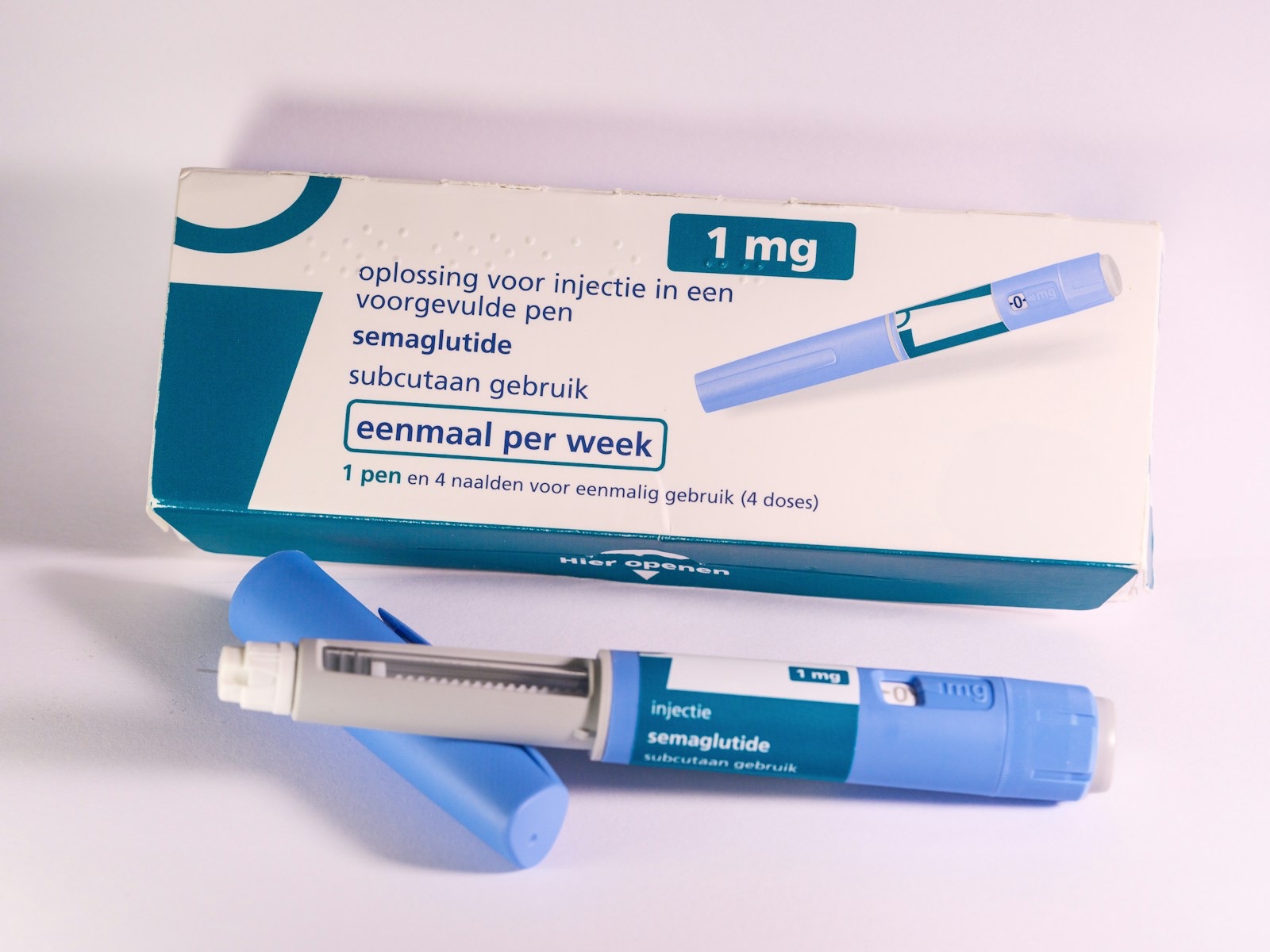
The FDA has approved tirzepatide — Mounjaro, from Eli Lilly — to reduce the risk of major adverse cardiovascular events in adults with type 2 diabetes. It is the first dual GIP and GLP-1 receptor agonist to hold that indication.
The trial behind it, SURPASS-CVOT, is a serious piece of work: more than thirteen thousand adults with type 2 diabetes and established atherosclerotic cardiovascular disease, randomised and double-blinded across six hundred and forty sites in thirty countries, followed for a median of about four years. Nobody should minimise it.
What is worth reading carefully is the comparison it made.
Against what
Most cardiovascular outcome trials test a drug against placebo. The question is: does this reduce events relative to nothing?
SURPASS-CVOT did not ask that. Its comparator was dulaglutide — an older GLP-1 that already carried an established cardiovascular indication. The question was: does this reduce events relative to a drug we already know works?
The answer was non-inferiority, with an eight percent lower rate of the three-point endpoint of cardiovascular death, non-fatal heart attack and non-fatal stroke.
That is a legitimate and in some ways more useful design. Testing a new agent against placebo in patients who could have had an effective drug raises real ethical problems, and an active comparator answers the question a prescriber actually faces. But it means the evidence supports a specific and narrower claim than the label's plain language suggests: tirzepatide is at least as good as an older drug at this, and directionally somewhat better.
Why an indication is a financial event
Here is why this belongs on a business page rather than only a medical one.
GLP-1 medicines have been the hardest category in American benefits design for three years, because employers and insurers have been trying to limit them. The tool for limiting them is the indication. Cover for diabetes, exclude for weight management, require prior authorisation, require a step through something cheaper — all of that is administered against what the drug is approved for.
A cardiovascular risk-reduction indication is very difficult to sit on that exclusion list. It moves the drug out of the category a plan can characterise as lifestyle and into the category of secondary prevention in patients with established heart disease, which is the kind of therapy plans are judged for denying.
So this approval does not change what tirzepatide does in a body. It changes how many people a plan must pay for it, and that population is large: adults with type 2 diabetes and existing cardiovascular disease is not a niche.
Which lands on an employer already forecasting 8.2 percent
Two days ago this paper wrote that employers expect health benefit costs to rise 8.2 percent in 2027, the steepest since 2003, and that the figure is already net of what employers plan to move onto employees. In the same survey, GLP-1 medicines alone accounted for about one percentage point of the growth.
That percentage point was calculated before this indication existed. A widened covered population is not in it.
The plan-design response is fairly predictable, because the levers are known and few. Prior authorisation criteria will be rewritten to require documented atherosclerotic disease. Step therapy through dulaglutide will become more common, and it will be defensible on precisely the trial that produced this approval — if the evidence is non-inferiority to dulaglutide, an insurer can reasonably ask why not dulaglutide. That is the sharp edge of an active-comparator design, and it cuts toward the older drug.
What the trial cannot tell an employer
Whether the eight percent difference is worth the price difference. That question was not asked, because cost-effectiveness is not what a regulatory trial measures and not what the FDA approves against.
Somebody will have to answer it anyway — a pharmacy benefit manager, a plan actuary, an employer with hospital and drug price data that is only recently usable. They will answer it in a formulary document that no patient reads, and the answer will determine which of two drugs with the same indication a person with heart disease and diabetes is actually able to get.
The number to watch is not prescriptions. It is the share of commercial plans that add step therapy through an older GLP-1 within the next two renewal cycles. If most do, the practical effect of this approval will have been to strengthen the case for the cheaper comparator — which is an unusual outcome for an approval, and a direct consequence of what the trial was designed to prove.
The FDA approval of tirzepatide, marketed as Mounjaro by Eli Lilly, to reduce the risk of major adverse cardiovascular events in adults with type 2 diabetes, announced by Lilly on 28 August 2026; the design of SURPASS-CVOT as a randomised, double-blind, active-comparator trial enrolling more than 13,000 adults with type 2 diabetes and established atherosclerotic cardiovascular disease across 640 sites in 30 countries with median follow-up of roughly four years; the finding of non-inferiority to dulaglutide with an 8 percent lower rate of three-point MACE; the status of tirzepatide as the first dual GIP and GLP-1 receptor agonist to receive such an approval; and the characterisation of adverse events as predominantly gastrointestinal and mild to moderate are as reported by AJMC, HCPLive, BioPharm International and Eli Lilly's own announcement in late August and early September 2026. The estimate that GLP-1 medicines account for about one percentage point of employer health cost growth is from the Marsh McLennan employer survey reported on 2 September 2026. The analysis is our own.
Topics healthglp-1drug pricinginsurancefda